<?xml version="1.0" encoding="utf-8"?>

<rdf:RDF
xmlns:rdf="http://www.w3.org/1999/02/22-rdf-syntax-ns#"
xmlns:dc="http://purl.org/dc/elements/1.1/"
xmlns:sy="http://purl.org/rss/1.0/modules/syndication/"
xmlns:admin="http://webns.net/mvcb/"
xmlns:cc="http://web.resource.org/cc/"
xmlns="http://purl.org/rss/1.0/">

<channel rdf:about="http://www.emfoley.com/ecos/">
<title>Environmental Center for Our Schools</title>
<link>http://www.emfoley.com/ecos/</link>
<description>All about the ECOS outdoor learning program based at Forest Park in Springfield, Mass.</description>
<dc:creator></dc:creator>
<dc:date>2011-02-14T13:03:27-05:00</dc:date>
<admin:generatorAgent rdf:resource="http://www.movabletype.org/?v=4.25" />


<items>
<rdf:Seq>
<rdf:li rdf:resource="http://www.emfoley.com/ecos/archives/2011/02/ponds.html" />

<rdf:li rdf:resource="http://www.emfoley.com/ecos/archives/2011/02/forests.html" />

<rdf:li rdf:resource="http://www.emfoley.com/ecos/archives/2011/02/fields.html" />

<rdf:li rdf:resource="http://www.emfoley.com/ecos/archives/2011/02/winter.html" />

<rdf:li rdf:resource="http://www.emfoley.com/ecos/archives/2008/09/introduction-to-1.html" />

<rdf:li rdf:resource="http://www.emfoley.com/ecos/archives/2007/08/6thgrade-schedu-1.html" />

<rdf:li rdf:resource="http://www.emfoley.com/ecos/archives/2007/08/design-a-shelte.html" />

<rdf:li rdf:resource="http://www.emfoley.com/ecos/archives/2007/08/standards-scien-1.html" />

<rdf:li rdf:resource="http://www.emfoley.com/ecos/archives/2007/08/design-a-raft-t.html" />

<rdf:li rdf:resource="http://www.emfoley.com/ecos/archives/2007/08/heat-transfer-1.html" />

<rdf:li rdf:resource="http://www.emfoley.com/ecos/archives/2007/08/soil-formation.html" />

<rdf:li rdf:resource="http://www.emfoley.com/ecos/archives/2007/08/mapping-the-ear.html" />

<rdf:li rdf:resource="http://www.emfoley.com/ecos/archives/2007/08/earth-history-1.html" />

<rdf:li rdf:resource="http://www.emfoley.com/ecos/archives/2007/08/rocks-and-miner.html" />

<rdf:li rdf:resource="http://www.emfoley.com/ecos/archives/2007/08/adaptations.html" />
</rdf:Seq>
</items>

</channel>


<item rdf:about="http://www.emfoley.com/ecos/archives/2011/02/ponds.html">
<title>Ponds</title>
<link>http://www.emfoley.com/ecos/archives/2011/02/ponds.html</link>
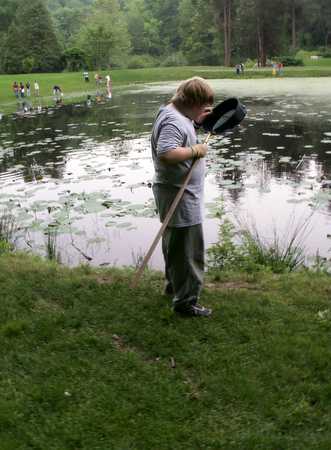
<description><![CDATA[<p><img alt="Looking in the net" src="http://www.emfoley.com/ecos/archives/PICT0009-1.jpg" width="331" height="450" border="1" /><br />
A fourth grader carefully checks his net for pond creatures.</p>

<p>After arriving on the school bus at the cabin on Porter Lake in Forest Park, 4th grade students will begin their ECOS program by studying habitats. Through hands-on discovery activities, such as temporarily netting and capturing and then examining the creatures and plants in forest, field and pond environments, they learn about the different plants and animals that live in each and how they are interconnected. Students learn the basic survival needs of all living things: sun, food, air, water, shelter and space.</p>]]></description>
<dc:subject>Fall to Spring at ECOS</dc:subject>
<dc:creator>mpdoran</dc:creator>
<dc:date>2011-02-14T13:03:27-05:00</dc:date>
</item>

<item rdf:about="http://www.emfoley.com/ecos/archives/2011/02/forests.html">
<title>Forests</title>
<link>http://www.emfoley.com/ecos/archives/2011/02/forests.html</link>
<description><![CDATA[<p><img alt="Northern Screech Owl" src="http://www.emfoley.com/ecos/archives/PICT0003-1.JPG" width="430" height="450" border="1" />This Northern Screech Owl was found perching on a tree limb after dusk near the edge of Forest Park. They usually grow to no more than 8-10 inches, but like all owls, it is an able hunter. It sometimes eats other birds such as starlings, but its diet is widely varied, from chipmunks to flying insects to salamanders. </p>
<p>Fourth and fifth graders go into the forest to explore. They get down on the forest floor, turn over logs, collect specimens -- it's hands-on discovery.  They learn that there's little to fear from the animals, plants and insects they encounter, and that mushrooms and molds might not be beautiful, but they play an indispensable part in the cycles of life in the forest. </p>

<p>A tour of the woods at Forest Park reveals a great diversity in plant and animal makeup. Slope and orientation to the sun, elevation, maturity, destructive pests, soil content, proximity to bodies of water, plus the effects of the surrounding communities and use of the woods by the people who visit the park are some of the factors that affect these habitats. </p>]]></description>
<dc:subject>Fall to Spring at ECOS</dc:subject>
<dc:creator>mpdoran</dc:creator>
<dc:date>2011-02-13T01:35:31-05:00</dc:date>
</item>

<item rdf:about="http://www.emfoley.com/ecos/archives/2011/02/fields.html">
<title>Fields</title>
<link>http://www.emfoley.com/ecos/archives/2011/02/fields.html</link>
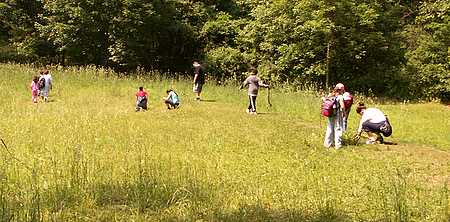
<description><![CDATA[<p><img alt="In the field" src="http://www.emfoley.com/ecos/archives/PICT0006-1-1-1.jpg" width="450" height="222" border="1" /><br />
Fourth graders spread out to find snakes, toads, insects, spiders, plants and other field dwellers.  </p>

<p>To find and capture animals in the field requires a keen eye and quick reflexes.  Garter snakes, which have been caught in abundance this year, are shy creatures and fast movers.  Anyone who has tried to catch butterflies knows that even with a net it can be a frustrating exercise.  And many of the other insects and spiders are camouflaged and are skilled at hiding in the deep grass. But 4th graders are quick too. </p>

<p>The field helps demonstrate the interaction among habitats through some of its creatures. The students know that many of the creatures found in the field start out in the pond: the dragonfly, the damselfly, and the toad are the most prominent examples. They also know that the basic outline of the food chain is the same -- plants, which they also collect, are producers, and the animals are either consumers or decomposers.  And though fungi, moss and lichen are usually associated with the forest, where they help break down organic and inorganic materials to produce soil, all three can also be found in the field or around its edges. <br />
</p>]]></description>
<dc:subject>Fall to Spring at ECOS</dc:subject>
<dc:creator>mpdoran</dc:creator>
<dc:date>2011-02-12T00:29:52-05:00</dc:date>
</item>

<item rdf:about="http://www.emfoley.com/ecos/archives/2011/02/winter.html">
<title>Winter</title>
<link>http://www.emfoley.com/ecos/archives/2011/02/winter.html</link>
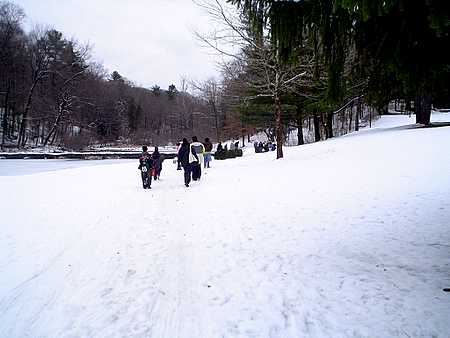
<description><![CDATA[<p><img alt="heading into the woods" src="http://www.emfoley.com/ecos/archives/DSC01721-3.JPG" width="450" height="338" border="1" /><br />
A 6th-grade class heads into the woods for a day of Winter Survival.</p>

<p>When they show up at Porter Lake for Winter Survival, the 6th grade students should be dressed warmly, because they are going to be outside for most of day one, which is for practice, and all of day two, during which they will put to use the survival skills they have <br />
learned. </p>

<p>How to build a shelter to help protect them from the elements, how to build a fire to keep warm and heat their lunch over it, and how to break camp and leave their area the way they found it are the major lessons of day one.  </p>]]></description>
<dc:subject>Fall to Spring at ECOS</dc:subject>
<dc:creator>mpdoran</dc:creator>
<dc:date>2011-02-11T11:39:55-05:00</dc:date>
</item>

<item rdf:about="http://www.emfoley.com/ecos/archives/2008/09/introduction-to-1.html">
<title>Introduction to ECOS for Parents</title>
<link>http://www.emfoley.com/ecos/archives/2008/09/introduction-to-1.html</link>
<description><![CDATA[<p><strong>ECOS<br />
Environmental Center for Our Schools<br />
Springfield Public Schools – Springfield, Massachusetts <br />
</strong></p>

<p>At the height of the environmental movement, Springfield Public School educators Lorraine Ide and Clifford A. Phaneuf realized the necessity of educating students to appreciate and understand their role in nature. Working in collaboration with the Springfield Park Department and the School Department, these two innovative teachers opened the Environmental Center for Our Schools in 1970. This unique school has now provided an exciting environmental education program for generations of Springfield residents. <br />
ECOS is designed for elementary and middle school students in Springfield. Each student and her/his teacher spend two school days at the Clifford A. Phaneuf Environmental Center in Forest Park. Students are transported from their school to Forest Park each morning and  returned to their school in time for dismissal.</p>

<p>The 750 acres of Forest Park provide a classroom which contains a treasure of environmental experiences. Some students have never had the opportunity to explore natural areas. ECOS provides an activity centered program in which students can expand their knowledge of the natural world by exploring the diverse habitats of the park.</p>

<p>STAFF</p>

<p>ECOS is staffed by certified teachers interested in environment education, adept at using the outdoors as a teaching tool, and skilled in the discovery method of teaching. The ECOS staff is assisted by the students’ classroom teacher a well as parents and visitors.</p>

<p>CLOTHING</p>

<p>Students should wear appropriate clothes for the outdoors, such as jeans, sweatshirts, sneakers or boots, etc. Since the program is held outside throughout the school year, students should dress according to the season and weather. Students should dress in layers because it is always a little cooler in the forest. They can always take off a sweatshirt if it gets warmer. (For a guide to dressing for Winter Survival see "6th-Grade Activities.") </p>

<p>LUNCH</p>

<p>Lunches are handled the same way as in school. Students who bring lunch to school should bring their lunch to ECOS. Students who receive a school lunch will receive their school lunch at ECOS.</p>

<p>AN INVITATION<br />
 <br />
Get in to your spirit of adventure! Get into some old clothes, dress for the weather, pack a lunch and tell your child’s teacher you would like to accompany the class to ECOS for one day or the entire session. We look forward to having you join us. </p>

<p>IMPORTANT</p>

<p>Sign the permission slip and return it to school as soon as possible. If you have any questions, please contact the school or your child’s teacher.<br />
We look forward to having your child participate in the ECOS program and hope you will consider joining us also. </p>

<p><br />
Ron St. Amand, Director of Science  					</p>

<p><br />
</p>]]></description>
<dc:subject>Parent Guide</dc:subject>
<dc:creator>mpdoran</dc:creator>
<dc:date>2008-09-02T21:31:46-05:00</dc:date>
</item>

<item rdf:about="http://www.emfoley.com/ecos/archives/2007/08/6thgrade-schedu-1.html">
<title>6th-Grade Schedule</title>
<link>http://www.emfoley.com/ecos/archives/2007/08/6thgrade-schedu-1.html</link>
<description><![CDATA[<p>2 Day Program<br />
(The day and time slots are interchangeable)</p>

<p>Day 1</p>

<p>Morning<br />
Students will learn to keep warm in Winter by:<br />
-- making group decisions.<br />
-- building a one match fire using available materials found in the forest.<br />
-- dressing appropriately</p>

<p>Lunch – outside if weather permits</p>

<p>Afternoon<br />
Students will learn to:<br />
-- build a shelter using available materials found in the forest. Branches from used Christmas trees and natual debris will be made available to students.<br />
-- the knots necessary in building shelters.</p>

<p><br />
Day 2</p>

<p>Students will spend the entire day in a designated survival area. They will work together cooperatively in small groups without teacher assistance but with teacher supervision. The survival experience will include:<br />
-- choosing a site in the survival area.<br />
-- building a shelter.<br />
-- building a one match fire.<br />
-- heating food over the fire.<br />
-- the importance of leaving the area as clean as it was found – if not cleaner.<br />
</p>]]></description>
<dc:subject>6th-Grade Activities</dc:subject>
<dc:creator>mpdoran</dc:creator>
<dc:date>2007-08-08T23:26:48-05:00</dc:date>
</item>

<item rdf:about="http://www.emfoley.com/ecos/archives/2007/08/design-a-shelte.html">
<title>Shelter  Building</title>
<link>http://www.emfoley.com/ecos/archives/2007/08/design-a-shelte.html</link>
<description><![CDATA[<p>Standard(s): Science and Technology/Engineering<br />
Strand #4: Technology/Engineering<br />
Learning Standard #32: Engineering design is an iterative process involving modeling and optimizing for developing technological solutions to problems within given constraints.</p>

<p>     Standard(s): English Language Arts<br />
       Strand:  Language<br />
       Learning Standard #2:  Questioning, listening, and contributing – Students will pose questions, listen to             the ideas of others, and contribute their own information or ideas in group discussions or interviews in order to acquire knowledge</p>

<p><a href="http://www.emfoley.com/ecos/archives/Gr6 Shelter Building - Design a Shelter.pdf">Download file</a><br />
</p>]]></description>
<dc:subject>6th-Grade Curriculum Standards</dc:subject>
<dc:creator>mpdoran</dc:creator>
<dc:date>2007-08-08T22:14:50-05:00</dc:date>
</item>

<item rdf:about="http://www.emfoley.com/ecos/archives/2007/08/standards-scien-1.html">
<title>Forms of Energy</title>
<link>http://www.emfoley.com/ecos/archives/2007/08/standards-scien-1.html</link>
<description><![CDATA[<p>Strand#3: Physical Science<br />
Learning Standard #13: Differentiate between potential and kinetic energy. Identify situations where kinetic energy is transformed into potential energy and vice versa. </p>

<p><a href="http://www.emfoley.com/ecos/archives/Gr6 Forms of energy.pdf">Download file</a></p>]]></description>
<dc:subject>6th-Grade Curriculum Standards</dc:subject>
<dc:creator>mpdoran</dc:creator>
<dc:date>2007-08-08T21:03:06-05:00</dc:date>
</item>

<item rdf:about="http://www.emfoley.com/ecos/archives/2007/08/design-a-raft-t.html">
<title>Design a raft to run the rapids in Forest Park</title>
<link>http://www.emfoley.com/ecos/archives/2007/08/design-a-raft-t.html</link>
<description><![CDATA[<p>Have your students use their “Floating and Sinking” knowledge in a real life situation. As part of the fifth grade Changes in Nature program at ECOS, students are asked to design a raft that can stay afloat when placed into a fast-moving stream. This activity lets students apply what they learn in the classroom to solve a problem at ECOS.<br />
</p>]]></description>
<dc:subject>5th-Grade Activities</dc:subject>
<dc:creator>mpdoran</dc:creator>
<dc:date>2007-08-08T20:24:47-05:00</dc:date>
</item>

<item rdf:about="http://www.emfoley.com/ecos/archives/2007/08/heat-transfer-1.html">
<title>Heat Transfer</title>
<link>http://www.emfoley.com/ecos/archives/2007/08/heat-transfer-1.html</link>
<description><![CDATA[<p><a href="http://www.emfoley.com/ecos/archives/Gr 6 Heat transfer.pdf">Download file</a><br />
</p>]]></description>
<dc:subject>6th-Grade Curriculum Standards</dc:subject>
<dc:creator>mpdoran</dc:creator>
<dc:date>2007-08-08T16:25:29-05:00</dc:date>
</item>

<item rdf:about="http://www.emfoley.com/ecos/archives/2007/08/soil-formation.html">
<title>Soil Formation</title>
<link>http://www.emfoley.com/ecos/archives/2007/08/soil-formation.html</link>
<description><![CDATA[<p><a href="http://www.emfoley.com/ecos/archives/Gr 5 Soil Formation.pdf">Download file</a><br />
</p>]]></description>
<dc:subject>5th-Grade Curriculum Standards</dc:subject>
<dc:creator>mpdoran</dc:creator>
<dc:date>2007-08-08T16:17:29-05:00</dc:date>
</item>

<item rdf:about="http://www.emfoley.com/ecos/archives/2007/08/mapping-the-ear.html">
<title>Mapping the Earth</title>
<link>http://www.emfoley.com/ecos/archives/2007/08/mapping-the-ear.html</link>
<description><![CDATA[<p>Standard(s): Science and Technology/Engineering<br />
       Strand #1: Earth and Space Science<br />
       Learning Standard #1: Recognize, interpret, and be able to create models of the earth’s common physical features in various mapping representations, including contour maps. </p>

<p><a href="http://www.emfoley.com/ecos/archives/Gr 7 Mapping the Earth.pdf">Download file</a><br />
</p>]]></description>
<dc:subject>7th-Grade Curriculum Standards</dc:subject>
<dc:creator>mpdoran</dc:creator>
<dc:date>2007-08-08T00:37:46-05:00</dc:date>
</item>

<item rdf:about="http://www.emfoley.com/ecos/archives/2007/08/earth-history-1.html">
<title>Earth&apos;s History</title>
<link>http://www.emfoley.com/ecos/archives/2007/08/earth-history-1.html</link>
<description><![CDATA[<p>Standard(s): Science and Technology/Engineering<br />
       Strand  #1: Earth and Space  <br />
       Learning Standard  #6: Describe and give examples of ways in which the Earth’s surface is built up and torn down by natural processes, including deposition of sediments, rock formation, erosion,and weathering. </p>

<p><a href="http://www.emfoley.com/ecos/archives/Gr 7 Earths History.pdf">Download file</a><br />
</p>]]></description>
<dc:subject>7th-Grade Curriculum Standards</dc:subject>
<dc:creator>mpdoran</dc:creator>
<dc:date>2007-08-08T00:35:05-05:00</dc:date>
</item>

<item rdf:about="http://www.emfoley.com/ecos/archives/2007/08/rocks-and-miner.html">
<title>Rocks and Minerals</title>
<link>http://www.emfoley.com/ecos/archives/2007/08/rocks-and-miner.html</link>
<description><![CDATA[<p>Standard(s): Science and Technology/Engineering<br />
     Strand #1:  Earth and Space<br />
       Learning Standard #1: Give a simple explanation of what a mineral is and some examples e.g. quartz, mica.<br />
       Learning Standard #2: Identify the three categories of rock (metamorphic, igneous, and sedimentary) based <br />
        on how they are formed and explain the natural and physical processes that create these rocks. <br />
        <br />
       Standard(s): English Language Arts<br />
       Strand:  Language<br />
       Learning Standard #2:  Questioning, listening, and contributing – Students will pose questions, listen to               the ideas of others, and contribute their own information or ideas in group discussions or interviews in order to acquire knowledge.</p>

<p><a href="http://www.emfoley.com/ecos/archives/Gr4 Rocks & Minerals.pdf">Download file</a><br />
</p>]]></description>
<dc:subject>4th-Grade Curriculum Standards</dc:subject>
<dc:creator>mpdoran</dc:creator>
<dc:date>2007-08-08T00:33:09-05:00</dc:date>
</item>

<item rdf:about="http://www.emfoley.com/ecos/archives/2007/08/adaptations.html">
<title>Adaptations</title>
<link>http://www.emfoley.com/ecos/archives/2007/08/adaptations.html</link>
<description><![CDATA[<p>Standard(s) Science and Technology/Engineering<br />
      Strand #2: Life Science (Biology)<br />
      Learning Standard# 6:  Give examples of how inherited characteristics may change over time as <br />
      adaptations to changes in the environment that enable organisms to survive, e.g., shape of beak or feet,                                                                placement of eyes on head, length of neck, shape of  teeth, color.<br />
        <br />
       Standard(s): English Language Arts<br />
      Strand:  Language<br />
       Learning Standard #2:  Questioning, listening, and contributing – Students will pose questions, listen to the ideas of others, and contribute their own information or  ideas in group discussions or interviews in order to acquire knowledge. </p>

<p><a href="http://www.emfoley.com/ecos/archives/Gr 5 Adaptations.pdf">Download file</a></p>]]></description>
<dc:subject>5th-Grade Curriculum Standards</dc:subject>
<dc:creator>mpdoran</dc:creator>
<dc:date>2007-08-08T00:28:31-05:00</dc:date>
</item>


</rdf:RDF>