<?xml version="1.0" encoding="utf-8"?>
<feed version="0.3" xmlns="http://purl.org/atom/ns#" xmlns:dc="http://purl.org/dc/elements/1.1/" xml:lang="en">
<title>Environmental Center for Our Schools</title>
<link rel="alternate" type="text/html" href="http://www.emfoley.com/ecos/" />
<modified>2011-03-10T18:17:32Z</modified>
<tagline>All about the ECOS outdoor learning program based at Forest Park in Springfield, Mass.</tagline>
<id>tag:www.emfoley.com,2011:/ecos/4</id>
<generator url="http://www.movabletype.org/" version="4.25">Movable Type</generator>
<copyright>Copyright (c) 2011, mpdoran</copyright>

<entry>
<title>Ponds</title>
<link rel="alternate" type="text/html" href="http://www.emfoley.com/ecos/archives/2011/02/ponds.html" />
<modified>2011-03-10T18:17:32Z</modified>
<issued>2011-02-14T18:03:27Z</issued>
<id>tag:www.emfoley.com,2011:/ecos/4.262</id>
<created>2011-02-14T18:03:27Z</created>
<summary type="text/plain"> A fourth grader carefully checks his net for pond creatures. After arriving on the school bus at the cabin on Porter Lake in Forest Park, 4th grade students will begin their ECOS program by studying habitats. Through hands-on discovery...</summary>
<author>
<name>mpdoran</name>
<url>http//www.emfoley.com/ecos/</url>
<email>mpdoran@emfoley.com</email>
</author>
<dc:subject>Fall to Spring at ECOS</dc:subject>
<content type="text/html" mode="escaped" xml:lang="en" xml:base="http://www.emfoley.com/ecos/">
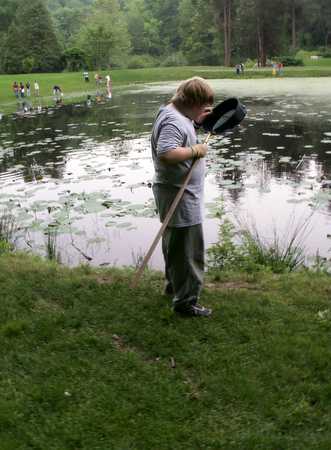
<![CDATA[<p><img alt="Looking in the net" src="http://www.emfoley.com/ecos/archives/PICT0009-1.jpg" width="331" height="450" border="1" /><br />
A fourth grader carefully checks his net for pond creatures.</p>

<p>After arriving on the school bus at the cabin on Porter Lake in Forest Park, 4th grade students will begin their ECOS program by studying habitats. Through hands-on discovery activities, such as temporarily netting and capturing and then examining the creatures and plants in forest, field and pond environments, they learn about the different plants and animals that live in each and how they are interconnected. Students learn the basic survival needs of all living things: sun, food, air, water, shelter and space.</p>]]>
<![CDATA[<p>After exploring each habitat, they begin to understand how all the habitats in Forest Park are interdependent.  The theme of habitats and their populations is carried forward in a discussion of the studentsï¿½ neighborhoods and the wider world.</p>

<p>But it is the plants and animals and places that they may have never seen, some quite exotic, that stir the studentsï¿½ imaginations and encourage them to look around at the world we share.  Nearly all of what you see here has been either caught (and later released) or discovered by fourth and fifth grade ECOS students during the spring of 2006. Some plants and animals that were seen over the summer are included.   </p>

<p>The ponds are especially rich in plant and animal species. Here some insects begin life as nymphs; carnivorous beetles dive for food within a bubble to use for air; tadpoles turn into frogs and snapping turtles eat anything they want.  </p>

<p>The students learn that the best way to capture specimens is to drag the net through the mud at the edge of the pond and then use their fingers to find anything moving in it.  After one classmate finds a fish or a tadpole by getting muddy hands, most of the rest of the students resign themselves to it. When the plants and animals have been netted, they are examined, identified and counted. After the ECOS staff leads a discussion of the habitat's dynamics, it's time for lunch.    <br />
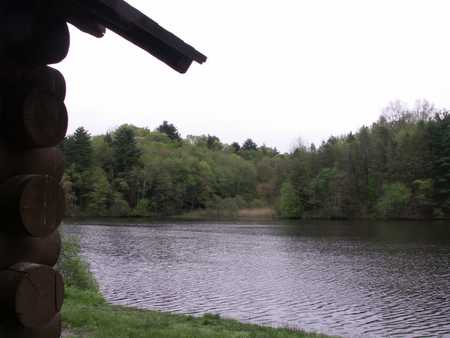
<img alt="Windy morning at cabin" src="http://www.emfoley.com/ecos/archives/PICT0015.jpg" width="450" height="338" border="1" /><br />
A windy May morning at the ECOS cabin on Porter Lake.<img alt="</p>
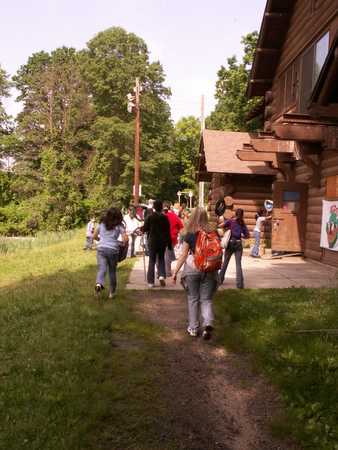
<p><img alt="Off to work" src="http://www.emfoley.com/ecos/archives/PICT0003-2-1.jpg" width="338" height="450" border="1" /> <br />
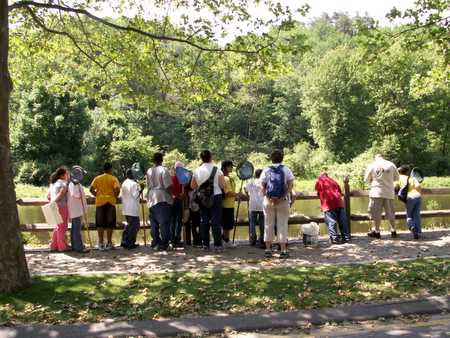
Students, teachers and parents head to the pond with their nets and containers for their catches.</p>

<p><img alt="Class at duck pond" src="http://www.emfoley.com/ecos/archives/PICT0054.jpg" width="450" height="338" border=1 /><br />
ECOS teacher Ms. Orellana's students drop by the Duck Pond to observe... </p>
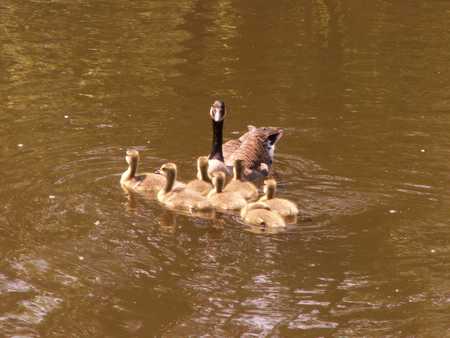
<p><img alt="Canada goose and goslings" src="http://www.emfoley.com/ecos/archives/PICT0051-1.jpg" width="450" height="338" border="1" /><br />
... a Canada Goose and its 7 goslings.</p>

<p><img alt="Showing how to use the net" src="http://www.emfoley.com/ecos/archives/PICT0020-1.jpg" width="450" height="338" border="1" /><br />
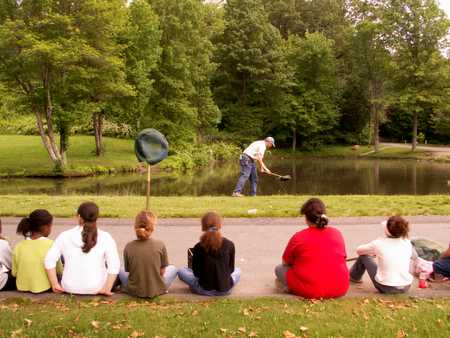
ECOS teacher Mr. Freedman demonstrates use of the net at the pond.<br />
 <br />
<img alt="Students look for a catch" src="http://www.emfoley.com/ecos/archives/PICT0031-1.jpg" width="450" height="389" border="1" /><br />
The students get started looking for something to catch.</p>

<p><img alt="searching through mud" src="http://www.emfoley.com/ecos/archives/PICT0005-4.JPG" width="450" height="285" border="1" /><br />
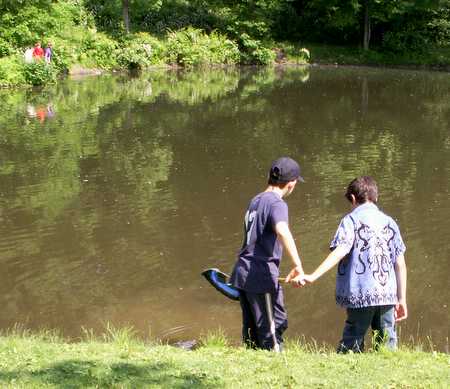
A pair of students search through the mud in their net for creatures from the pond.</p>

<p><img alt="Mr. Haley" src="http://www.emfoley.com/ecos/archives/PICT0002-3.JPG" width="366" height="450" border="1" /><br />
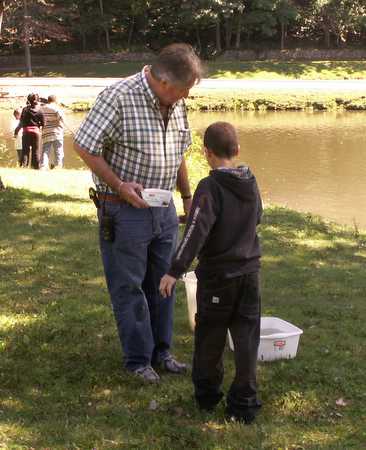
ECOS teacher Mr. Haley helps a student identify his catch before placing it in the collection bucket with the other animals and plants.</p>

<p><br />
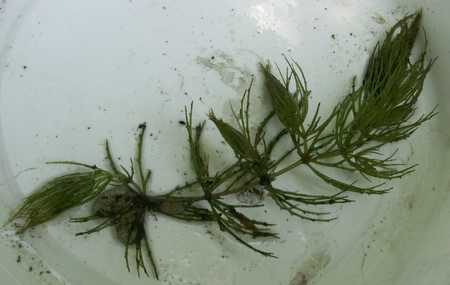
<img alt="water-plant elodea" src="http://www.emfoley.com/ecos/archives/PICT0097.jpg" width="450" height="285" border="1" /><br />
Elodea, a water plant, is an important source of food in the pond, and is on the list of plants and animals the students are asked to search for.</p>

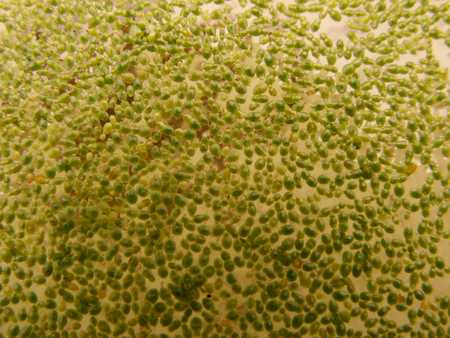
<p><img alt="Duckweed" src="http://www.emfoley.com/ecos/archives/PICT0020.jpg" width="450" height="338" border="1" /><br />
One of the other important food producers in the pond is Duckweed, here seen greatly magnified.  It is often mistakenly called algae. </p>
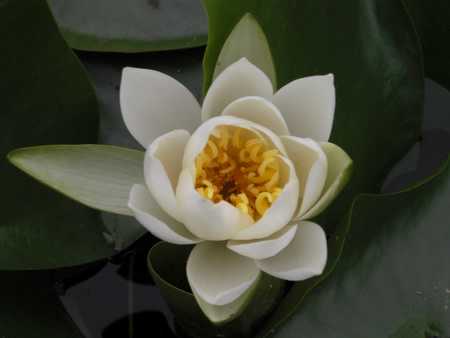
<p><img alt="Lily" src="http://www.emfoley.com/ecos/archives/PICT0138-1.jpg" width="450" height="338" border="1" />White Water-Lilies cover many of the ponds, and their leaves, called pads, provide frogs both places to hide  from predators and places to perch for catching insects.</p>

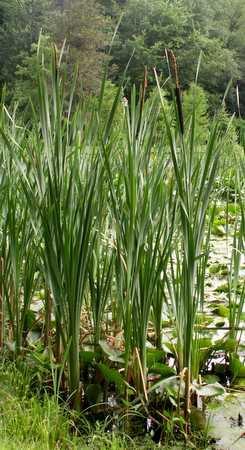
<p><img alt="Cattails" src="http://www.emfoley.com/ecos/archives/PICT0109.jpg" width="245" height="450" border="1" /><br />
Cattails grow at the edges of ponds and lakes and in marhes. </p>
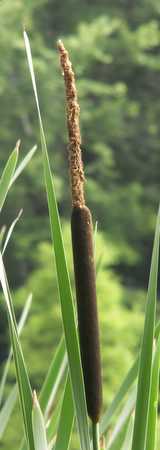
<p><img alt="Cattail flower" src="http://www.emfoley.com/ecos/archives/PICT0111-2.JPG" width="160" height="450" border="1" /><br />
The Cattail flower is in two parts. The top or tail contains the male flowers. Just below are the brown female flowers.  </p>
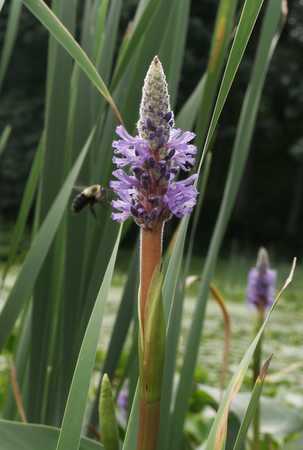
<p><img alt="pickerelweed" src="http://www.emfoley.com/ecos/archives/PICT0127-1-1.jpg" width="303" height="450" border="1" /><br />
A Pickerelweed flower, growing among Cattails, attracts a Bumble Bee.  </p>
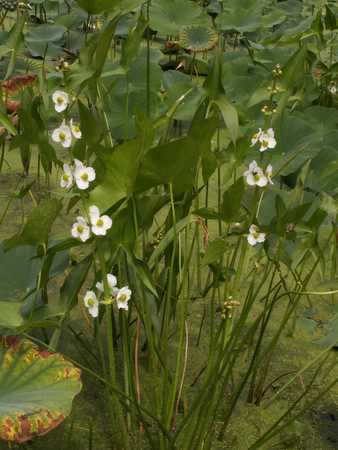
<p><img alt="arrowhead" src="http://www.emfoley.com/ecos/archives/PICT0200.JPG" width="338" height="450" border="1" />The Arrowhead, named after the shape of its leaves, flowers from July to September.  The plant produces an edible tuber that was a favorite food among Native Americans. </p>
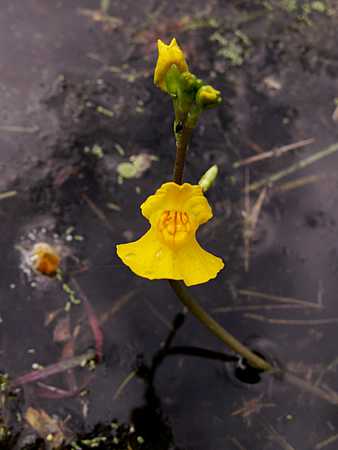
<p><img alt="Swollen Bladderwort" src="http://www.emfoley.com/ecos/archives/PICT0008-4.JPG" width="351" height="450" border="1" /><br />
Swollen Bladderwort is a carnivorous plant. Below the surface, it has leaves that suck in tiny animals to eat. It grows in still water ... </p>
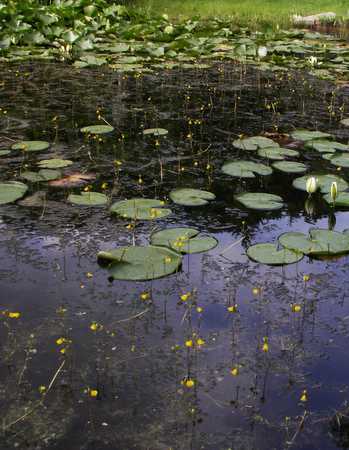
<p><br />
<img alt="Swollen Bladderwort in pond" src="http://www.emfoley.com/ecos/archives/PICT0012.JPG" width="349" height="450" border="1" /><br />
...and can be found in the lily ponds at Forest Park.  </p>
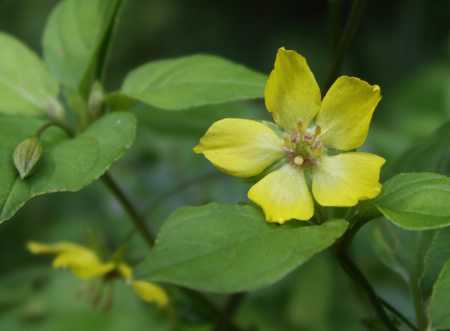
<p><img alt="Fringed Loosestrife" src="http://www.emfoley.com/ecos/archives/PICT0051-3.JPG" width="450" height="331" border="1" /><br />
Fringed Loosestrife grows in wet areas around the ponds. The flowers mostly face downward, like the one on the left. </p>
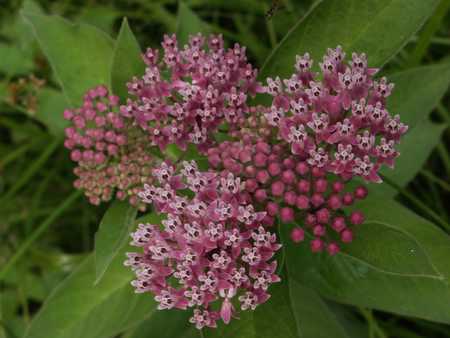
<p><img alt="swamp milkweed" src="http://www.emfoley.com/ecos/archives/PICT0027.JPG" width="450" height="338" border="1" /><br />
Swamp Milkweed in flower.  </p>

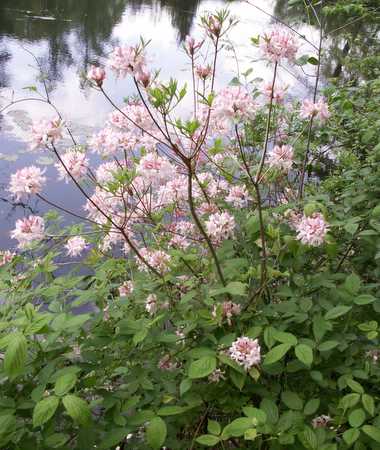
<p><img alt="Pink Azalea" src="http://www.emfoley.com/ecos/archives/PICT0058-1-1-1.JPG" width="380" height="450" border="1" /><br />
Pink Azalea is a wild cousin to the flowering shrubs you see in many yards. It blooms next to ponds and swampy areas in early spring.</p>

<p><br />
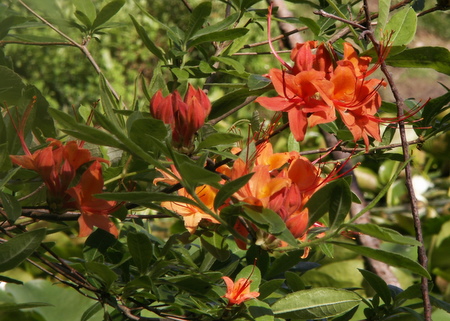
<img alt="Flame Azalea" src="http://www.emfoley.com/ecos/archives/PICT0004-1.JPG" width="450" height="321" border="1" />This Flame Azalea is uncommon to see growing as far north as Springfield, but it is listed among the flora growing in the park in an annual report written in 1903, along with the Pink Azalea.  It is most commonly found in the mid-Atlantic states, making a spectacular show of color in the Appalachian Mountains. It blooms in June, over a month later than the Pink Azalea. Like the Pink Azalea, the Flame Azalea grows by the side of a pond.  </p>
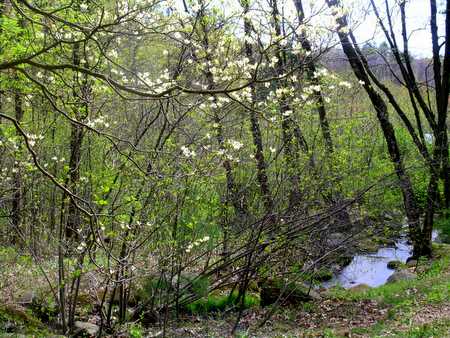
<p><img alt="dogwood tree" src="http://www.emfoley.com/ecos/archives/DSCN1986.jpg" width="450" height="338" border="1" /><br />
The Dogwood tree with its white blossoms is most often seen near ponds or streams in the wild.</p>

<p><img alt="Mystery egg sack" src="http://www.emfoley.com/ecos/archives/PICT0046-1.jpg" width="450" height="151" border="1" /><br />
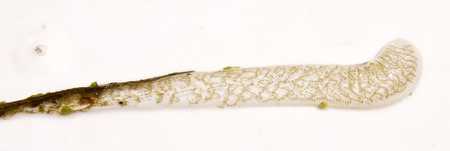
Sometimes a sharp eyed student finds a mystery in his net, like this minuscule egg sack, which hasn't been identified yet.</p>

<p><br />
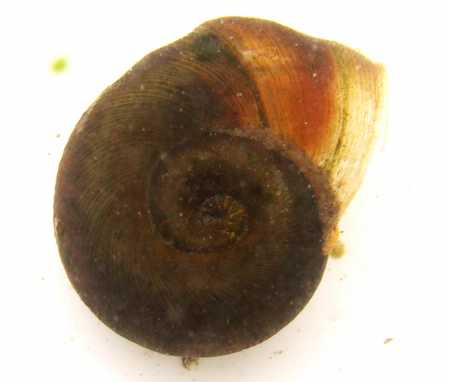
<img alt="wheel snail" src="http://www.emfoley.com/ecos/archives/PICT0035.jpg" width="450" height="382" border="1" /><br />
A Wheel Snail; a small, numerous pond organism.  </p>
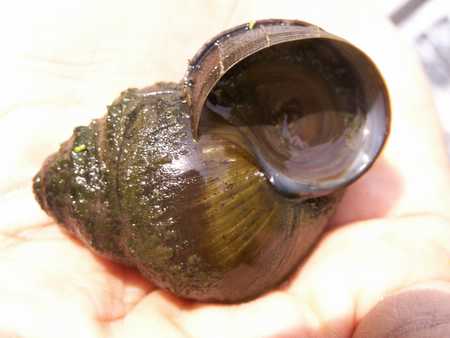
<p><img alt="winkel" src="http://www.emfoley.com/ecos/archives/PICT0047-2.jpg" width="450" height="338" border="1"/><br />
A Winkle Snail, about 2 inches long.  </p>

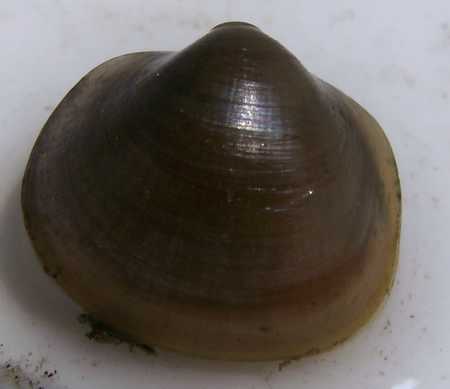
<p><img alt="papershell clam" src="http://www.emfoley.com/ecos/archives/PICT0111.jpg" width="450" height="389" border=1" /><br />
A tiny Papershell Clam.</p>

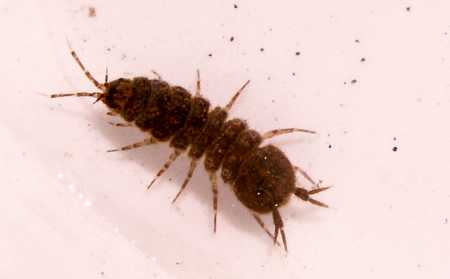
<p><img alt="isopod" src="http://www.emfoley.com/ecos/archives/PICT0039-1.jpg" width="450" height="279" border=1" /><br />
An isopod, a tiny crustacean. </p>

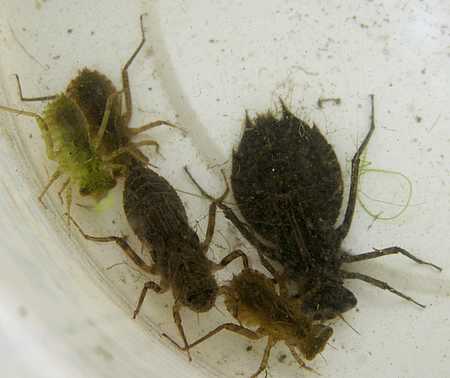
<p><img alt="dragnfly nymphs" src="http://www.emfoley.com/ecos/archives/PICT0034-1.jpg" width="450" height="378" border="1" /><br />
A variety of drangonfly nymphs, one of the most numerous insects caught in the pond.  </p>
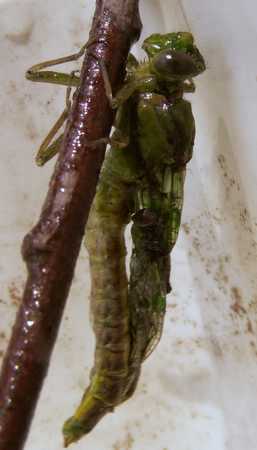
<p><img alt="dragonfly emerging" src="http://www.emfoley.com/ecos/archives/PICT0072-1.jpg" width="257" height="450" border="1"/><br />
A dragonfly in the process of metamorphosis, changing from a nymph that lives in the pond to a flying insect. </p>
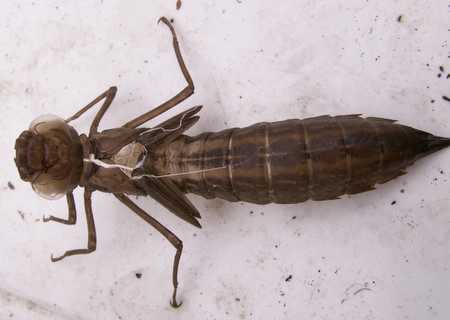
<p><img alt="Closeup of exoskelton" src="http://www.emfoley.com/ecos/archives/PICT0013.jpg" width="450" height="320" border="1"/><br />
A close-up of the exoskelton the dragonfly leaves behind. You can see it is empty by looking at the clear shell where the eyes were.</p>

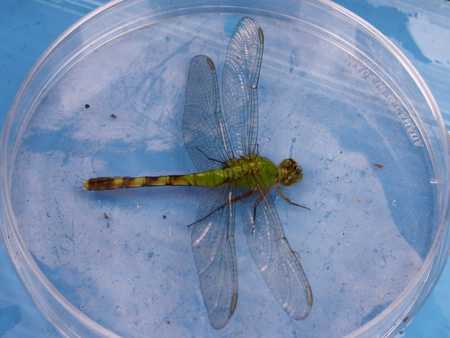
<p><img alt="dragonfly adult" src="http://www.emfoley.com/ecos/archives/PICT0029.jpg" width="450" height="338" border="1" /><br />
A dragonfly, the Eastern Pond Hawk, that has completed its metamorphosis.</p>

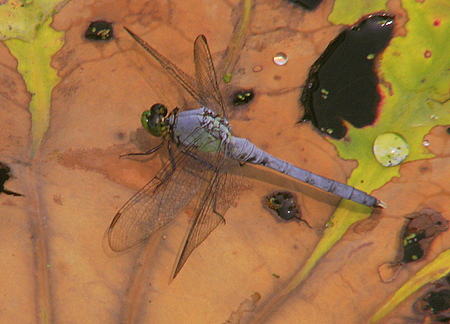
<p><img alt="Blue Dasher" src="http://www.emfoley.com/ecos/archives/PICT0073-1.JPG" width="450" height="324" border="1" /></p>

<p>Another adult dragonfly, the Blue Dasher.  Its adult habitat is also ponds. </p>
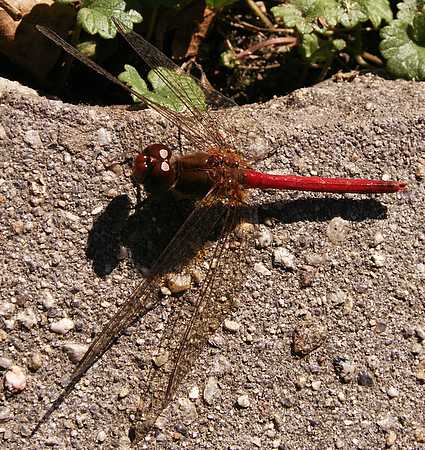
<p><img alt="yellow-legged Meawdowhawk" src="http://www.emfoley.com/ecos/archives/PICT0083-1.JPG" width="425" height="450" />The Yellow-Legged Meadowhawk is commonly found in fields or near bodies of water late in the season -- July through October. This one was found near the cabin on Porter Lake.  </p>
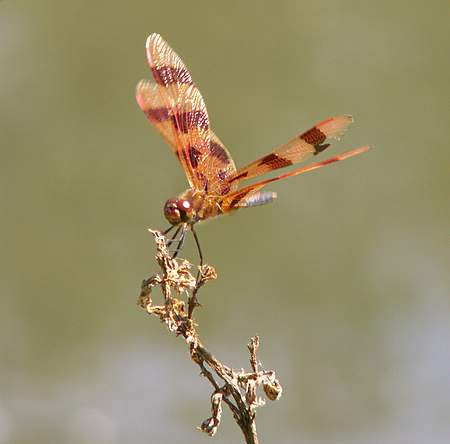
<p><img alt="Halloween Pennant dragonfly" src="http://www.emfoley.com/ecos/archives/PICT0048.JPG" width="450" height="444" /> A Halloween Pennant dragonfly, found near the Duck Pond. </p>
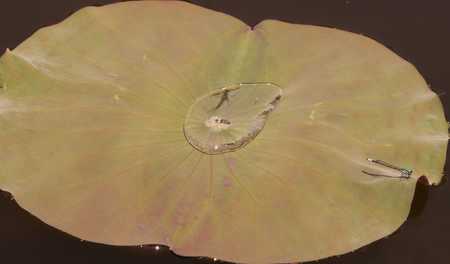
<p><img alt="Damselfy" src="http://www.emfoley.com/ecos/archives/PICT0078.jpg" width="450" height="264" border="1" /> <br />
An adult damselfly lands on a lily leaf where a damselfy nymph is caught in a pool of water. </p>
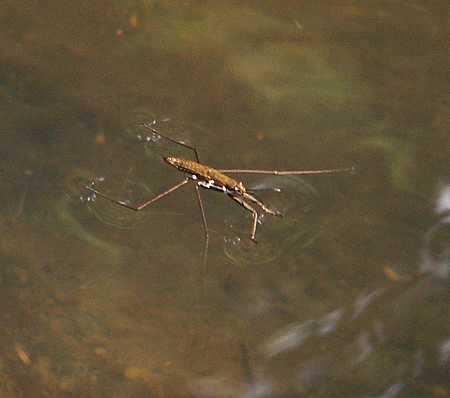
<p><img alt="Common water strider" src="http://www.emfoley.com/ecos/archives/PICT0042-2.JPG" width="450" height="398" border="1" /><br />
The Common Water Strider moves along the top of the water, hunting for insects that have risen to the surface or have fallen onto it.</p>

<p><br />
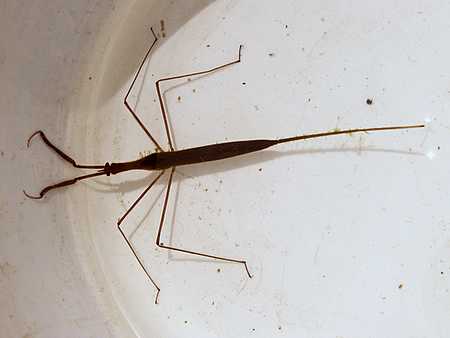
<img alt="water scorpion" src="http://www.emfoley.com/ecos/archives/PICT0024-3-1.jpg" width="450" height="338" border="1" /><br />
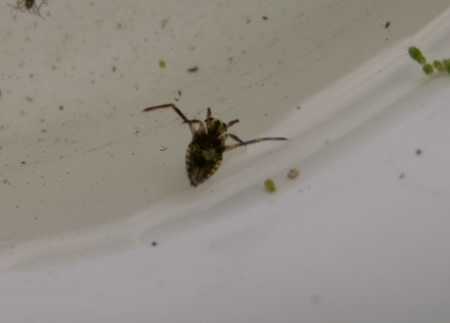
A Water Scorpion. This pond insect breaths through the two tubes that look like a tail. </p>
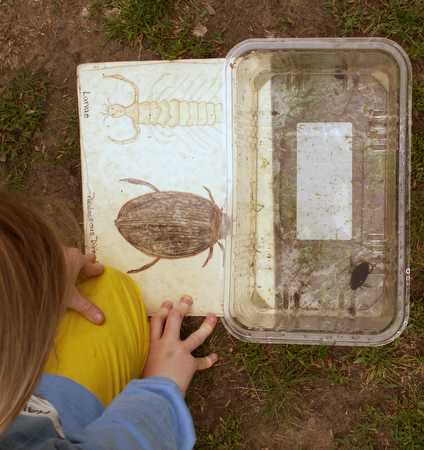
<p><img alt="Student examining diving beetle" src="http://www.emfoley.com/ecos/archives/PICT0035-1.jpg" width="424" height="450" border="1" /><br />
A student studies the Diving Beetle.</p>

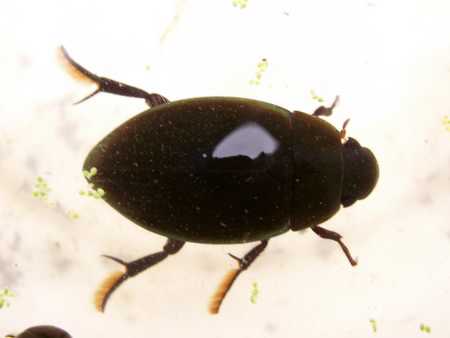
<p><img alt="Diving beetle" src="http://www.emfoley.com/ecos/archives/PICT0042.jpg" width="450" height="338" border="1" /><br />
A closeup of the Diving Beetle.</p>

<p><img alt="backswimmer" src="http://www.emfoley.com/ecos/archives/PICT0086.jpg" width="450" height="323" border="1" /><br />
A Backswimmer, named for the way it uses its legs to swim.</p>

<p><img alt="leech" src="http://www.emfoley.com/ecos/archives/PICT0057-1-1.jpg" width="236" height="450" border="1" /><br />
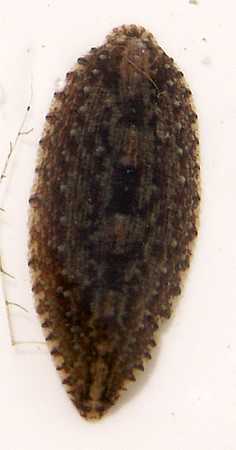
A Freshwater Leech, a member of the aquatic worm family.</p>

<p><img alt="little fish" src="http://www.emfoley.com/ecos/archives/PICT0032-2.jpg" width="450" height="338" border="1"/><br />
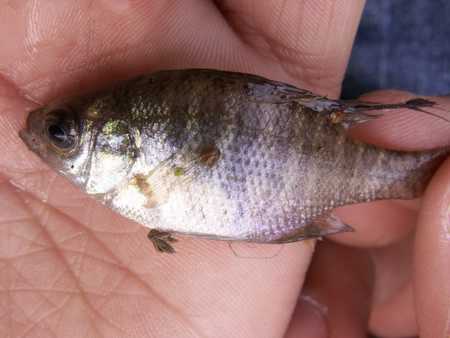
A young Pumpkinseed fish. </p>

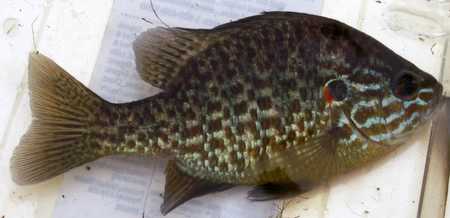
<p><img alt="Pumpkinseed fish" src="http://www.emfoley.com/ecos/archives/PICT0037-1.jpg" width="450" height="218" border="1" /><br />
An adult Pumpkinseed, about 5 inches long.</p>

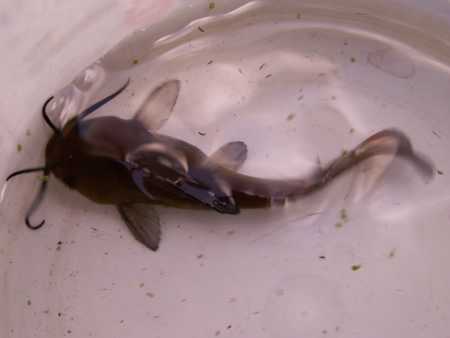
<p><img alt="Catfish" src="http://www.emfoley.com/ecos/archives/PICT0012-3.JPG" width="450" height="338" border="1" /><br />
A small Catfish.  </p>

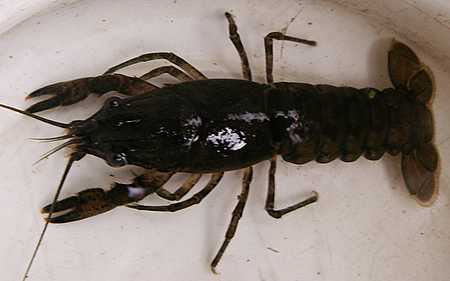
<p><img alt="Eastern Crayfish" src="http://www.emfoley.com/ecos/archives/PICT0010.JPG" width="450" height="281" border="1" />The Eastern Crayfish, about 4 inches long,  resembles a small lobster with thinner claws. It lives in ponds and small streams, eating plants and small animals.  </p>
<p><img alt="tadpoles in pond" src="http://www.emfoley.com/ecos/archives/PICT0009.jpg" width="450" height="206" border="1" /><br />
Tadpoles at the edge of the pond waiting to be netted.</p>

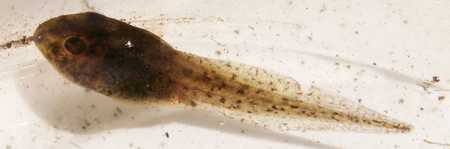
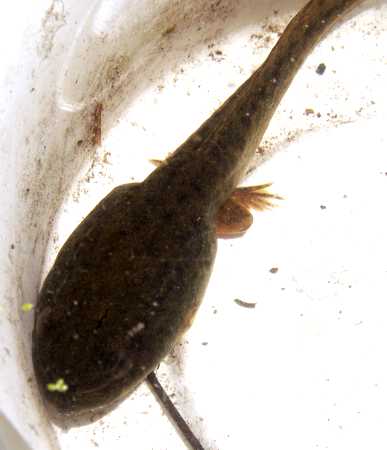
<p><img alt="tadpole" src="http://www.emfoley.com/ecos/archives/PICT0089.jpg" width="450" height="149" border="1" /><br />
A young tadpole.</p>

<p><img alt="tadpole with legs" src="http://www.emfoley.com/ecos/archives/PICT0038-1.jpg" width="387" height="450" border="1" /><br />
A tadpole in the first stage of metamorphosis, growing hindlegs.<br />
 <br />
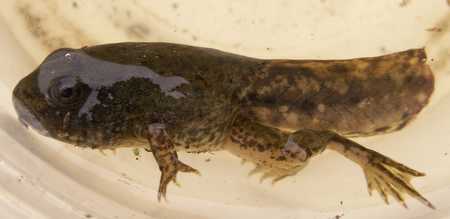
<img alt="tadpole with front and back legs" src="http://www.emfoley.com/ecos/archives/PICT0046-3.jpg" width="450" height="219" border="1" /><br />
A tadpole continues its metamorphosis.</p>

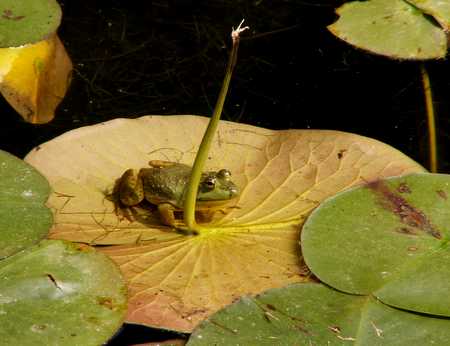
<p><img alt="full grown frog" src="http://www.emfoley.com/ecos/archives/PICT0020-3.jpg" width="450" height="346" border="1" /><br />
A Bullfrog in its adult form sits on an upturned lily leaf. </p>
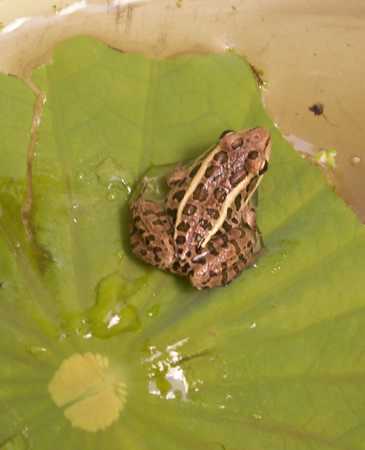
<p><br />
<img alt="pickerel frog" src="http://www.emfoley.com/ecos/archives/PICT0017.JPG" width="365" height="450" border="1" /><br />
A Pickerel Frog.</p>

<p><br />
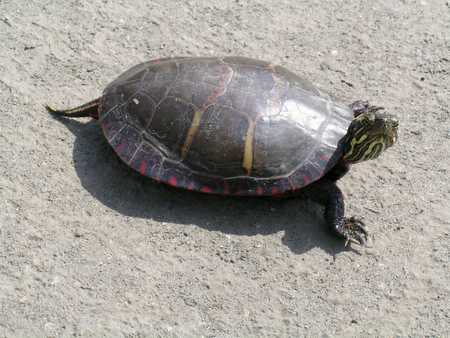
<img alt="Painted turtle" src="http://www.emfoley.com/ecos/archives/DSCN1853.jpg" width="450" height="338" border="1" /><br />
The Painted Turtle is an omnivore. You can often see them warming themselves on rocks or logs in the ponds and lakes.</p>

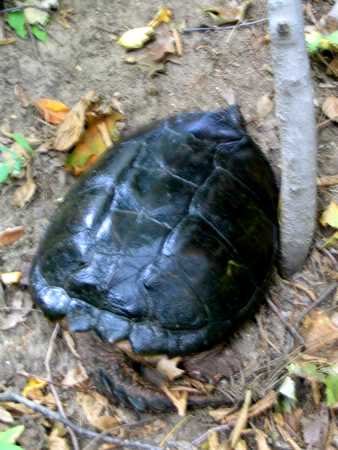
<p><img alt="Snapping turtle" src="http://www.emfoley.com/ecos/archives/IMG_1651.jpg" width="338" height="450" border="1" /><br />
Snapping Turtles, like this specimen found climbing up a hill alongside Lake Porter, is at the top of the pond food chain: the snapper eats other organisms in its habitat, but it has no predators. </p>
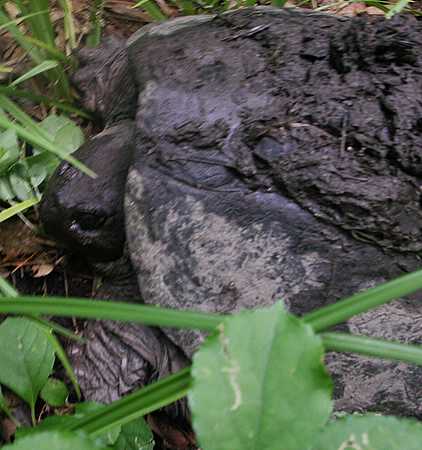
<p><img alt="Close-up of snapping turtle" src="http://www.emfoley.com/ecos/archives/PICT0066-3.JPG" width="422" height="450" border="1" /><br />
A close-up of the Snapping Turtle's head. This was found covered with mud, close to a trail near the skating pond. It was about a foot and a half long. </p>
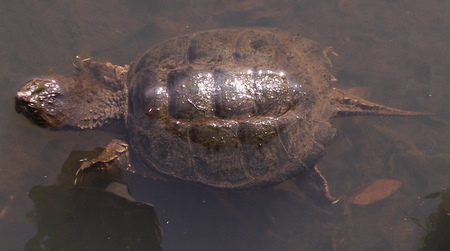
<p><img alt="Snapping Turtle Basking" src="http://www.emfoley.com/ecos/archives/PICT0018-1.JPG" width="450" height="251"  border="1"/> <br />
This Snapping Turtle, about 16 inches long, floats near the edge of one of the lilly ponds in late March. Snapping Turtles bury themselves in the bottom of ponds to keep warm in Winter. Like all cold blooded animals, it depends on external energy sources (such as the sun) to maintain its body temperature. This one must have just risen from the mud to warm itself -- it appeared "frozen," not attempting to swim away or move at all despite attracting many onlookers in the park, some of whom got very close to take pictures.     </p>
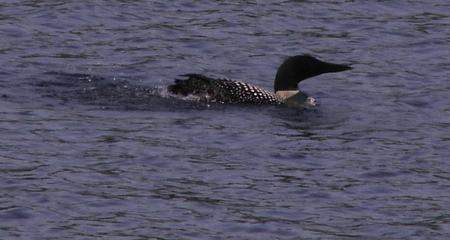
<p><img alt="Common Loon" src="http://www.emfoley.com/ecos/archives/PICT0118-1.JPG" width="450" height="240" border="1"/>The Common Loon has a distinct tremulous wail that can be heard clearly at night. In its habitat of freshwater lakes it dives for fish and eats them while still submerged.  </p>
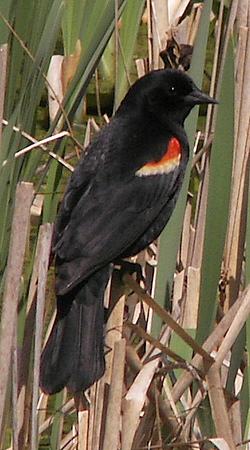
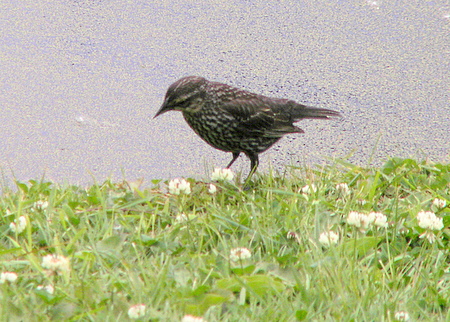
<p><img alt="redwing blackbird male" src="http://www.emfoley.com/ecos/archives/PICT0026-1.JPG" width="250" height="450" border="1" /></p>

<p><img alt="redwing blackbird female" src="http://www.emfoley.com/ecos/archives/PICT0014.JPG" width="450" height="322" />The Red-Winged Blackbird male, at top, and female are commonly found nesting near ponds and swamps.  The red spot and yellow fringe on the wings of the male tend to fade in late summer and fall.  The female is colored to blend into her nesting area.   </p>
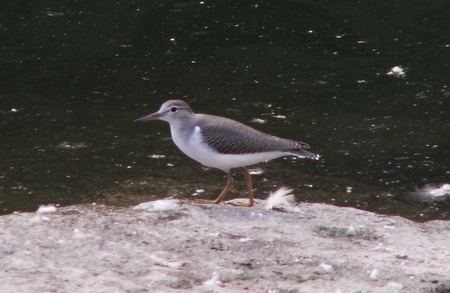
<p><img alt="Spotted Sandpiper" src="http://www.emfoley.com/ecos/archives/PICT0092-1.JPG" width="450" height="293" border="1"/>The Spotted Sandpiper's habitat is ponds and streams.</p>

<p><br />
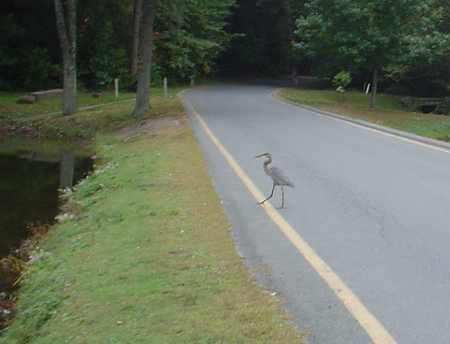
<img alt="Heron" src="http://www.emfoley.com/ecos/archives/DSC00958.jpg" width="450" height="344" border="1" /><br />
A Great Blue Heron crosses from one pond to another looking for a meal. Frogs and tapdpoles are among its favorite foods. It, too, is at the top of the food chain in the pond. </p>
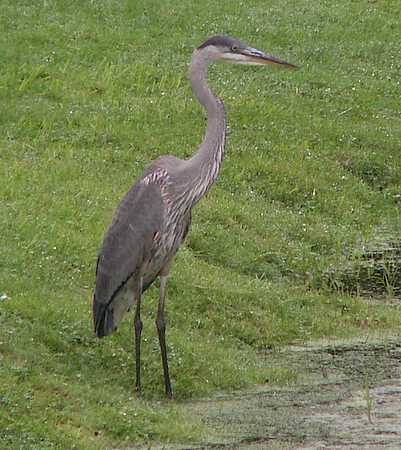
<p><img alt="heron close up" src="http://www.emfoley.com/ecos/archives/PICT0028-2.JPG" width="401" height="450" border="1" /><br />
A close-up of the Great Blue Heron.  </p>

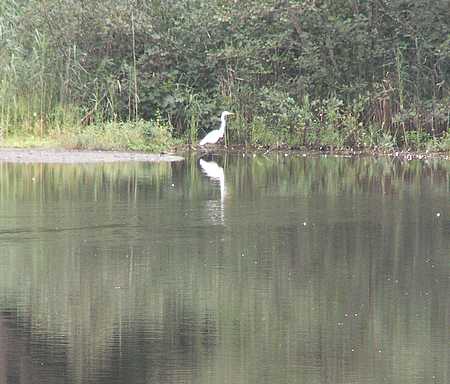
<p><img alt="great egret" src="http://www.emfoley.com/ecos/archives/PICT0007-3.JPG" width="450" height="384" border="1" /><br />
A rare visitor to the park, a Great Egret stops by Porter Lake.  Marshes are its habitat.</p>

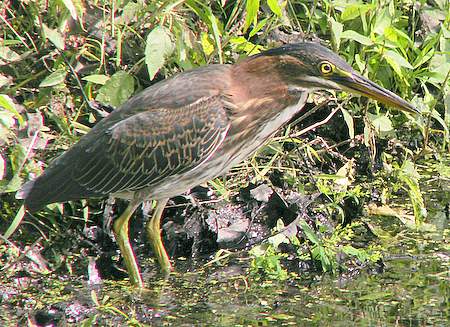
<p><img alt="green heron" src="http://www.emfoley.com/ecos/archives/PICT0124.JPG" width="450" height="327" border="1"/> This Green Heron came to feed at the edge of a lilly pond while an ECOS class was collecting specimens. It is much smaller than the Great Blue Heron -- about the size of a crow. The Green Heron eats mostly small fish, but it also eats crustaceans, mollusks, insects, reptiles, amphibians, spiders and leeches, standing very still on shore or in shallow water to await prey. They sometimes drop food, insects, or other small objects on the water's surface to attract fish, making them one of the few known tool-using species.</p>

<p><img alt="Muskrat" src="http://www.emfoley.com/ecos/archives/PICT0034-4.JPG" width="450" height="429" border="1" /><br />
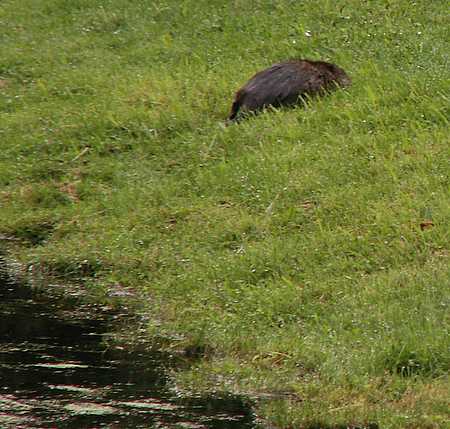
A Muskrat forages in the grass near a lily pond. It mainly eats water plants. </p>
<p><br />
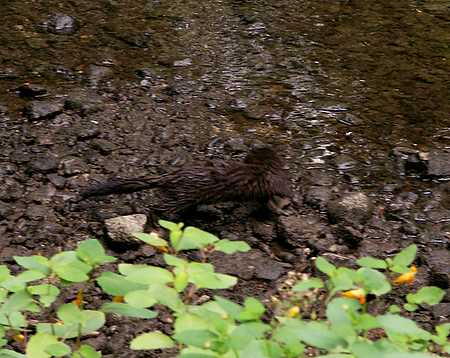
<img alt="Mink" src="http://www.emfoley.com/ecos/archives/PICT0112.JPG" width="450" height="358" border="1" /><br />
This Mink, which was spotted near the covered bridge in Forest Park, eats a wide variety of animals, including rodents, muskrats, fish, birds and frogs. Minks are members of the weasel family.   </p>
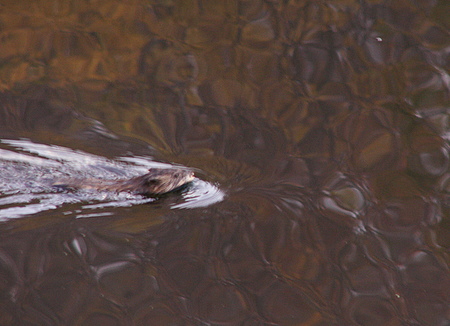
<p><img alt="Beaver" src="http://www.emfoley.com/ecos/archives/PICT0175.JPG" width="450" height="326" border="1" /> Beavers,   North America's largest rodent, live in lodges built from layers of branches, mud and reeds and reached by tunnels under water.  They eat the bark and leaves of broadleaf trees, and stash branches near their lodges for winter use.  Beavers also create ponds by damming  small streams. They are active mainly at dusk and night, year-round.  </p>
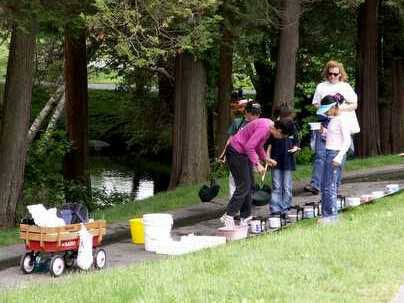
<p><img alt="viewing station" src="http://www.emfoley.com/ecos/archives/PICT0089-1-1-1.jpg" width="404" height="303" border="1" /><br />
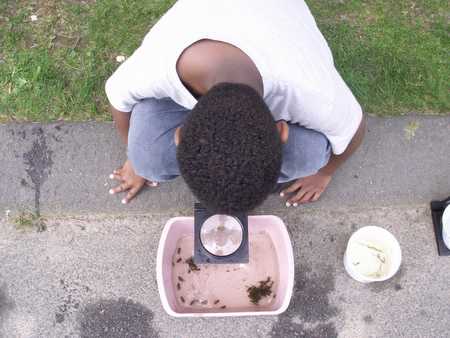
ECOS teacher Ms. Martinez orgnanizes a viewing station for the students to see what their class caught.</p>

<p><br />
<img alt="Closer look" src="http://www.emfoley.com/ecos/archives/PICT0046-2.jpg" width="450" height="338" border="1" /><br />
A student uses a magnifier to look at one of the organisms on display.</p>

<p><img alt="counting up" src="http://www.emfoley.com/ecos/archives/PICT0095.jpg" width="450" height="372" border="1" /><br />
Taking a census of tadpoles, frogs, plants and everything else captured in the morning is part of every class at the pond. After a count is made, the students return the specimens to the pond.</p>

<p><img alt="Going home" src="http://www.emfoley.com/ecos/archives/PICT0059.jpg" width="450" height="321" border="1" /><br />
Time to pack up the tools and head to the cabin for lunch.</p>

<p><img alt="After lunch" src="http://www.emfoley.com/ecos/archives/PICT0016.jpg" width="338" height="450" border="1" /><br />
ECOS teacher Mr. Freedman puts the pond experience in perspective, illustrating how producers -- plants such as Elodea and Duckweed -- provide sustenance at the bottom of the food chain, and where the other organisms fit in. </p>
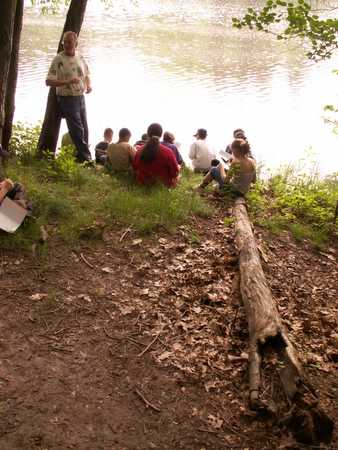
<p><img alt="Quiet sit" src="http://www.emfoley.com/ecos/archives/PICT0022-1-1.jpg" width="338" height="450" border="1" /><br />
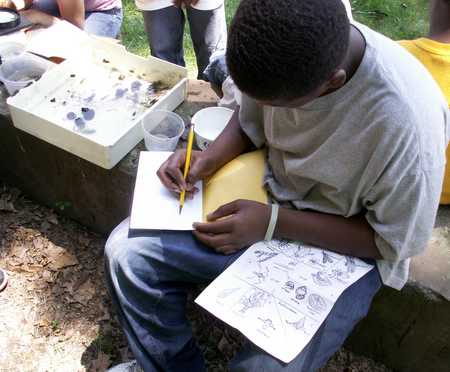
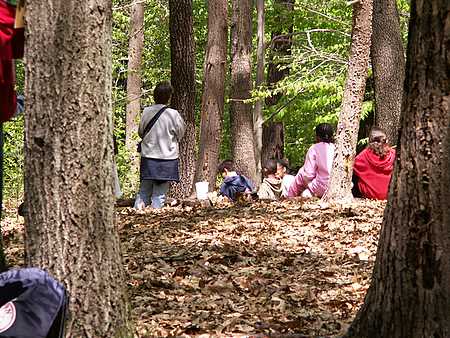
After lunch activities include a "quiet sit," where the students find a place near the lake to be still, write down what they hear, and draw something around them, aiming to capture in their notebooks the elements of the habitat surrounding them. </p>
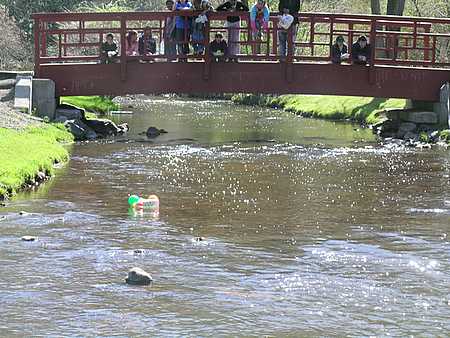
<p><img alt="floating rafts" src="http://www.emfoley.com/ecos/archives/DSCN1923.JPG" width="450" height="338" border="1" /><br />
Fifth grade students use rafts to determine how fast the Pecousic River is flowing.  They drop the rafts from the bridge and time how long it takes them to move 100 feet.</p>

<p><img alt="Rafts" src="http://www.emfoley.com/ecos/archives/DSCN1925.JPG" width="450" height="393" border="1" /><br />
Some of the rafts that passed the flotation test.  </p>
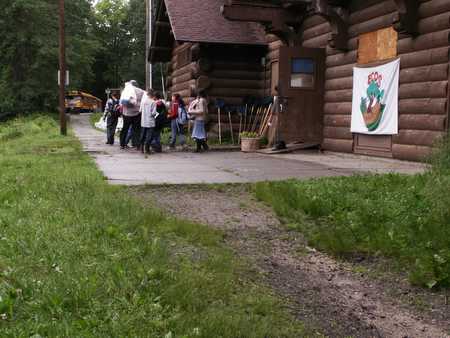
<p><br />
<img alt="On the bus" src="http://www.emfoley.com/ecos/archives/PICT0031.jpg" width="450" height="338" border="1" /><br />
When their afternoon activities are done, the 4th graders leave behind their drying nets at the cabin and head for the buses that will take them back to their school in time for dismissal.   </p>]]>
</content>
</entry>

<entry>
<title>Forests</title>
<link rel="alternate" type="text/html" href="http://www.emfoley.com/ecos/archives/2011/02/forests.html" />
<modified>2011-03-10T18:16:53Z</modified>
<issued>2011-02-13T06:35:31Z</issued>
<id>tag:www.emfoley.com,2011:/ecos/4.264</id>
<created>2011-02-13T06:35:31Z</created>
<summary type="text/plain">This Northern Screech Owl was found perching on a tree limb after dusk near the edge of Forest Park. They usually grow to no more than 8-10 inches, but like all owls, it is an able hunter. It sometimes eats...</summary>
<author>
<name>mpdoran</name>
<url>http//www.emfoley.com/ecos/</url>
<email>mpdoran@emfoley.com</email>
</author>
<dc:subject>Fall to Spring at ECOS</dc:subject>
<content type="text/html" mode="escaped" xml:lang="en" xml:base="http://www.emfoley.com/ecos/">
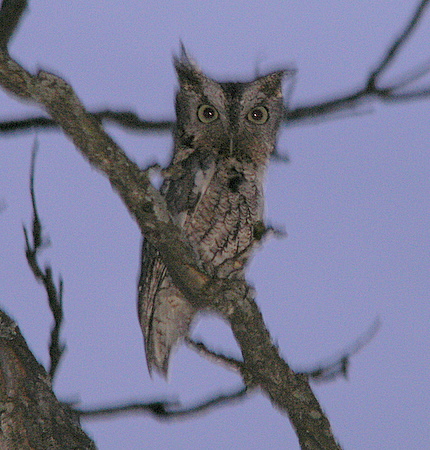
<![CDATA[<p><img alt="Northern Screech Owl" src="http://www.emfoley.com/ecos/archives/PICT0003-1.JPG" width="430" height="450" border="1" />This Northern Screech Owl was found perching on a tree limb after dusk near the edge of Forest Park. They usually grow to no more than 8-10 inches, but like all owls, it is an able hunter. It sometimes eats other birds such as starlings, but its diet is widely varied, from chipmunks to flying insects to salamanders. </p>
<p>Fourth and fifth graders go into the forest to explore. They get down on the forest floor, turn over logs, collect specimens -- it's hands-on discovery.  They learn that there's little to fear from the animals, plants and insects they encounter, and that mushrooms and molds might not be beautiful, but they play an indispensable part in the cycles of life in the forest. </p>

<p>A tour of the woods at Forest Park reveals a great diversity in plant and animal makeup. Slope and orientation to the sun, elevation, maturity, destructive pests, soil content, proximity to bodies of water, plus the effects of the surrounding communities and use of the woods by the people who visit the park are some of the factors that affect these habitats. </p>]]>
<![CDATA[<p>In the fourth grade and continuing through fifth grade, how these conditions create different wooded habitats and support diverse organisms, the basic concepts of growth and decomposition, the production of food through photosynthesis and the chain of consumers, as well as the interconnections with other habitats are learned through direct experiences. </p>

<p>By getting their hands dirty, the 4th and 5th grade students learn about the interrelationships of organic and inorganic elements in different environments, and about how decomposers, producers and consumers keep the park's habitats in healthy balance.    </p>

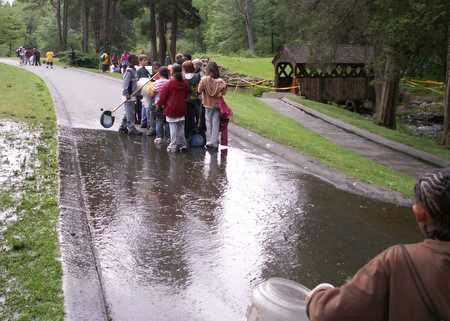
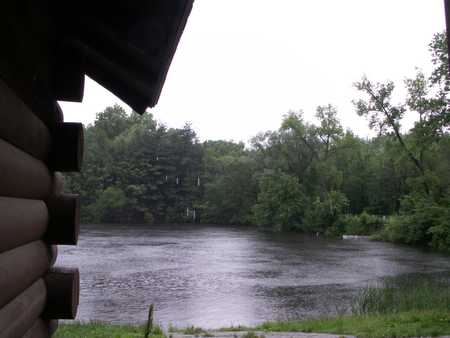
<p><img alt="Rainy May morning at cabin" src="http://www.emfoley.com/ecos/archives/PICT0012-1.jpg" width="450" height="338" border="1"/><br />
This day in May starts with rain at ECOS.  </p>

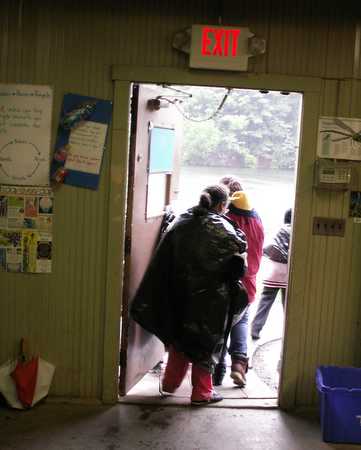
<p><img alt="Out the door" src="http://www.emfoley.com/ecos/archives/PICT0022-2.jpg" width="361" height="450" border="1" /><br />
Rain or shine, students at ECOS leave the cabin to experience Forest Park.</p>

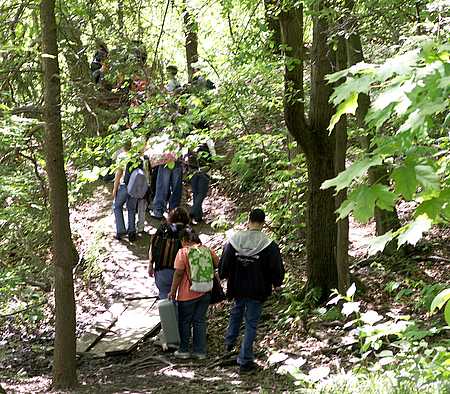
<p><img alt="Forest climb" src="http://www.emfoley.com/ecos/archives/PICT0004-1-3.jpg" width="450" height="394" border="1" /><br />
The class begins climbing into the forest.  </p>

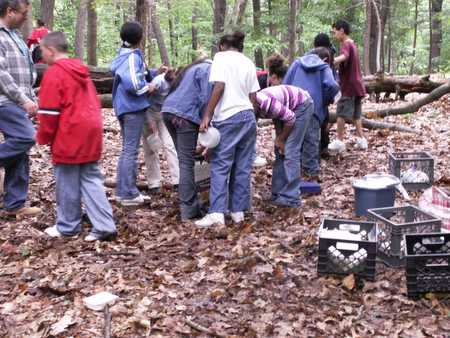
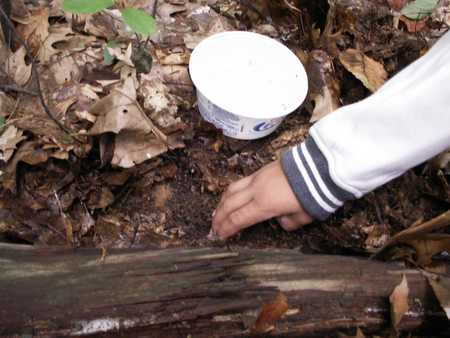
<p><img alt="Ready to collect specimens" src="http://www.emfoley.com/ecos/archives/PICT0045.jpg" width="450" height="338" border="1" /><br />
Once in the area they will study, the students take containers to collect organisms in the forest environment, with a focus on consumers and decomposers. Decomposers work constantly to turn dead leaves, trees and other organic matter into soil to replace what is lost to erosion and depleted by the living plants that rely on the soilï¿½s nutrients.    </p>

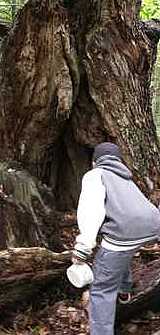
<p><img alt="Boy exploring in tree trunk" src="http://www.emfoley.com/ecos/archives/PICT0027-3-2.jpg" width="160" height="335" border="1"/><br />
Inside a rotting tree trunk there are many decomposers at work.</p>

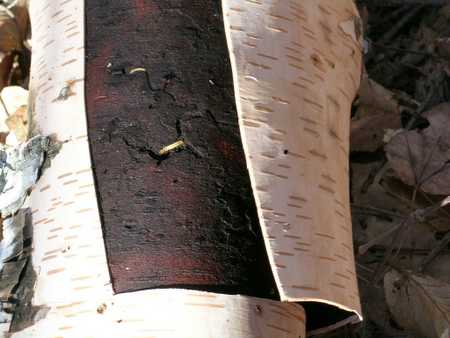
<p><img alt="termites" src="http://www.emfoley.com/ecos/archives/DSCN1421.jpg" width="450" height="338" border="1" /><br />
Termites, beetles and insect larvae are some of the favorite foods of all species of woodpecker in the park. Removing the bark from this dead White Birch branch shows what woodpeckers listen for as they move up and down a tree. </p>

<p><img alt="pileated woodpecker"  src="http://www.emfoley.com/ecos/archives/DSCN1872-1.jpg" width="378" height="450" border="1" /> <br />
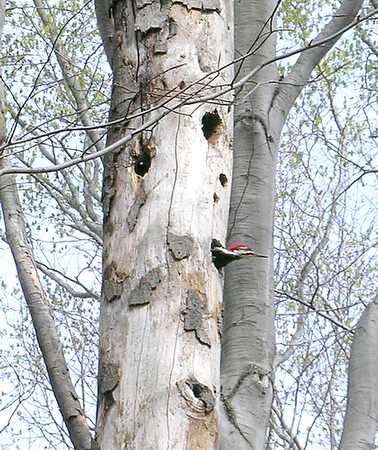
The Pileated Woodpecker is the largest woodpecker in Forest Park.  It is also the loudest -- the hammering sound it makes can often be heard ringing through the woods. Here it is building a nest in dead pine tree.  </p>

<p><img alt="hairy woodpecker" src="http://www.emfoley.com/ecos/archives/DSCN1984.jpg" width="320" height="445" border="1" /><br />
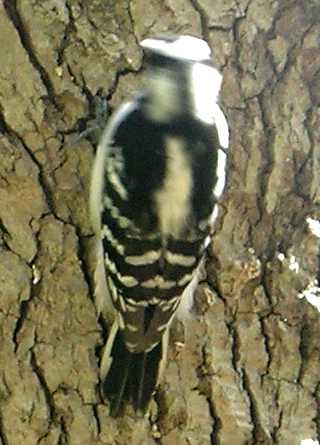
A Hairy Woodpecker searches for food. </p>

<p><img alt="Northern Flicker" src="http://www.emfoley.com/ecos/archives/PICT0005.JPG" width="450" height="434" border="1"/><br />
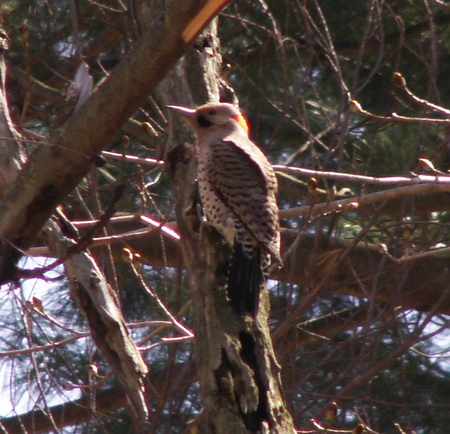
The Northern Flicker is a member of the woodpecker family, though it often feeds on insects on the forest floor.  This is a male -- females lack the black "mustache." The flicker is migratory, flying south of New England in the coldest winter months, between November and March.  </p>

<p><img alt="mite and spider" src="http://www.emfoley.com/ecos/archives/PICT0062.jpg" width="450" height="304" border="1" /><br />
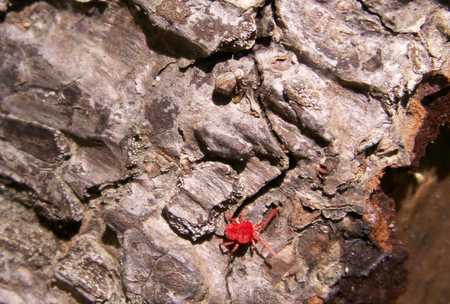
A close look at the trees and the floor of the forest will reveal many extremely small creatures.  This red mite and a camouflaged spider, greatly enlarged in this photo, are good examples.  </p>

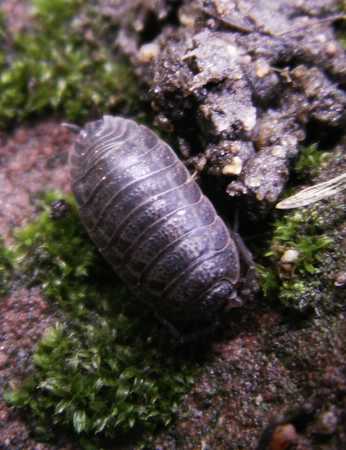
<p><img alt="Sow bug" src="http://www.emfoley.com/ecos/archives/PICT0188.JPG" width="346" height="450" border="1" /><br />
Sow Bugs, about 1/2 inch long, are found under rocks, logs and stones and in other damp, dark places. The Sow Bug is not an insect or arachnid, but a crustacean adapted to living solely on land. It eats decaying plant matter.  </p>

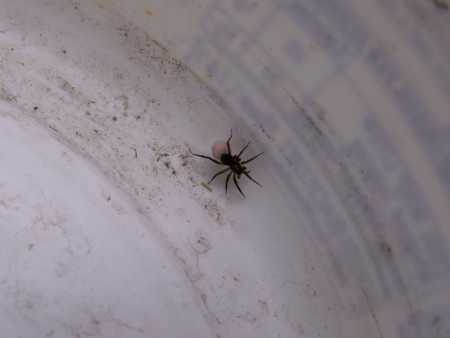
<p><img alt="Spider with egg sack" src="http://www.emfoley.com/ecos/archives/PICT0129.jpg" width="450" height="338" border="1" /><br />
Wolf spiders roam all the habitats of forest park save the water. This one is carrying an egg sack. </p>

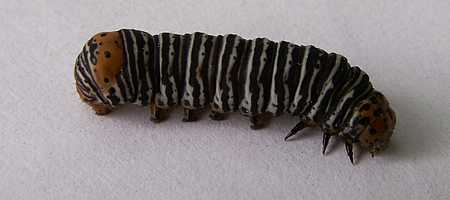
<p><img alt="Caterpillar" src="http://www.emfoley.com/ecos/archives/PICT0058-3-2.jpg" width="450" height="200" border="1" /><br />
Some caterpillars feed on the leaves of the particular tree a butterfly or moth laid its eggs on, or may move around. They are often food for birds and small carnivores. This specimen displays confusing coloring -- it appears to have a head at both ends.   </p>

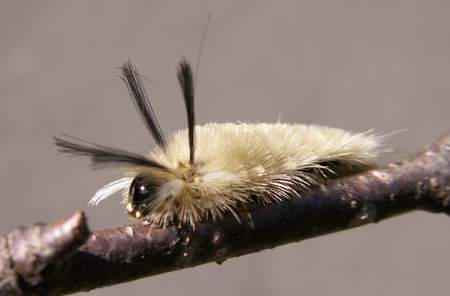
<p><img alt="oddcaterpillar.JPG" src="http://www.emfoley.com/ecos/archives/PICT0073.JPG" width="450" height="296" border="1" /></p>

<p>This caterpillar was found by a student at the edge of the woods near a lilly pond.</p>

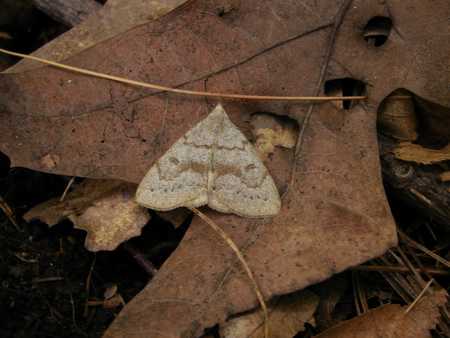
<p><img alt="moth" src="http://www.emfoley.com/ecos/archives/PICT0045-1.jpg" width="450" height="338" border="1" /><br />
Many moths live exclusively within the forest. Coloring often matches  their environment.  </p>

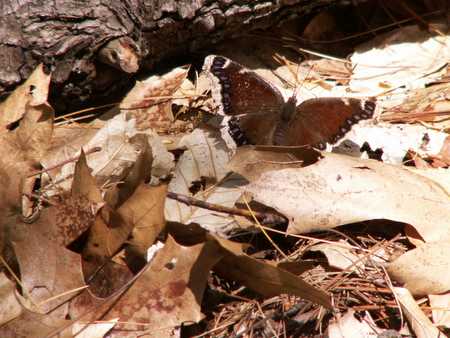
<p><img alt="Morning cloak butterfly" src="http://www.emfoley.com/ecos/archives/PICT0068-2.jpg" width="450" height="338" border="1" /><br />
Many butterflies that inhabit the forest are also colored to fit into their environment in order to escape predation by birds and other insect eaters. This butterfly is called a Mourning Cloak.  Its preferred food is tree sap, especially that of the oak tree.</p>

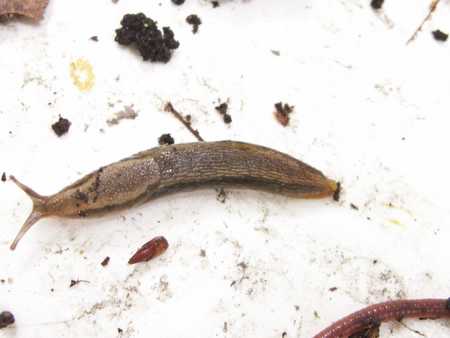
<p><img alt="Slug" src="http://www.emfoley.com/ecos/archives/PICT0032-4.jpg" width="450" height="338" border="1" /><br />
Slugs like this one leave silvery trails behind on the leaves they travel over in search of food.  </p>

<p><img alt="Under a log" src="http://www.emfoley.com/ecos/archives/PICT0024.jpg" width="450" height="338" border="1" /><br />
Finding organisms that decompose matter on the floor of the forest often requires turning over logs under which they live or hide during the daylight hours.</p>

<p><img alt="red backed salamanders and earthworms" src="http://www.emfoley.com/ecos/archives/DSCN1907.jpg" width="450" height="338" border="1" /><br />
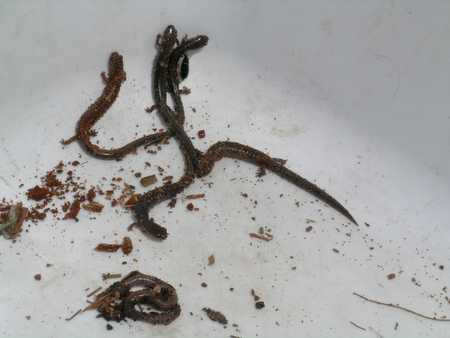
The Eastern Red-Backed Salamander lives under logs in the forest during the day, and differ from the Dusky Salamander by having three toes, instead of four. Some Earthworms, often found alongside the salamanders under logs, are in the foreground.</p>

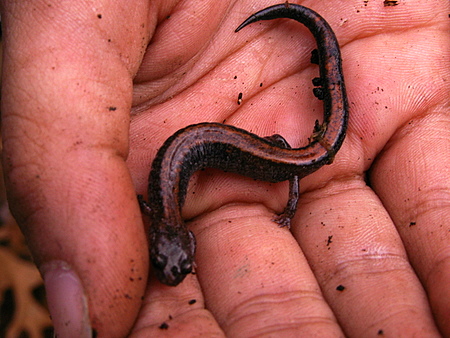
<p><img alt="Eastern red-backed salamander" src="http://www.emfoley.com/ecos/archives/PICT0111-3.JPG" width="450" height="338" border="1" /> Close-up of the Eastern Red-Backed Salamander.</p>
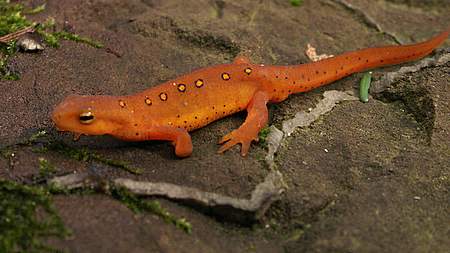
<p><img alt="Red Spotted Newt" src="http://www.emfoley.com/ecos/archives/PICT0036.JPG" width="450" height="253" border="1" /><br />
The Red Spotted Newt, a common salamander in North America, is not found in Forest Park, but lives nearby.  This one was found on a hike up Mount Tom,  roaming around the forest floor in daylight (unlike the nocturnal Eastern Red-Backed Salamander).  Eastern newts have three stages of life: the aquatic larva or tadpole stage; the red eft or terrestrial juvenile stage; and the aquatic adult. The larva possesses gills and does not leave the pond environment where it was hatched. Larvae are brown-green in color, and shed their gills when they transform into the terrestrial red eft, seen above.  During this stage, the eft may travel far, from one pond to another. After two or three years, the eft finds a pond and transform into the aquatic adult. Eastern newts live in the forest;  they need a moist environment with either a temporary or permanent body of water. Eastern newts have some of toxins in their skin, and their coloring may serve as a warning to predators. It eats a variety of foods such as insects, small mollusks and crustaceans, young amphibians and frog eggs. </p>

<p><img alt="toad" src="http://www.emfoley.com/ecos/archives/PICT0187-1.jpg" width="450" height="338" border="1" /><br />
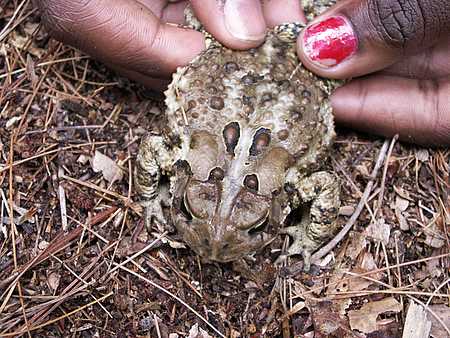
Holding it the proper way -- by its hind legs -- students display a large toad. The life cycle of the toad includes all three major habitats; the pond, where it is born; and the field and forest, where it roams in search of food. </p>

<p><img alt="petting toad" src="http://www.emfoley.com/ecos/archives/PICT0126.jpg" width="239" height="450" border="1" /><br />
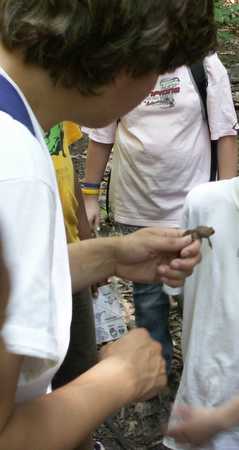
Ms. Orellena holds a toad out for the students to feel its dry, bumpy skin.  </p>

<p><img alt="woodfrog" src="http://www.emfoley.com/ecos/archives/DSCN1779-1.jpg" width="450" height="338" border="1" /><br />
Wood Frogs live in the leaves on the forest floor. They range from light red to dark brown. </p>

<p><br />
<img alt="Vernal pond" src="http://www.emfoley.com/ecos/archives/PICT0049.jpg" width="450" height="262" border="1" /><br />
Wood Frogs breed in vernal ponds, which are bodies of water formed by snowmelt and spring rains, often drying up by midsummer. <br />
Most animals that live in vernal ponds stay when the water dries up, burying deep into the soil until the water returns.  Their reproduction and development has to be fast or else they wouldn't survive in the vernal pond habitat.</p>

<p><img alt="vernal pond dried up" src="http://www.emfoley.com/ecos/archives/PICT0042-3.JPG" width="338" height="450" border="1" /><br />
The vernal pond, which dried up in August.</p>

<p><img alt="Frog in vernal pond" src="http://www.emfoley.com/ecos/archives/DSCN2023-1.jpg" width="450" height="406" border="1" /><br />
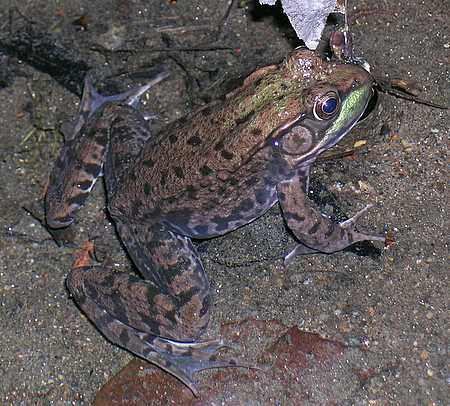
Frogs, like this Green Frog, are often found in vernal ponds. </p>

<p><br />
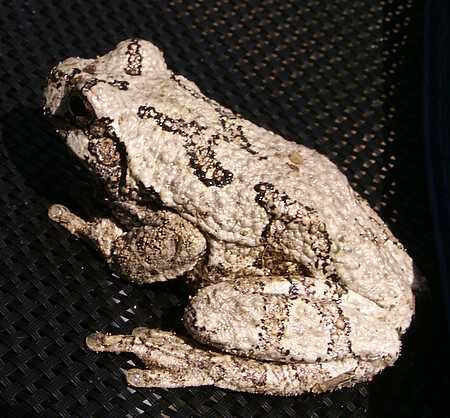
<img alt="grey tree frog" src="http://www.emfoley.com/ecos/archives/PICT0044-1-1.jpg" width="450" height="418" border="1" /><br />
The Grey Tree Frog, which is rarely seen during the day, has suction pads on its toes. It can change its color from grey to green or brown to match its surroundings. It makes a fluttery, musical trilling sound at night. </p>

<p>  <br />
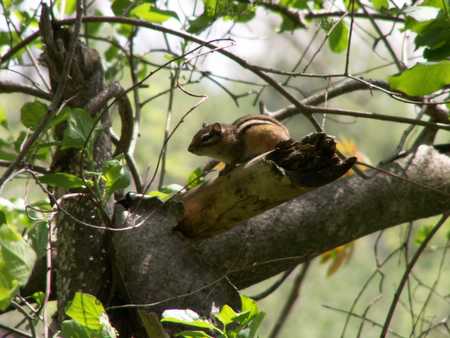
<img alt="chipmunk.jpg" src="http://www.emfoley.com/ecos/archives/PICT0083.jpg" width="450" height="338" border="1" /><br />
The Chipmunk lives in the forest or around its edges in underground burrows.</p>

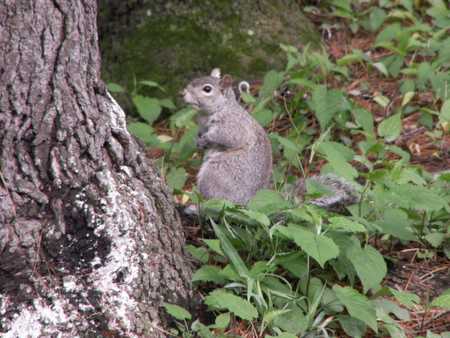
<p><img alt="Squirrel-1.jpg" src="http://www.emfoley.com/ecos/archives/PICT0028-1.jpg" width="450" height="338" border="1" /><br />
The Chipmunk's rodent cousin the Grey Squirrel is a great distributor of seeds, burying them in the ground during fall to store food for winter and early spring.  In the warm months the squirrel lives in tree nests. During the colder months it lives in more protected areas, such as the hollow of a log.</p>

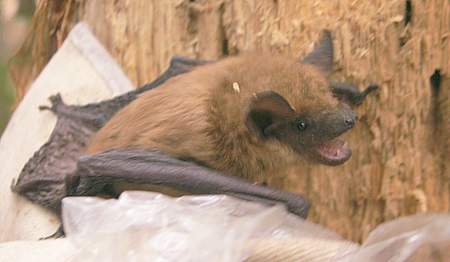
<p><img alt="little brown bat.JPG" src="http://www.emfoley.com/ecos/archives/PICT00301.JPG" width="450" height="262" border="1" /><br />
The Little Brown Bat, like this one that was found inside the ECOS cabin, feeds on insects such as moths, beetles, mosquitoes, and flies. A single Little Brown Bat can catch 600 mosquitoes in just one hour. Bats rest in roosts - often trees, or in crevices where they form tight clusters. During the summer months, the bats consume about half their weight in insects each night. The bat is the only mammal that can truly fly (like a bird).</p>

<p>	</p>

<p><br />
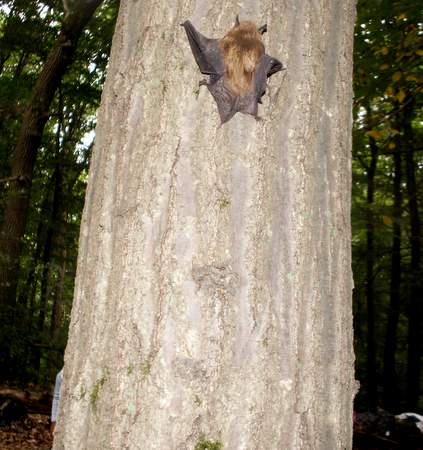
<img alt="bat escaping.JPG" src="http://www.emfoley.com/ecos/archives/PICT0038.JPG" width="423" height="450" border="1" /></p>

<p>During a trip to the woods with his class, Mr. Freedman, who found the Little Brown Bat in his classroom, released it by letting it attach itself to a tree.  It used its claws to climb up the tree until it was out of sight in the upper branches. Bats are nocturnal, so it was climbing to finding itself a safe place to sleep until nightfall.</p>

<p></p>

<p><img alt="Catbird" src="http://www.emfoley.com/ecos/archives/PICT0008-5.JPG" width="450" height="429" border="1" /><br />
The Catbird lives on the edge of the forest and in dense shrubs. It is able to mimic other birds, but it gets its name from its call, which sounds like a cat meeowing.</p>

<p><img alt="Northern Mockingbird" src="http://www.emfoley.com/ecos/archives/PICT0037.JPG" width="450" height="264" border="1" />The Northern Mockingbird most often nests near the tops of trees or in dense thickets, sometimes in suburban or urban areas. It is a year-round resident, though may fly south to escape harsh winters. It forages on the ground or in vegetation, eating mainly insects, berries and seeds. It aggressively defends its nest and the surrounding area against other birds and animals, including humans. </p>

<p></p>

<p><br />
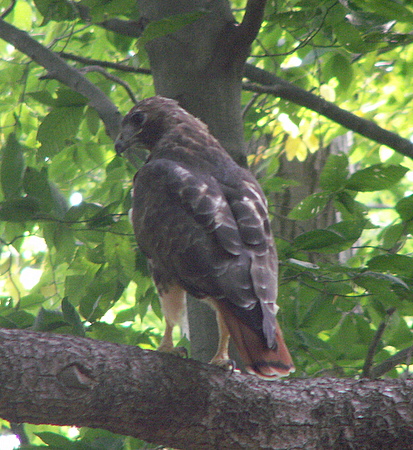
<img alt="Red tailed hawk"  src="http://www.emfoley.com/ecos/archives/PICT0009.JPG" width="413" height="450" border="1" /><br />
This Red-Tailed Hawk has its eye on its prey, which can include squirrels, chipmunks, smaller birds, snakes and other small animals. It hunts in both fields and forests, and is at the top of the food chain in both habitats.</p>

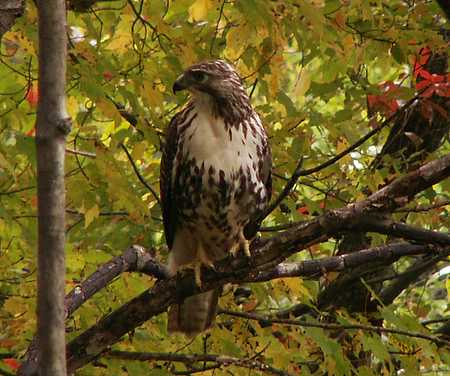
<p><img alt="Immature Red-Tailed Hawk" src="http://www.emfoley.com/ecos/archives/PICT0061-1.JPG" width="450" height="376" border="1" /><br />
The speckled brown and white feathers on this Red-Tailed Hawk indicate that it is immature. It was seen hunting near Fountain Lake.</p>

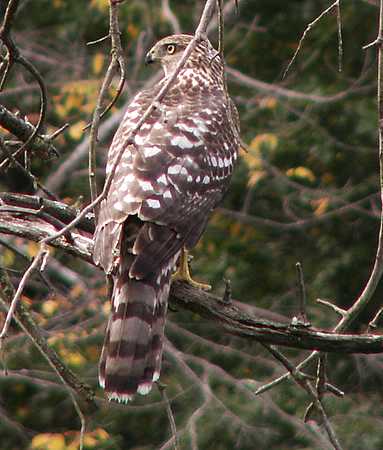
<p><img alt="Cooper's Hawk" src="http://www.emfoley.com/ecos/archives/PICT0012-3-1.JPG" width="383" height="450" border="1" />The speckled feathers on this hawk also indicate it is immature, though it is not a Red-Tailed  Hawk, but a much less commonly seen Cooper's Hawk.  It feeds on birds, which it hunts primarily in the forest, though it sometimes hunts quail and poultry.</p>
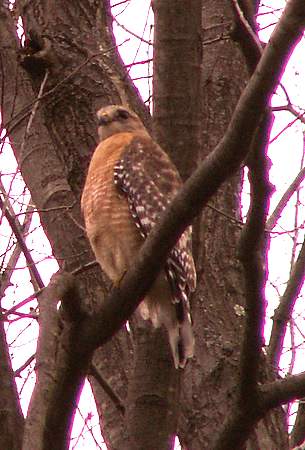
<p><img alt="Red-shouldered Hawk" src="http://www.emfoley.com/ecos/archives/PICT0001.JPG" width="305" height="450" border="1" /></p>

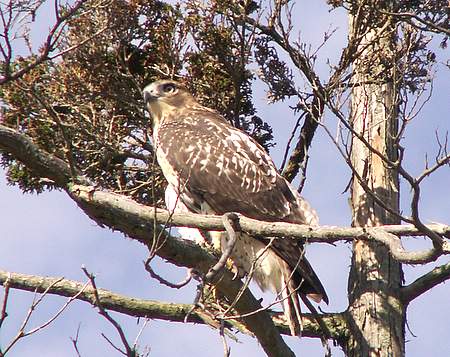
<p>The Red-Shouldered Hawk favors woodlands near water. This one was part of a pair that built a nest near Fountain Lake in Forest Park this spring. Red-shouldered Hawks eat small mammals, the largest being rabbits and squirrels; it also consumes reptiles and amphibians, such as snakes, toads, frogs, plus small birds and large insects.</p>

<p><img alt="Red Shouldered Hawk immature" src="http://www.emfoley.com/ecos/archives/PICT0032.JPG" width="450" height="357" border="1" /><br />
One of the Red-Shouldered Hawks' offspring.</p>

<p><br />
<img alt="Wild Turkey" src="http://www.emfoley.com/ecos/archives/PICT0002-4.JPG" width="450" height="259" border="1" />Wild Turkeys were successfully reintroduced recently into Southern and Central New England after the regrowth of broadleaf forests restored their habitat. Many now live in Forest Park and venture out into the surrounding towns in search of food.</p>
<p><br />
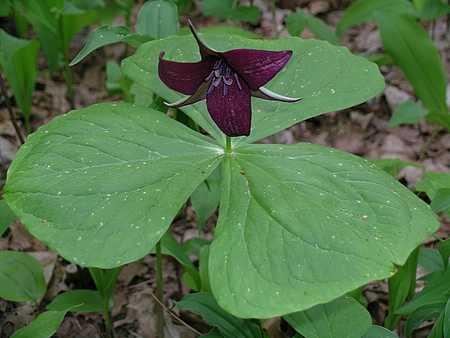
<img alt="purple trillium" src="http://www.emfoley.com/ecos/archives/DSCN2014-1.jpg" width="450" height="338" border="1" /><br />
Many wildflowers only grow in the shade of the forest, but bloom early to catch the sunlight before the trees leaf out. And like this Purple Trillium, their growing period can be very short.  </p>

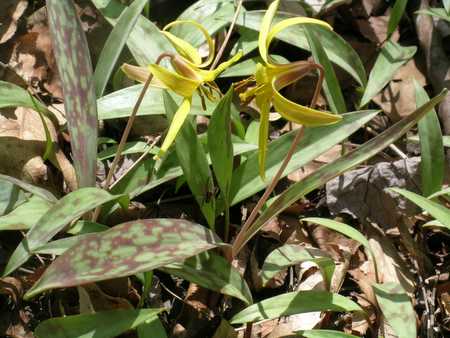
<p><img alt="Trout lilly" src="http://www.emfoley.com/ecos/archives/DSCN1934.jpg" width="450" height="338" border="1" /><br />
The Trout Lilly blooms from April through May in the park, then dries up and decomposes. It grows in the forest and on its edges where it is wet. It is named for the spots on its leaves.  </p>

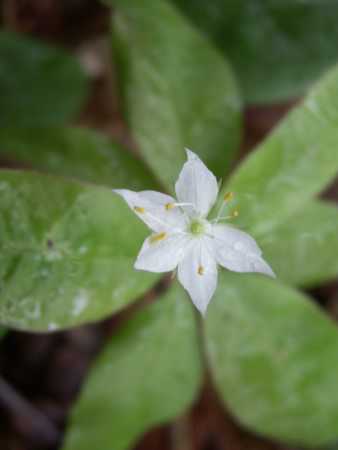
<p><img alt="Eastern Starflower" src="http://www.emfoley.com/ecos/archives/PICT0023-1.JPG" width="338" height="450" border="1" /><br />
The Eastern Starflower blooms in moist woods from May to June.</p>

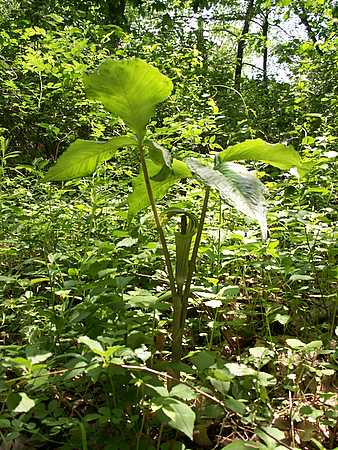
<p><img alt="Jack in the pulpit" src="http://www.emfoley.com/ecos/archives/PICT0068-1-1.jpg" width="338" height="450" border="1" /><br />
The Jack-in-the-Pulpit ranges from the deep forest to its edges.</p>

<p><img alt="Jack in the pulpit closeup-1-1.jpg" src="http://www.emfoley.com/ecos/archives/PICT0069-1-1.jpg" width="338" height="450" border="1" /><br />
Closeup of the Jack-in-the-Pulpit's flower.</p>

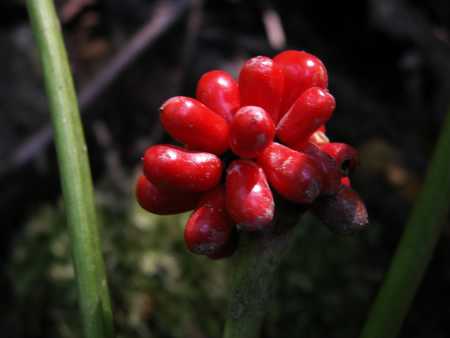
<p><img alt="berries" src="http://www.emfoley.com/ecos/archives/PICT0030-2.JPG" width="450" height="338" border="1" /><br />
Closeup of the berries the Jack-in-the-Pulpit produces in near the end of summer. </p>

<p></p>

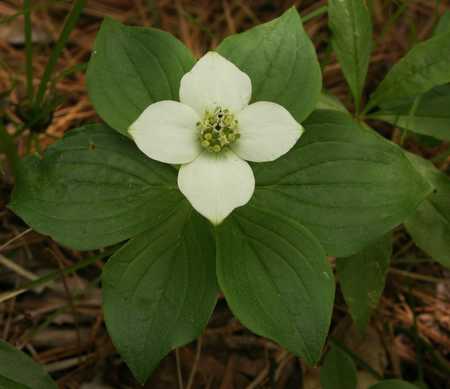
<p><img alt="Bunchberry" src="http://www.emfoley.com/ecos/archives/PICT0030-1-1.JPG" width="450" height="389" border="1" /><br />
Bunchberry blooms in the woods in early to late spring.  </p>

<p><br />
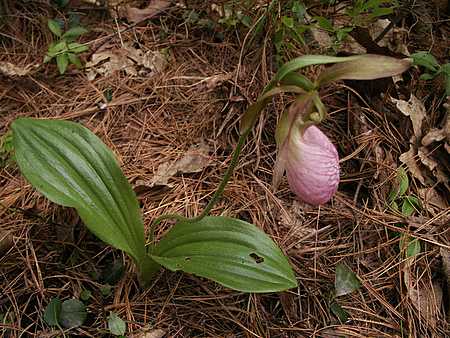
<img alt="Pink Lady's slipper" src="http://www.emfoley.com/ecos/archives/PICT0016-1-1.jpg" width="450" height="338" border="1"/><br />
The Pink Lady's Slipper, one of relatively few North American orchids in New England, is becoming scarce in Forest Park because people dig it up to plant in their gardens. It does not transplant, however. The plant is very sensitive to soil and light conditions.</p>

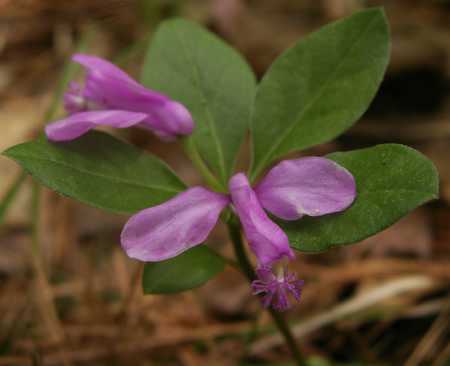
<p><img alt="Fringed Polygala"  src="http://www.emfoley.com/ecos/archives/PICT0027-2.jpg" width="450" height="366" border="1" /><br />
This Fringed Polygala, also called "Gaywings," is an small orchid-like plant that blooms May to June. </p>

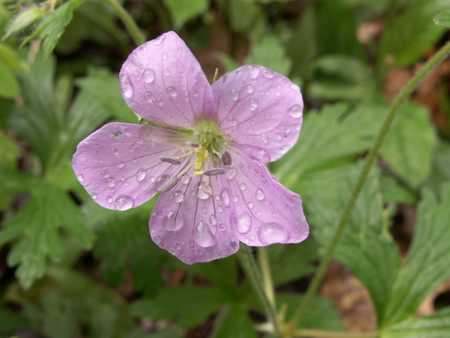
<p><img alt="geranium.jpg" src="http://www.emfoley.com/ecos/archives/geranium.jpg" width="450" height="338" border="1" /><br />
A Wild Geranium, which blooms in spring in wooded and shady areas across Forest Park.  </p>

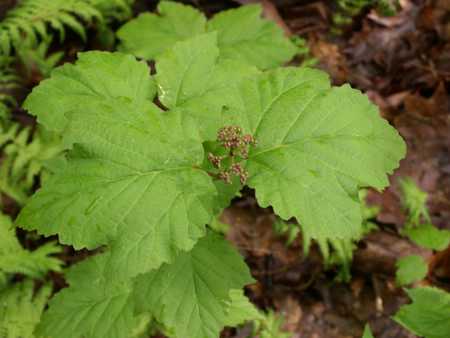
<p><img alt="Maple-leaf Viburnum" src="http://www.emfoley.com/ecos/archives/PICT0042-1-1.JPG" width="450" height="338" border="1" /><br />
A Maple-Leaf Viburnum budding in early spring.  </p>

<p><br />
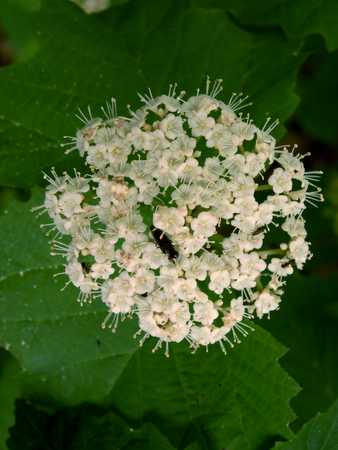
<img alt="Maple Leaf Viburnum in bloom" src="http://www.emfoley.com/ecos/archives/PICT0024-2.jpg" width="338" height="450" border="1" /><br />
The Maple-Leaf Viburnum blooms from May to July.</p>

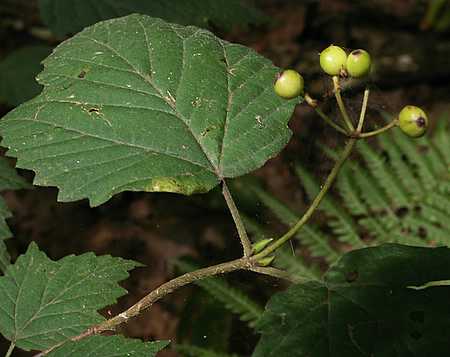
<p><img alt="berries" src="http://www.emfoley.com/ecos/archives/PICT0090.JPG" width="450" height="357" border="1" /><br />
The Maple-Leaf Viburnum then produces berries beginning in August.</p>

<p><img alt="Orange Jewelweed" src="http://www.emfoley.com/ecos/archives/PICT0091.JPG" width="415" height="450" border="1" /><br />
Orange Jewelweed is sometimes called "Spotted Touch-Me-Not" because the seed capsules the flower produces burst when touched. </p>

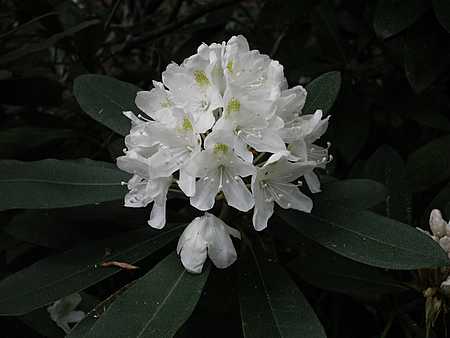
<p><img alt="rosebay rhododendron" src="http://www.emfoley.com/ecos/archives/PICT0004-1-1-1.JPG" width="450" height="338" border="1" />The Rosebay Rhododendron prefers moist woods or streamsides.  It is a large, evergreen shrub that blooms June through July.</p>

<p><br />
<img alt="Spotted Wintergreen" src="http://www.emfoley.com/ecos/archives/PICT0042-2-1.JPG" width="338" height="450" border="1" /><br />
Spotted Wintergreen blooms June through July.   </p>

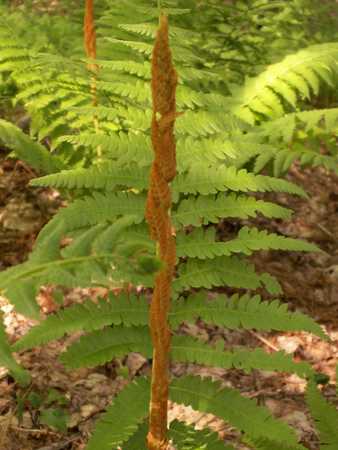
<p><img alt="cinnamon fern" src="http://www.emfoley.com/ecos/archives/PICT0025-3.jpg" width="338" height="450" border="1" /><br />
The Cinnamon Fern is named for the 4 foot cinnamon-colored stalk growing among its fronds. Ferns are among the oldest families of plants still alive. In New England, most grow in woodland habitats.    </p>

<p></p>

<p><br />
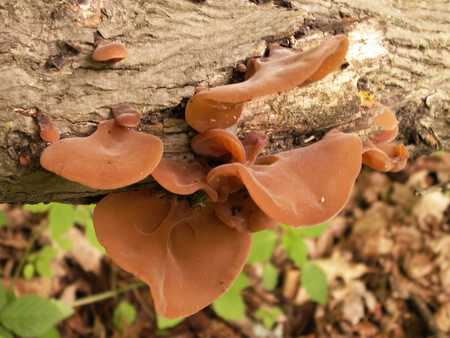
<img alt="Mushrooms" src="http://www.emfoley.com/ecos/archives/PICT0205.jpg" width="450" height="338" border="1" /><br />
Mushrooms, mosses, lichens and molds play a large role in the decomposition of organic material in the forest. </p>

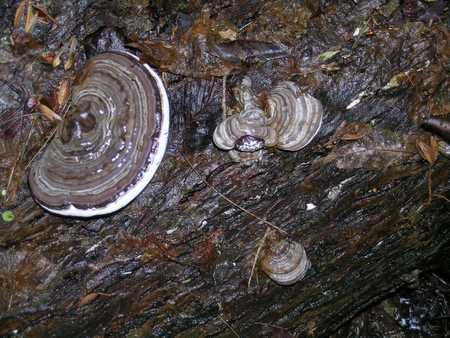
<p><img alt="artist's fungus" src="http://www.emfoley.com/ecos/archives/DSCN1882.jpg" width="450" height="338" border="1" /><br />
This bracket fungus, which prefers to grow on living or dead broadleaf trees, is named Artist's Fungus. </p>

<p><img alt="pinecone mushroom" src="http://www.emfoley.com/ecos/archives/PICT0013-5.JPG" width="338" height="450" border="1" />This fungus is called a Pinecone Mushroom.</p>
<p><br />
<img alt="Indian Pipe" src="http://www.emfoley.com/ecos/archives/PICT0148-2.JPG" width="338" height="450" border="1" /><br />
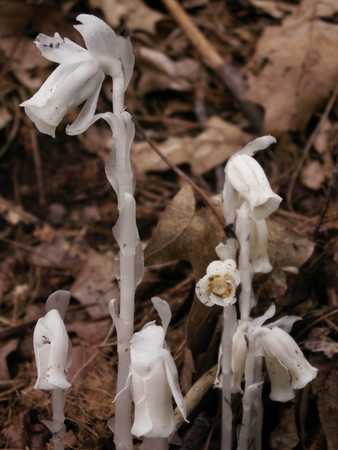
Indian Pipe, which grows in shady woods and around its edges, gets its food from dead organic matter.</p>

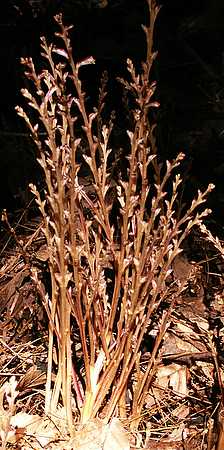
<p><img alt="Beechdrops" src="http://www.emfoley.com/ecos/archives/PICT0004-3.JPG" width="224" height="450" border="1"/><br />
Beechdrops is a parasitic plant that, as its name suggests, can be found under beech trees, where it feeds on the tree's roots.</p>

<p><br />
<img alt="Beaver" src="http://www.emfoley.com/ecos/archives/PICT0148.jpg" width="450" height="345" border="1"/><br />
The Beaver, a member of the rodent family, has been multiplying in Forest Park. Evidence of their work at felling trees and chewing bark can be seen widely in the areas around the dams. </p>

<p><img alt="European Larch" src="http://www.emfoley.com/ecos/archives/PICT0074-1.jpg" width="450" height="338" border="1" /><br />
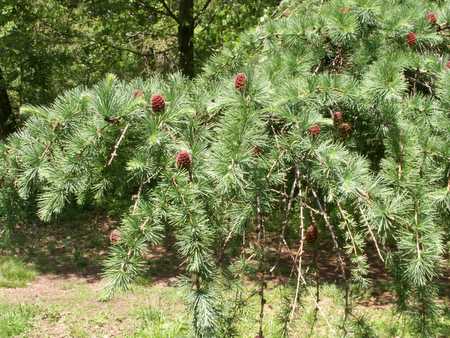
The European Larch tree, seen in late April, is a conifer which loses its needles in the winter. The cones of the larch are a bright red in early spring.  Its American relative, the Tamarack, prefers wetland habitats. In Forest Park, the European Larch is one of many specimen trees that were planted, some marked with plaques for identification -- a reminder that the actions of people are an integral part of the forest ecosystem.</p>

<p><img alt="pinecone" src="http://www.emfoley.com/ecos/archives/PICT0079-1.jpg" width="345" height="450" border="1" /><br />
A close-up of the European Larch pinecone in early spring. Later, they turn brown. </p>

<p><img alt="Class observing trees" src="http://www.emfoley.com/ecos/archives/PICT0058-1-1.jpg" width="450" height="338" border="1" /><br />
The students quietly study the trees around them, describing in their journals the type of trees in their vicinity, the presence of fungi, lichens and mosses, as well as nests, animals and many insects.</p>

<p><img alt="Boy at tree" src="http://www.emfoley.com/ecos/archives/PICT0059-4.jpg" width="218" height="450" border="1" /><br />
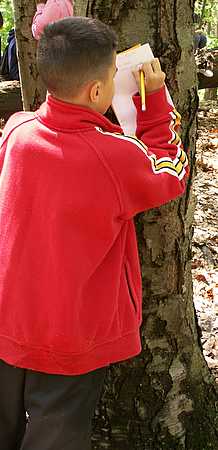
Examining the bark of one tree, a student notes the design and texture of the bark. </p>

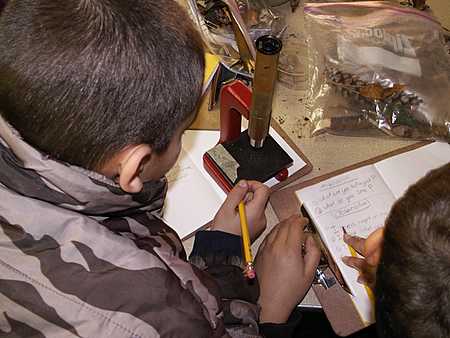
<p><img alt="microscopic inspection" src="http://www.emfoley.com/ecos/archives/PICT0063.JPG" width="450" height="338" />Mr. Haley's class collected plants, rocks, insects and earth to bring back to class to study under microcsopes and record their observations about each.</p>
<p><br />
<img alt="Marsh bridge" src="http://www.emfoley.com/ecos/archives/DSCN1885-1.jpg" width="450" height="338" border="1" /><br />
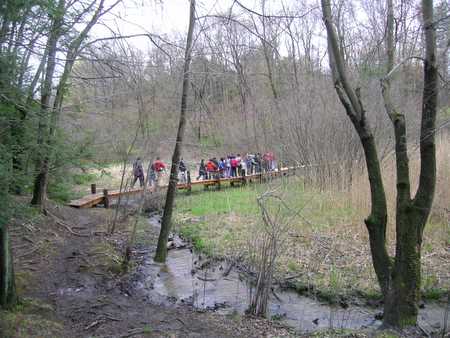
Crossing a marsh on the south side of Porter Lake to get to and from the forested hills, students often observe footprints of deer, birds, and other animals that come down for water and food. They learn the marsh is a habitat in its own right. Technically, Forest Park is a watershed area, meaning water within the park and from its periphery gathers to form lakes, ponds and  streams, which empty into the Connecticut River via the Pecousic River. </p>

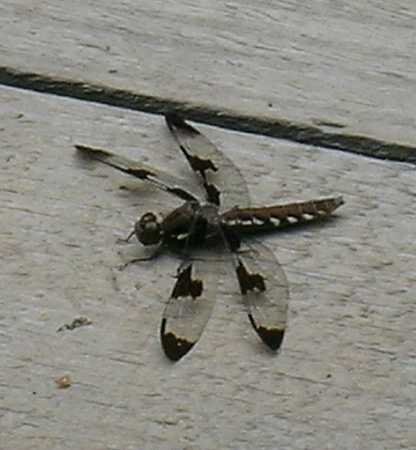
<p><img alt="Female Common Whitetail" src="http://www.emfoley.com/ecos/archives/DSCN2190.JPG" width="416" height="450" border="1" /><br />
Photo by Liam Doran<br />
                         <br />
A female Common Whitetail Dragonfly lands on the marsh bridge, immediately joined by ... </p>

<p><br />
<img alt="Common Whitetail" src="http://www.emfoley.com/ecos/archives/PICT0134-2.JPG" width="450" height="346" border ="1" /><br />
... a male Common Whitetail Dragonfly.</p>

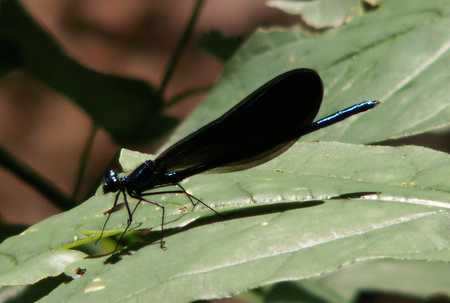
<p><img alt="Black-winged Damselfly" src="http://www.emfoley.com/ecos/archives/PICT0053-1-2.JPG" width="450" height="303" border="1" /><br />
A male Ebony Jewelwing Damselsfly. It lives near woodland streams and rivers.  </p>

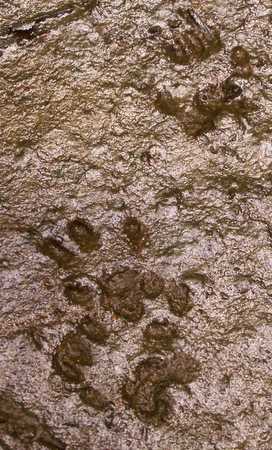
<p><img alt="Racoon prints" src="http://www.emfoley.com/ecos/archives/PICT0190.jpg" width="272" height="450" border="1" /><br />
Raccoon prints in the marsh mud.</p>

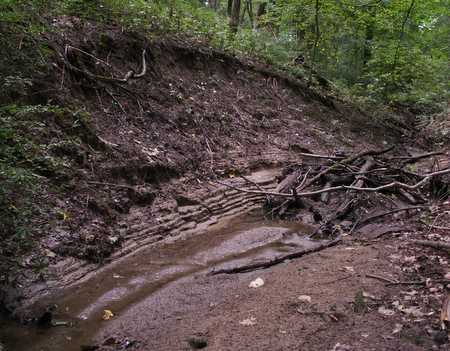
<p><img alt="Erosion gully" src="http://www.emfoley.com/ecos/archives/PICT0031-5.JPG" width="450" height="351" border="1" /><br />
Aside from the aftermath of major floods, the ability of moving water to create new landscapes is seen dramatically in Forest Park's  erosion gullies. Erosion gullies between the many hills in the park connect the forest to the marsh, and the marsh to the pond or lake, a prime example of the interaction of habitats. Nutrient rich soil gets washed down from the forested hills by rain and snowmelt. The streams in the gullies carry it along, depositing some along the way. </p>

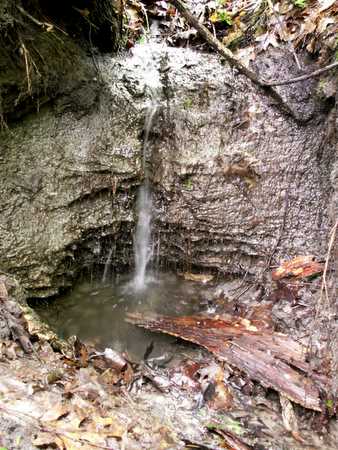
<p><img alt="Erosion waterfall" src="http://www.emfoley.com/ecos/archives/PICT0039-2.jpg" width="338" height="450" border="1"/><br />
Here the fall of water has stripped away a wall of clay and created a small waterfall and pool.  Clay is beneath the relatively shallow layer of topsoil almost everywhere in the lower areas of the park. It is also evident in the lower part of the previous photograph.    </p>

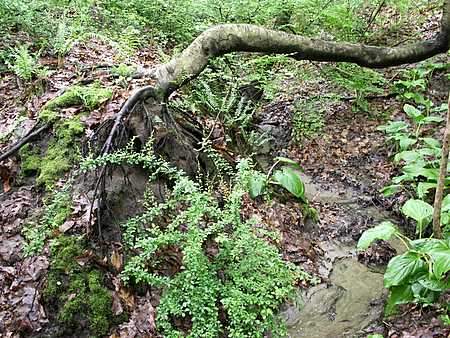
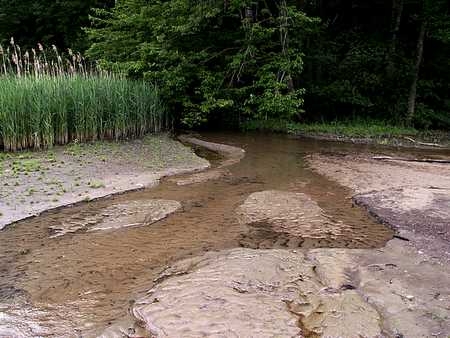
<p><img alt="erosion" src="http://www.emfoley.com/ecos/archives/PICT0030-1.jpg" width="450" height="338" border="1" /> Upstream from the marsh, the soil has been washed away from the roots of this tree.   As the process of erosion continues, more and more silt gets deposited in the marsh and beyond, creating ... </p>
<p><img alt="Delta" src="http://www.emfoley.com/ecos/archives/PICT0127-1.jpg" width="450" height="338" border="1" /> <br />
... deltas, which project out into lakes and ponds and begin to support vegetation. The delta will continue to grow unless rising water levels or floods wash them away.  </p>

<p><img alt="skunk cabbage flower" src="http://www.emfoley.com/ecos/archives/PICT0018-4.JPG" width="450" height="446" border "1" /> The flower of the skunk cabbage, which grows in late winter. The flower generates enough heat to melt the snow around it. The foul smell, from which the plant gets gets its name, together with the heat, attract the year's first insects -- flies, which like foul smells -- to pollinate it.  The leaves, wound tightly in a cone shape, appear soon after the flowers.</p>
<p><img alt="Skunk cabbage field" src="http://www.emfoley.com/ecos/archives/PICT0005-1.jpg" width="450" height="338" border="1"/><br />
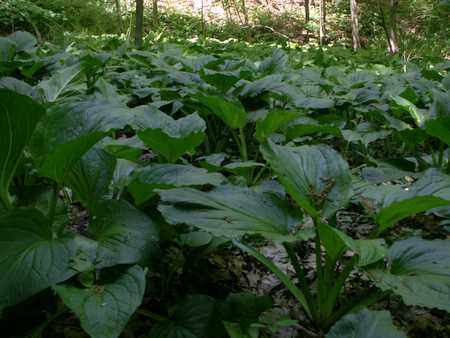
Skunk Cabbage lives only in areas where the soil is wet for some time during the year. </p>

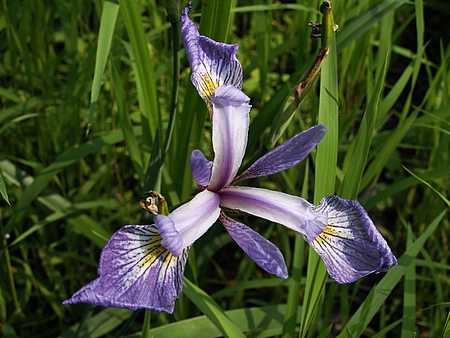
<p><img alt="Blue flag" src="http://www.emfoley.com/ecos/archives/PICT0000.jpg" width="450" height="338" border="1" /><br />
The Blue Flag, a wild iris, is another species of plant that grows only in a marshy habit.  </p>

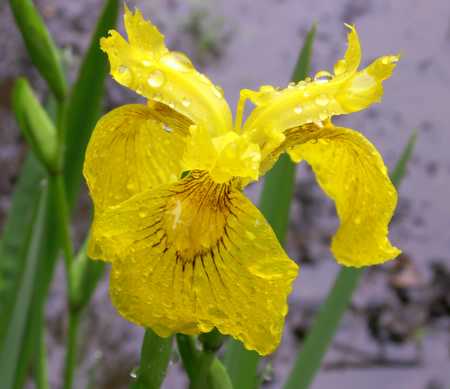
<p><img alt="yellow flag" src="http://www.emfoley.com/ecos/archives/PICT0064.jpg" width="450" height="389" border="1" /><br />
This Yellow Flag is not a native iris like the Blue Flag, but a specimen brought from Europe that escaped from gardens and became an invasive plant. It also grows in marshes and beside bodies of water in Forest Park. </p>

<p><img alt="purple loosestrife" src="http://www.emfoley.com/ecos/archives/PICT0043.JPG" width="255" height="450" border="1"/><br />
Purple Loosestrife is another invasive plant from Europe. It can be seen blooming in profusion in wetlands from July through September.</p>

<p><img alt="Dusky salamander" src="http://www.emfoley.com/ecos/archives/PICT0004-1.jpg" width="450" height="338" border="1" /><br />
Dusky Salamanders are an example of variation in organisms. Adapted to the wet areas of the forest, it is only found near water. Their markings vary widely from a dull tan with spots to nearly black. They also differ from the forest salamanders in that their hind legs are noticeably larger than their front limbs, they have a moveable lower jaw, and their tails are triangular rather than rounded like the Eastern Red-Backed Salamander's tail.  <br />
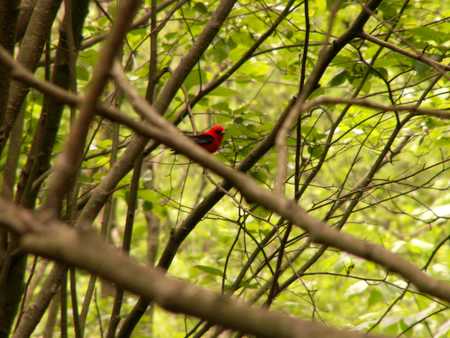
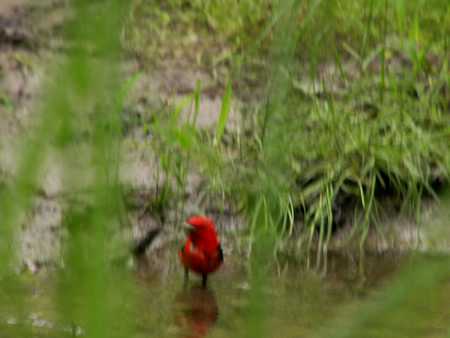
 <img alt="Scarlet tanager" src="http://www.emfoley.com/ecos/archives/PICT0199.jpg" width="450" height="338" border="1" /><br />
A scarlet tanager comes down from the treetops.<br />
  <br />
<img alt="tanager taking bath" src="http://www.emfoley.com/ecos/archives/PICT0201.jpg" width="450" height="338" border="1" /><br />
The Scarlet Tanager take a bath in the marsh.</p>

<p><img alt="observation" src="http://www.emfoley.com/ecos/archives/PICT0069-3.jpg" width="338" height="450" "border="1" /><br />
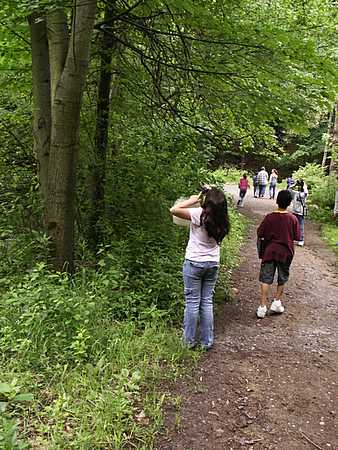
After learning observation skills in the forests, most students want to see more, even when they are on their way back to the cabin for lunch.</p>]]>
</content>
</entry>

<entry>
<title>Fields</title>
<link rel="alternate" type="text/html" href="http://www.emfoley.com/ecos/archives/2011/02/fields.html" />
<modified>2011-03-10T18:16:13Z</modified>
<issued>2011-02-12T05:29:52Z</issued>
<id>tag:www.emfoley.com,2011:/ecos/4.265</id>
<created>2011-02-12T05:29:52Z</created>
<summary type="text/plain"> Fourth graders spread out to find snakes, toads, insects, spiders, plants and other field dwellers. To find and capture animals in the field requires a keen eye and quick reflexes. Garter snakes, which have been caught in abundance this...</summary>
<author>
<name>mpdoran</name>
<url>http//www.emfoley.com/ecos/</url>
<email>mpdoran@emfoley.com</email>
</author>
<dc:subject>Fall to Spring at ECOS</dc:subject>
<content type="text/html" mode="escaped" xml:lang="en" xml:base="http://www.emfoley.com/ecos/">
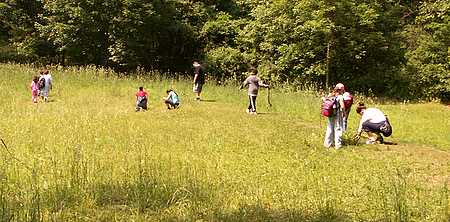
<![CDATA[<p><img alt="In the field" src="http://www.emfoley.com/ecos/archives/PICT0006-1-1-1.jpg" width="450" height="222" border="1" /><br />
Fourth graders spread out to find snakes, toads, insects, spiders, plants and other field dwellers.  </p>

<p>To find and capture animals in the field requires a keen eye and quick reflexes.  Garter snakes, which have been caught in abundance this year, are shy creatures and fast movers.  Anyone who has tried to catch butterflies knows that even with a net it can be a frustrating exercise.  And many of the other insects and spiders are camouflaged and are skilled at hiding in the deep grass. But 4th graders are quick too. </p>

<p>The field helps demonstrate the interaction among habitats through some of its creatures. The students know that many of the creatures found in the field start out in the pond: the dragonfly, the damselfly, and the toad are the most prominent examples. They also know that the basic outline of the food chain is the same -- plants, which they also collect, are producers, and the animals are either consumers or decomposers.  And though fungi, moss and lichen are usually associated with the forest, where they help break down organic and inorganic materials to produce soil, all three can also be found in the field or around its edges. <br />
</p>]]>
<![CDATA[<p>Following the same practice used at the pond, the specimens of each group are collected and displayed for all the students to see what has been found before everything is put back where it came from. Then, of course, it's  time for lunch.</p>

<p>There are a variety of after-lunch activities for the ECOS staff to choose from. The web game, illustrated in this section, is one of them, designed to get the students to make connections among randomly chosen members of the three groups in the food chain and inorganic elements. </p>

<p>Then it's off to the bubblegum tree ...  <img alt="cabin at Porter Lake" src="http://www.emfoley.com/ecos/archives/PICT0003-1.jpg" width="450" height="338" border="1" /><br />
April morning, a beautiful day at ECOS.</p>

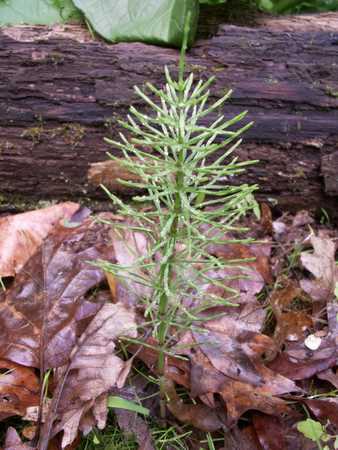
<p><img alt="horsetail" src="http://www.emfoley.com/ecos/archives/PICT0046.jpg" width="338" height="450" border="1" /><br />
The Horsetail is a living relic from over 300 million years ago, the only member of its plant family still in existence. It can be found just about anywhere in the park where there is moist soil, so in the field habitat it is most often found near wooded edges. This plant is about 5 inches tall, but its ancestors grew up to 100 feet tall.  </p>

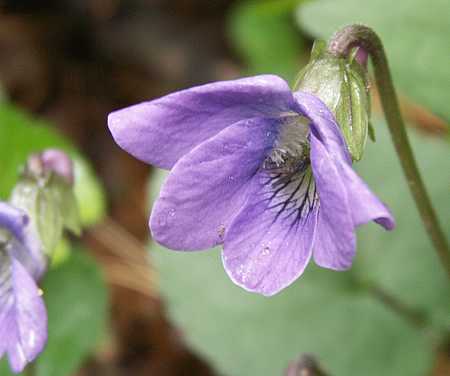
<p><img alt="violet" src="http://www.emfoley.com/ecos/archives/PICT0020-1-1-1.jpg" width="450" height="376" border= "1" /><br />
Violets of many varities also grow all around the park, most being able to grow in wet, shady areas as well as drier, grassy land. Most flower from early to late spring.   <br />
  </p>

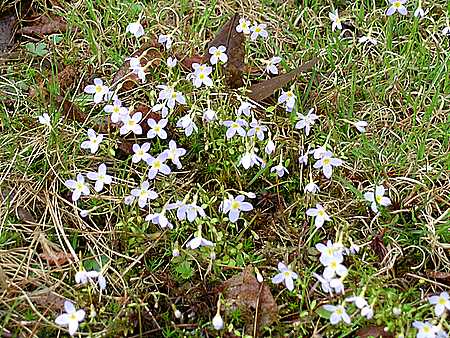
<p><img alt="Bluets" src="http://www.emfoley.com/ecos/archives/DSCN1881-1.jpg" width="450" height="338" border="1" /><br />
Bluets are tiny flowering plants that bloom for a short time in mid spring.  They get their name from the bluish tinge of the white flowers.  </p>

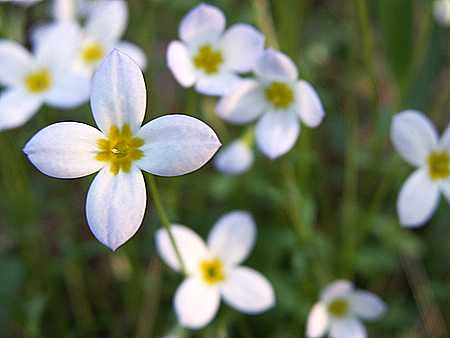
<p><img alt="Bluet Closeup" src="http://www.emfoley.com/ecos/archives/PICT0007-1-1-1-1.jpg" width="450" height="338" border="1" /><br />
A close-up of the Bluet.</p>

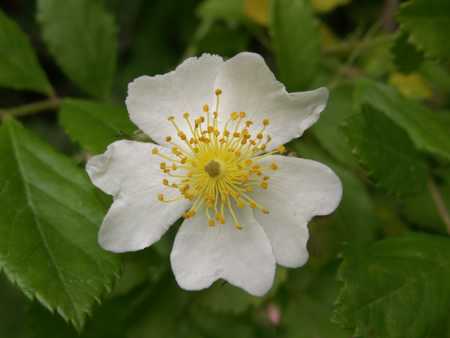
<p><img alt="wild rose" src="http://www.emfoley.com/ecos/archives/PICT0019-1.jpg" width="450" eight="338" border="1" /><br />
Wild roses hug the edges of the field,  often climbing over bushes to catch the sunlight. They flower in mid-spring.  This one has a sweet scent.    <br />
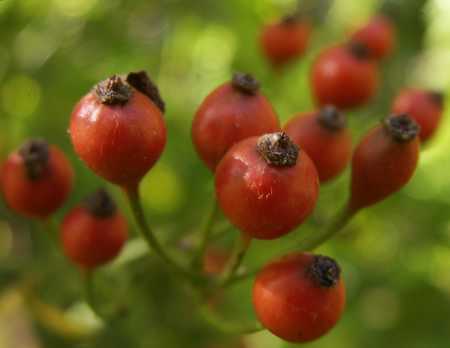
<img alt="rose hips" src="http://www.emfoley.com/ecos/archives/PICT0025-1.JPG" width="450" height="348" border="1" />The fruits the rose are called rose hips.</p>
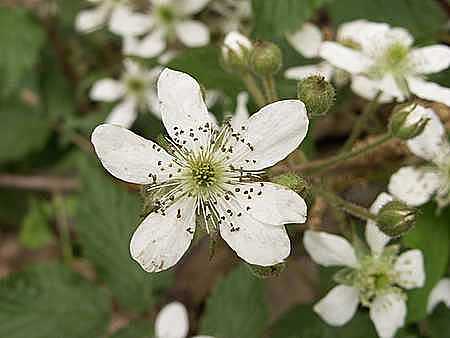
<p><img alt="Bramble" src="http://www.emfoley.com/ecos/archives/PICT0044-3-1.jpg" width="450" height="338" border="1" /> <br />
The Blackberry also grows at the edges of the field.   </p>

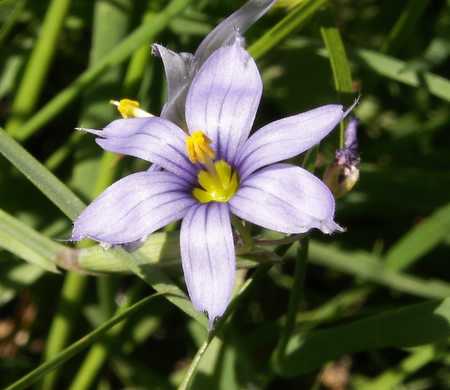
<p><img alt="Blue-Eyed Grass" src="http://www.emfoley.com/ecos/archives/PICT0062-2.JPG" width="450" height="390" border="1"/><br />
Blue-Eyed Grass has a tiny flower that only opens for one day in the morning on a sunny day. It is found in the field and in marshes.<br />
  </p>

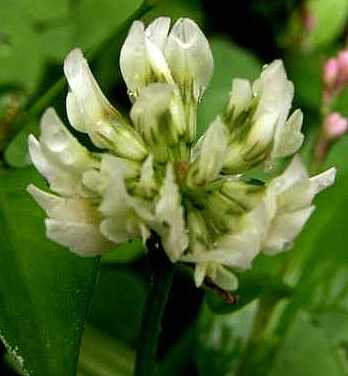
<p><img alt="close-up of white clover flower" src="http://www.emfoley.com/ecos/archives/PICT0006-3.jpg" width="348" height="376" border="1" /><br />
White Clover is a major source of nectar for bees and other insects.  It has a cluster of three leaves. Finding one with four leaves is considered a sign of good luck.  <br />
   <br />
<img alt="Common Buttercup" src="http://www.emfoley.com/ecos/archives/PICT0216.JPG" width="394" height="450" border="1" /><br />
The Common Buttercup is sometimes called the "Tall Buttercup" because the flower stalk grows up to 2 feet high.  It blooms in fields from May through August.  </p>

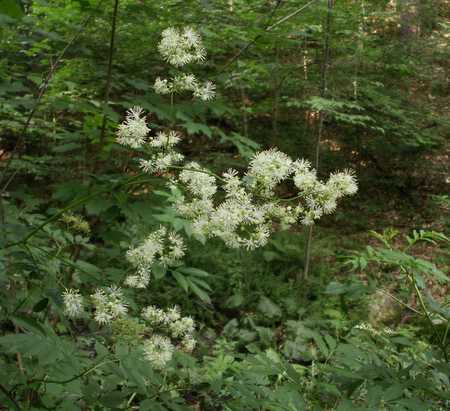
<p><img alt="Tall Meadow Rue" src="http://www.emfoley.com/ecos/archives/PICT0031-4.JPG" width="450" height="411" border="1" /><br />
Tall Meadow Rue grows in fields, usually near the wood's edge, and in swampy areas.   </p>

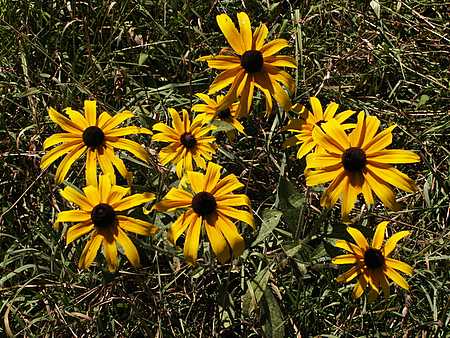
<p><img alt="Black-eyed Susan" src="http://www.emfoley.com/ecos/archives/PICT0035-4.JPG" width="450" height="338" border="1" /><br />
Black-Eyed Susan blooms in fields from June to September.  It is common to see varieties of this flower in gardens.</p>

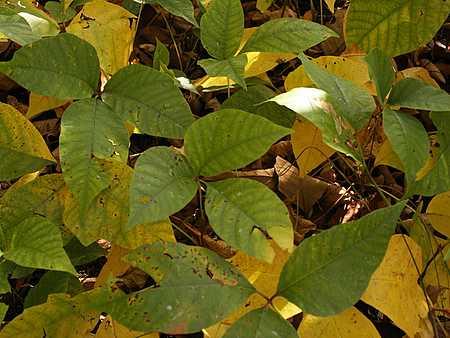
<p><img alt="Poison Ivy" src="http://www.emfoley.com/ecos/archives/PICT0032-1-2.JPG" width="450" height="338" border="1" />The old saying about Poison Ivy -- "leaves of three, let them be" -- is sound advice.  Touching any part of this plant, which sometimes grows as a vine, will cause severe skin inflammation. </p>
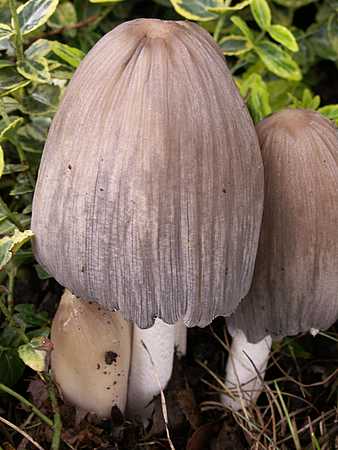
<p><img alt=Mushroom" src="http://www.emfoley.com/ecos/archives/PICT0008-1-1-1.jpg" width="338" height="450" border="1" /><br />
Mushrooms often appear suddenly in fields after soaking rains. This mushroom is called an Alcohol Inky, partially named for its dark black underside, where it carries its spores. </p>

<p><br />
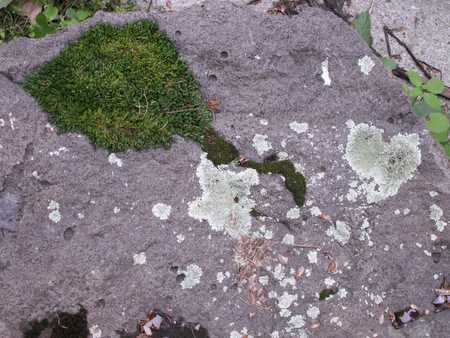
<img alt="rock with moss and lichen" src="http://www.emfoley.com/ecos/archives/PICT0155.jpg" width="450" height="338" border="1" /><br />
Moss and lichen (the light green patches), like mushrooms, are most often associated with wooded areas but are also present in the field.  Moss helps to decompose rock into the sand that makes up part of soil through the action of the water it absorbs. In winter the water freezes in little cracks in the rock, causing the cracks to widen. Lichens, through the action of acid that it uses to create tiny holes for gripping, also act as decomposers of rocks.</p>

<p><img alt="robin nesting" src="http://www.emfoley.com/ecos/archives/PICT0059-1.jpg" width="450" height="338" border="1" /><br />
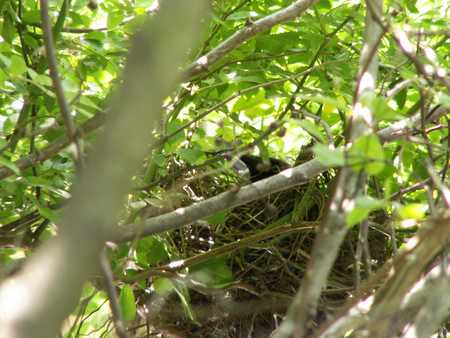
The American Robin most often nests near fields. The whitish rim around the eye identifies this bird in its nest... </p>

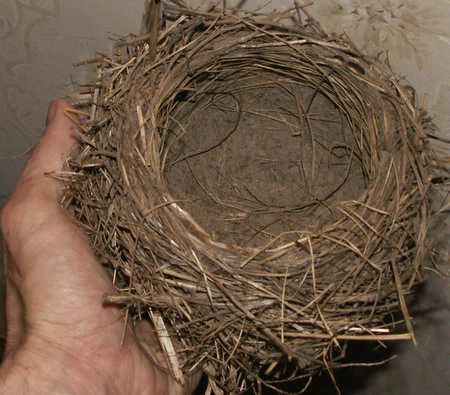
<p><img alt="Robin nest up close" src="http://www.emfoley.com/ecos/archives/PICT0013-4.jpg" width="450" height="395" border="1" /> <br />
...which it builds using mud to hold together grasses and small twigs. </p>

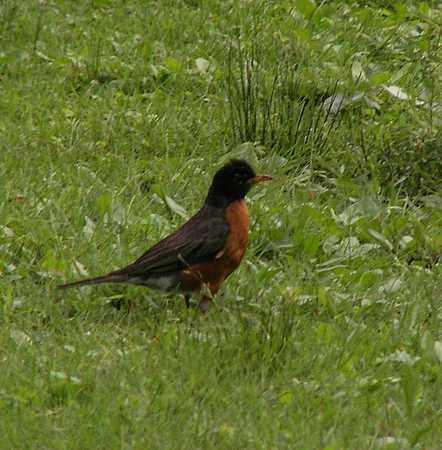
<p><img alt="Robin" src="http://www.emfoley.com/ecos/archives/PICT0198.JPG" width="442" height="450" border="1" /><br />
The American Robin specializes in catching earthworms from spring through summer.  In the fall and winter, it eats berries.</p>

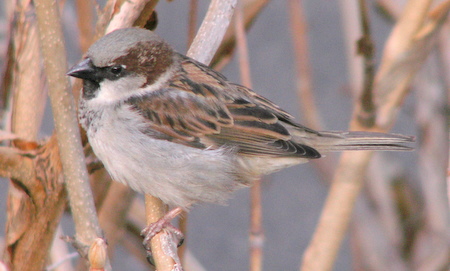
<p><img alt="House Sparrow" src="http://www.emfoley.com/ecos/archives/PICT0041.JPG" width="450" height="271" border="1" />The male House Sparrow. This 6-inch bird is a European import which has made itself at home in parks and in backyards, often being the biggest eater at bird feeders.  It is also known to kill nestlings and remove eggs of other birds in birdhouses.   The female is mostly pale brown on top with some black streaks, and dusky below.   </p>
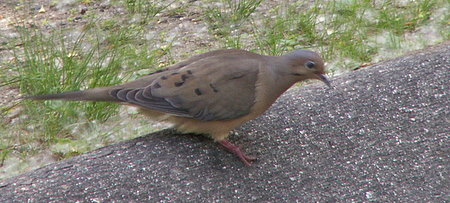
<p><img alt="Mourning Dove" src="http://www.emfoley.com/ecos/archives/PICT0004-1-4.JPG" width="450" height="203" border="1" />The Mourning Dove gets its name from its mournful call. It eats mostly seeds. </p>
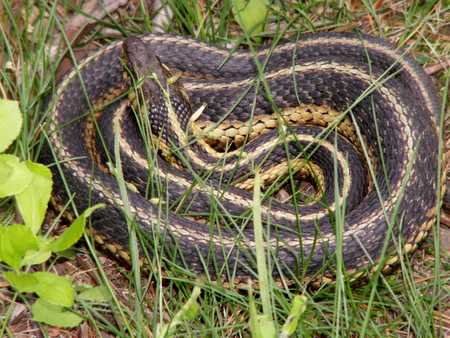
<p><br />
<img alt="garter snake basking" src="http://www.emfoley.com/ecos/archives/PICT0007-1-1.jpg" width="450" height="338" border="1" /><br />
An adult Garter Snake, approximately two feet long. They are named after the straps men used to wear to hold up their stockings. They are not poisonous and are easy to handle.    </p>

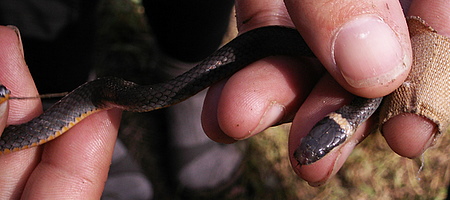
<p><img alt="Rign-Necked Snake" src="http://www.emfoley.com/ecos/archives/PICT0070.JPG" width="450" height="200" border="1" />Ms. Orellana holds a young Ring-Necked Snake caught by her class.  The snake can grow up to a foot long and constricts itself around its prey -- earthworms, frogs, and salamanders.</p>
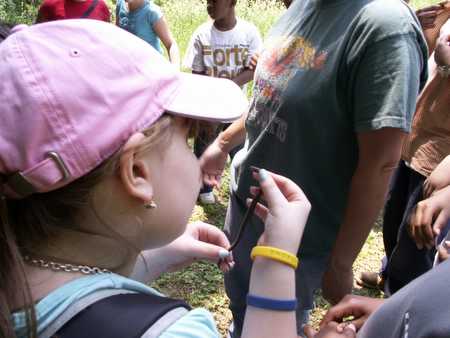
<p><img alt="Student handing snake" src="http://www.emfoley.com/ecos/archives/PICT0012-2.jpg" width="450" height="338" border="1" /><br />
A student holds a young Garter Snake, discovering that its skin is not slimy, but feels dry and only slightly scaly.    </p>

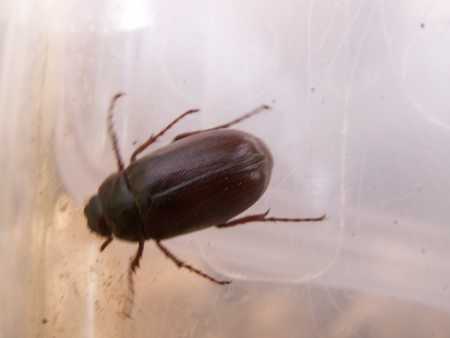
<p><img alt="Beetle" src="http://www.emfoley.com/ecos/archives/PICT0066.jpg" width="450" height="338" border="1" /><br />
A beetle commonly found in the field.</p>

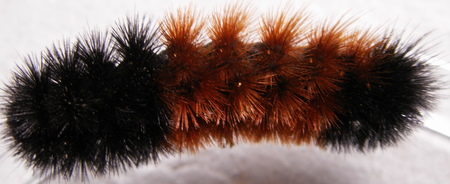
<p><img alt="woolly bear caterpillar" src="http://www.emfoley.com/ecos/archives/PICT0006-4.JPG" width="450" height="184" border="1" />The Woolly Bear Caterpillar is often seen crossing roads and trails in late fall before going into hibernation. It will often roll itself into a ball if touched.</p>
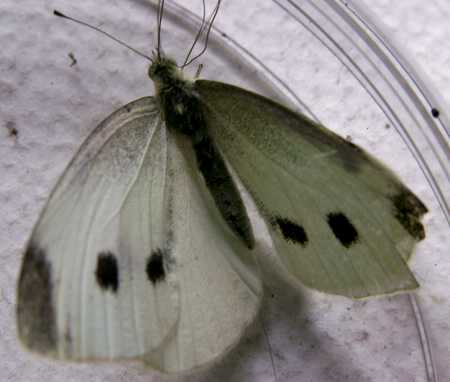
<p><img alt="Cabbage white butterfly" src="http://www.emfoley.com/ecos/archives/PICT0003-4.JPG" width="450" height="382" border="1" /><br />
A female Cabbage White butterfly.  The male has only one spot on its forewing. </p>

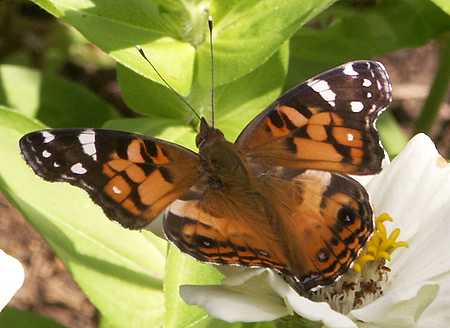
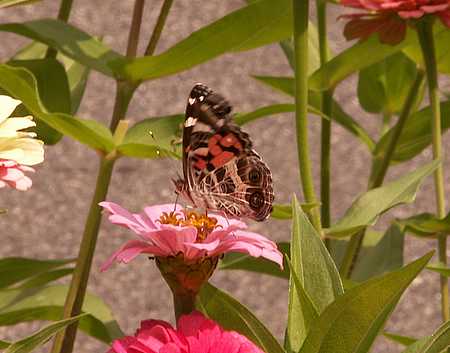
<p><img alt="American lady butterfly" src="http://www.emfoley.com/ecos/archives/PICT0067-2-1.JPG" width="450" height="328" border="1" /> <br />
The American Lady butterfly's habitat is fields and gardens.  </p>

<p><img alt="American lady butterfly underwing" src="http://www.emfoley.com/ecos/archives/PICT0118.JPG" width="450" height="353" border="1" /><br />
The underside of the wings of an American Lady butterfly.  </p>

<p></p>

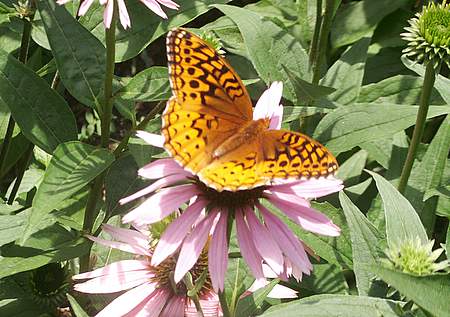
<p><img alt="Great spangled butterfly" src="http://www.emfoley.com/ecos/archives/PICT0003-1-3.JPG" width="443" height="450" border="1" /><br />
The Great Spangled Fritillary is another butterfly that likes fields and gardens.</p>

<p><br />
<img alt="Great Spangled Fritillary top" src="http://www.emfoley.com/ecos/archives/PICT0035-3.JPG" width="450" height="317" Border="1" /><br />
The Great Spangled Fritillary with its wings open.  </p>

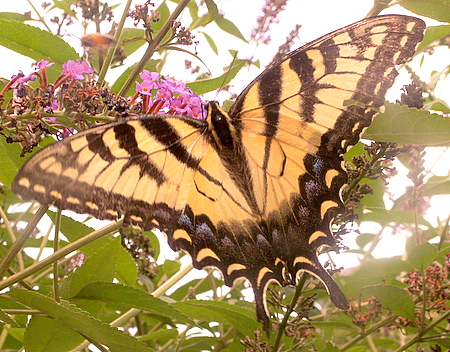
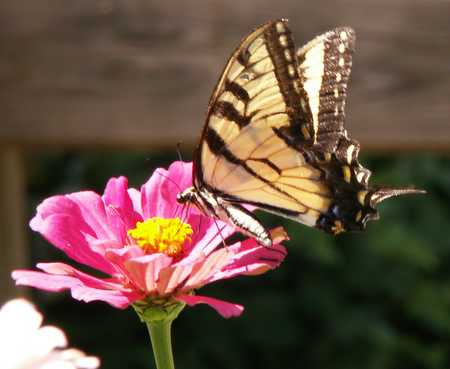
<p><img alt="Eastern Tiger Swallowtail" src="http://www.emfoley.com/ecos/archives/PICT0114.JPG" width="450" height="352" border="1"/><br />
The Eastern Tiger Swallowtail prefers open woods and fields.</p>

<p><img alt="Eastern Tiger Swallowtail" src="http://www.emfoley.com/ecos/archives/PICT0131.JPG" width="450" height="369" border="1" /><br />
Side view of the Eastern Tiger Swallowtail. </p>

<p><br />
<img alt="Monarch wings open" src="http://www.emfoley.com/ecos/archives/PICT0020-4.JPG" width="412" height="450" border="1" />Monarch butterflies were seen in abundance around Forest Park and in gardens this summer and fall.</p>
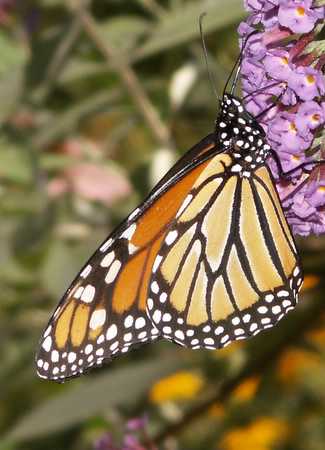
<p><img alt="Monarch butterfly side view" src="http://www.emfoley.com/ecos/archives/PICT0115.JPG" width="325" height="450" border="1" />Side view of the Monarch butterfly.</p>

<p><br />
<img alt="Silver-Spotted Skipper" src="http://www.emfoley.com/ecos/archives/PICT0154.JPG" width="450" height="383" border="1" /><br />
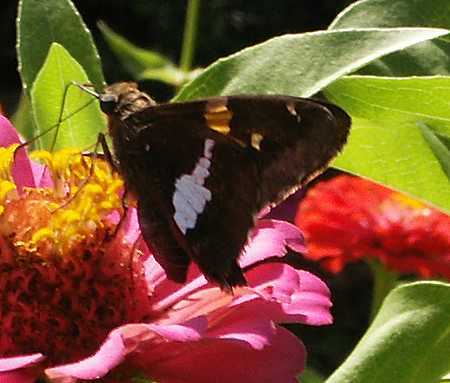
The Silver-Spotted Skipper is an aggressive butterfly that will often chase others away.  </p>

<p><img alt="Peck's Skipper butterfly" src="http://www.emfoley.com/ecos/archives/PICT0011-1.JPG" width="450" height="398" border="1" /><br />
A Peck's Skipper butterfly. </p>

<p><img alt="American Copper butterfly"  src="http://www.emfoley.com/ecos/archives/PICT0006-1.JPG" width="450" height="352" border="1" /></p>

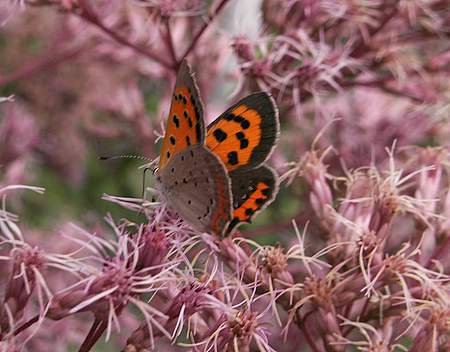
<p>The American Copper butterfly, about half the size of the Monarch, is usually found in dry fields.</p>

<p><img alt="Summer Azure" src="http://www.emfoley.com/ecos/archives/PICT0043.JPG" width="450" height="343" border="1"/><br />
The Summer Azure butterfly gets its name from the color of the tops of its wings -- "azure" being the color of the cloudless sky.  </p>

<p><br />
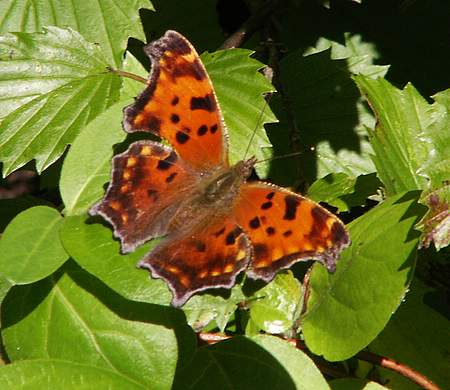
 <img alt="Eastern Comma Butterfly side" src="http://www.emfoley.com/ecos/archives/PICT0011.JPG" width="450" height="398" border="1" /></p>

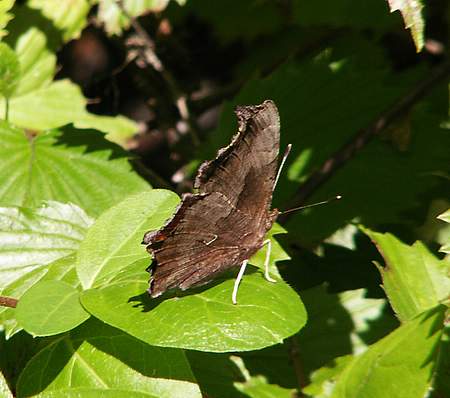
<p>This butterfly is called the Eastern Comma because of the small, curved silver line on its hind underwing. This one has a grey underside, but there are Eastern Commas whose undersides are orange -- an example of variation in nature that can occur within one species.</p>

<p><br />
<img alt="Eastern Comma Butterfly top" src="http://www.emfoley.com/ecos/archives/PICT0016.JPG" width="450" height="390" Border="1" /></p>

<p>The Eastern Comma butterfly with its wings open.</p>

<p><img alt="Hybrid" src="http://www.emfoley.com/ecos/archives/PICT0055.JPG" width="450" height="386" border= "1" /><br />
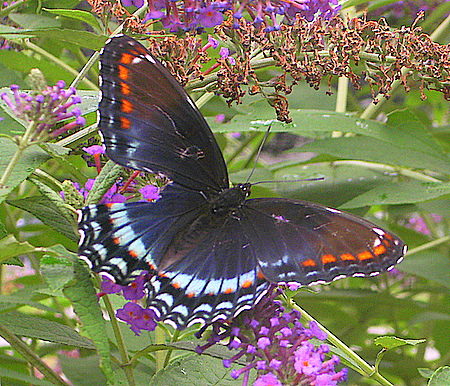
This is a hybrid, meaning that it is the offspring of two distinct varieties of butterfly -- the White Admiral, whose territory reaches farther north, and the Red-spotted Purple, whose territory is more to the south.  As a result of the interbreeding, this hybrid shares a few characteristics from each of its parents. </p>

<p><br />
<img alt="Hummingbird Clearwing Moth" src="http://www.emfoley.com/ecos/archives/IMG_3841 copy-5.jpg" width="450" height="315" border="1"/><br />
Photo by Peter Doran<br />
The Hummingbird Clearwing Moth is often confused with the bird when spotted in gardens and fields. Though smaller, the moth sips nectar from the same types of flowers, and both the moth and the bird are able to hover in the air with wings that beat at high speeds. </p>

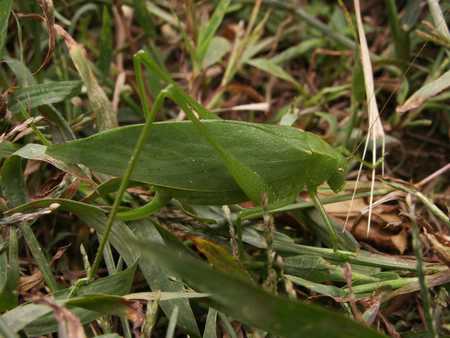
<p><img alt="Katydid" src="http://www.emfoley.com/ecos/archives/PICT0051-1-2.JPG" width="450" height="338" border="1" /><br />
Katydids can be found in fields near broadleaf forests where they live. Their wings mimic the color and veined pattern of leaves, making them less visible to predators. </p>

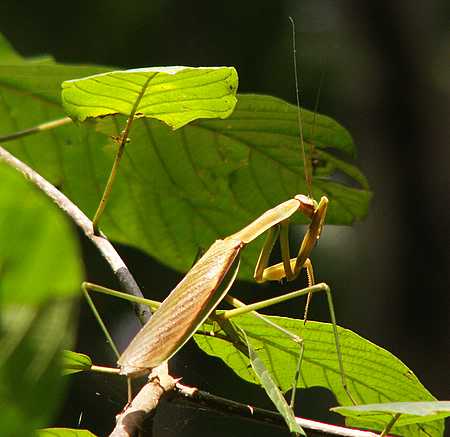
<p><img alt="praying mantis" src="http://www.emfoley.com/ecos/archives/PICT0044-3-2.JPG" width="450" height="437" border="1" /><br />
The Praying Mantis captures other insects with its two powerful "praying" forelegs.  It has large eyes and one of the most flexible necks of any insect, enabling it to hunt prey and look out for danger at almost all angles. Its habitat is fields and gardens.  </p>

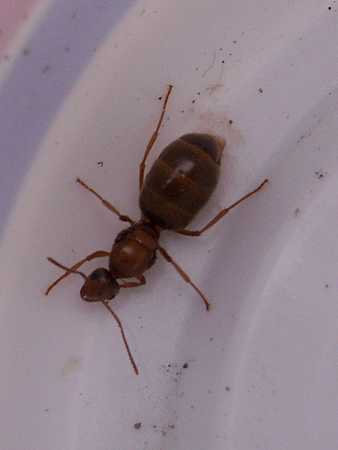
<p><img alt="ant" src="http://www.emfoley.com/ecos/archives/PICT0004-2-2.jpg" width="338" height="450" border="1" /><br />
A large reddish ant.  </p>

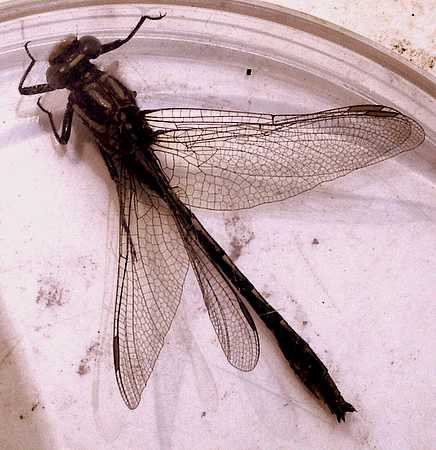
<p><img alt="Dragonfly from field" src="http://www.emfoley.com/ecos/archives/PICT0009-2-2.jpg" width="436" height="450" border="1" /><br />
When dragonflies were nymphs in the pond they hunted smaller insects. The adult dragonfly seeks its prey flying above the field. This is an Eastern Pondhawk dragonfly.  </p>

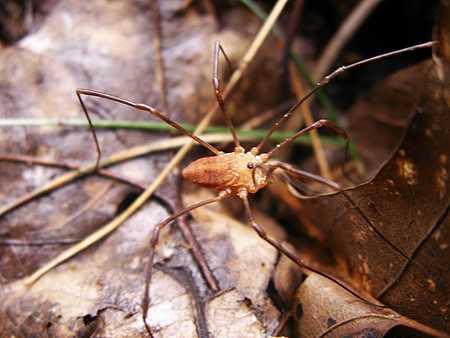
<p><img alt="Daddy long legs" src="http://www.emfoley.com/ecos/archives/PICT0067-2.jpg" width="450" height="338" border="1" /><br />
A daddy long legs is aply named -- its legs can be many times as long as its body. It can be found in the forest, field and in your backyard.  </p>

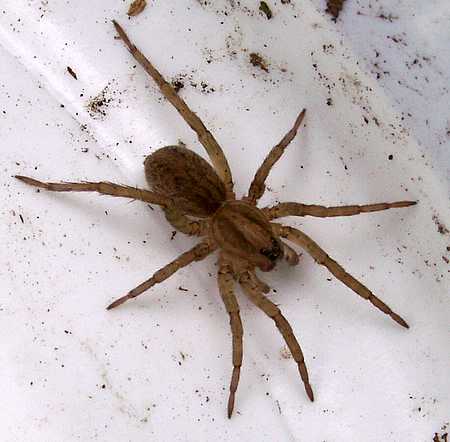
<p><img alt="reddish wolf spider" src="http://www.emfoley.com/ecos/archives/PICT0146-2.jpg" width="450" height="442" border="1" /><br />
The Wolf Spider, greatly enlarged in this photograph, is also carnivorous, but it is not an insect, which has six legs, but an arachnid, which has eight. </p>

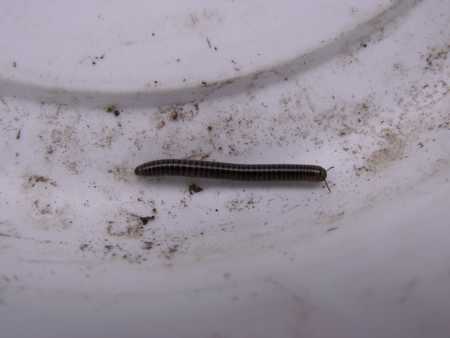
<p><img alt="Millipede" src="http://www.emfoley.com/ecos/archives/PICT0132.jpg" width="450" height="338" border="1" /><br />
Millipedes are common to the forest and field habitats. They eat plant material.</p>

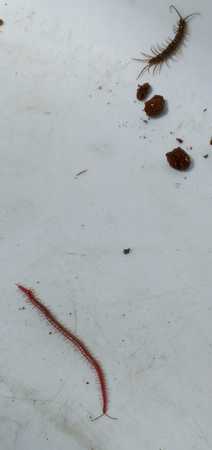
<p><img alt="centipedes" src="http://www.emfoley.com/ecos/archives/DSCN1901.JPG" width="212" height="450" border="1" /><br />
Two Centipedes of different size and color. Variation among related organisms is something the students take note of when examining the day's catch.</p>

<p><br />
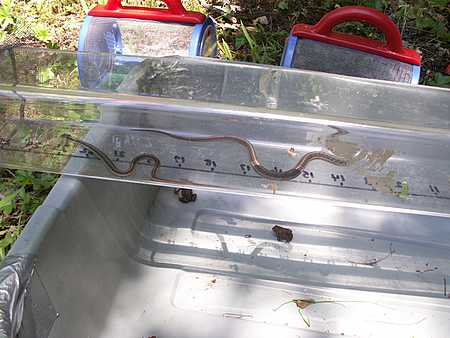
<img alt="measuring snakes" src="http://www.emfoley.com/ecos/archives/PICT0007-1.jpg" width="450" height="338" border="1" /><br />
The Garter Snakes caught by this class are put in a special holding tube so they can be measured. These young snakes were six inches and eight inches long. </p>

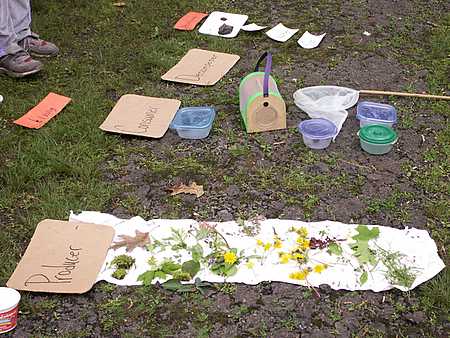
<p><img alt="Sorting field finds" src="http://www.emfoley.com/ecos/archives/PICT0075-1-1.jpg" width="450" height="338" border="1" /><br />
As the class brings specimens to the ECOS teacher, they are identified and sorted into inorganic, producer, consumer and decomposer. </p>

<p><br />
<img alt="Mrs. Martinez, web game" src="http://www.emfoley.com/ecos/archives/PICT0003-1-1.jpg" width="338" height="450" border="1"/><br />
Ms. Martinez leads a game which illustrates the interconnections of these groups. <br />
  <br />
<img alt="web game begins" src="http://www.emfoley.com/ecos/archives/PICT0005-2-1.jpg" width="450" height="338" border="1" /><br />
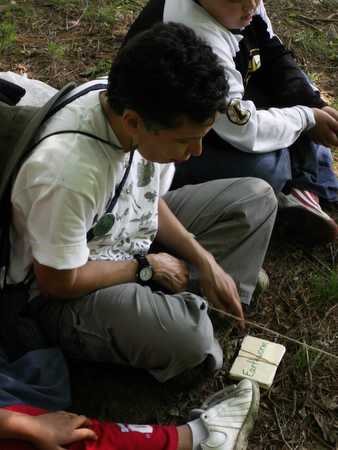
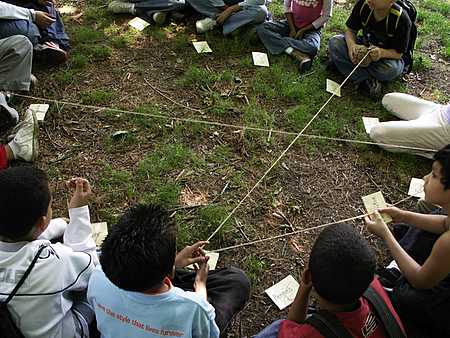
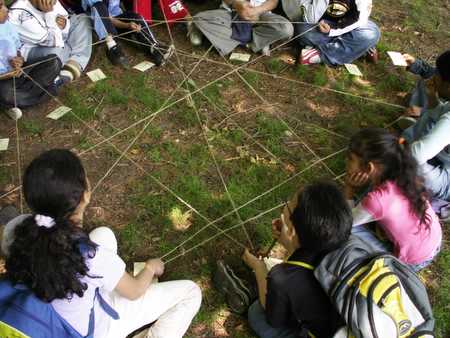
Ms. Martinez  throws a ball of twine to a student, each of whom has been assigned to play the role of a producer, consumer, decomposer or inorganic substance.  The student holds on to the string and throws the ball it at random on to the next student, who must say how the two elements of the environment are connected.</p>

<p><img alt="Everything connected" src="http://www.emfoley.com/ecos/archives/PICT0022-1.jpg" width="450" height="338" border="1" /><br />
The game is done when the web of interconnections is completed, reinforcing the idea that no one part of the environment is separate from another. </p>

<p><br />
<img alt="bubble gum tree" src="http://www.emfoley.com/ecos/archives/PICT0054-2-2.jpg" width="450" height="338" border="1" /><br />
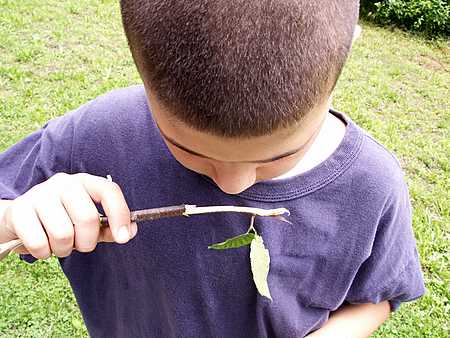
At the end of their last day at ECOS, every fourth grader gets what they've been eagerly anticipating -- a piece of "The Bubblegum Tree."  Its real name is Black Birch or Sweet Birch. Its nickname comes from the delicious smell of chewing gum it gives off when the bark of a sapling twig is stripped off.  They take their twigs with them and head back to school from ECOS till next year.   <br />
   </p>]]>
</content>
</entry>

<entry>
<title>Winter</title>
<link rel="alternate" type="text/html" href="http://www.emfoley.com/ecos/archives/2011/02/winter.html" />
<modified>2011-03-10T18:15:34Z</modified>
<issued>2011-02-11T16:39:55Z</issued>
<id>tag:www.emfoley.com,2011:/ecos/4.273</id>
<created>2011-02-11T16:39:55Z</created>
<summary type="text/plain"> A 6th-grade class heads into the woods for a day of Winter Survival. When they show up at Porter Lake for Winter Survival, the 6th grade students should be dressed warmly, because they are going to be outside for...</summary>
<author>
<name>mpdoran</name>
<url>http//www.emfoley.com/ecos/</url>
<email>mpdoran@emfoley.com</email>
</author>
<dc:subject>Fall to Spring at ECOS</dc:subject>
<content type="text/html" mode="escaped" xml:lang="en" xml:base="http://www.emfoley.com/ecos/">
<![CDATA[<p><img alt="heading into the woods" src="http://www.emfoley.com/ecos/archives/DSC01721-3.JPG" width="450" height="338" border="1" /><br />
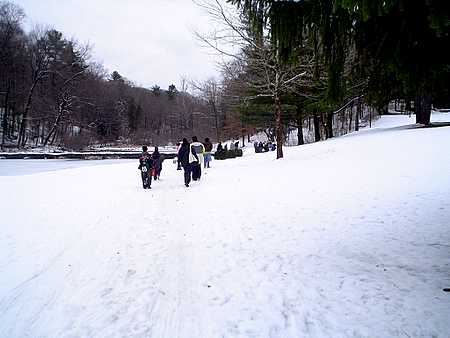
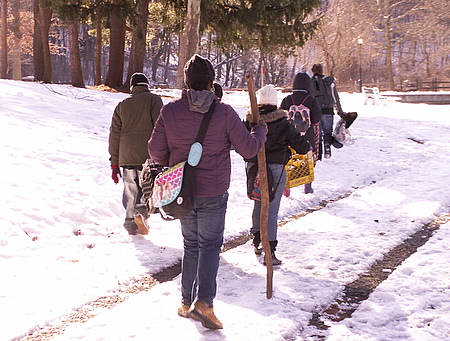
A 6th-grade class heads into the woods for a day of Winter Survival.</p>

<p>When they show up at Porter Lake for Winter Survival, the 6th grade students should be dressed warmly, because they are going to be outside for most of day one, which is for practice, and all of day two, during which they will put to use the survival skills they have <br />
learned. </p>

<p>How to build a shelter to help protect them from the elements, how to build a fire to keep warm and heat their lunch over it, and how to break camp and leave their area the way they found it are the major lessons of day one.  </p>]]>
<![CDATA[<p>On day two, students work on their own, with teacher supervision. </p>

<p>In order to succeed, students learn to work together to reach a common goal. Weather conditions and being in an unfamiliar place are motivators that encourage cooperation, which is the goal of this program.</p>

<p>By the time they reach the bus to take them back to school after surviving a winter's day outdoors, the students realize the importance of working together as a group, because students cannot individually master each skill they learned on day one. And despite all the work it took to survive, many of the students say that Winter Survival was the most fun they have had at ECOS.</p>

<p><img alt="Winter at the cabin" src="http://www.emfoley.com/ecos/archives/DSCN1376.JPG" width="450" height="338" border="1" /><br />
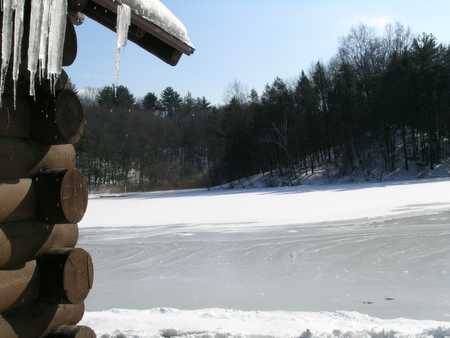
The day starts out sunny and cold at the cabin on Porter Lake.</p>

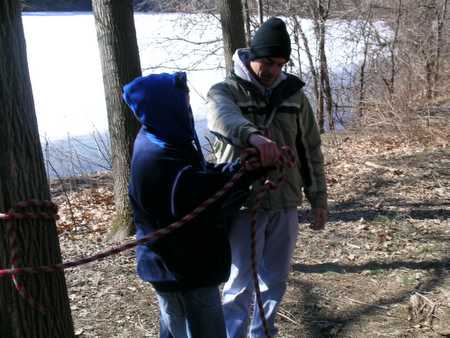
<p><img alt="Tying a knot" src="http://www.emfoley.com/ecos/archives/DSCN1406.JPG" width="450" height="338" border="1" /><br />
On day one, the first lesson is practice-shelter building. Learning how to tie the knots in order to string a rope between two trees is the first step.  The rope will hold up the shelter. </p>

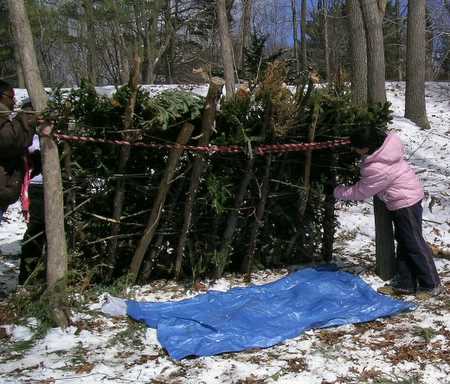
<p><img alt="The shelter" src="http://www.emfoley.com/ecos/archives/DSCN1419.JPG" width="450" height="384" border="1" /><br />
It takes group effort to put the shelter together. While some students work on attaching the rope, others gather the poles and pine fronds -- which come from used Christmas trees -- that make up the shelter. After everything is up, sometimes the rope needs to be tightened, as these two students are doing. </p>

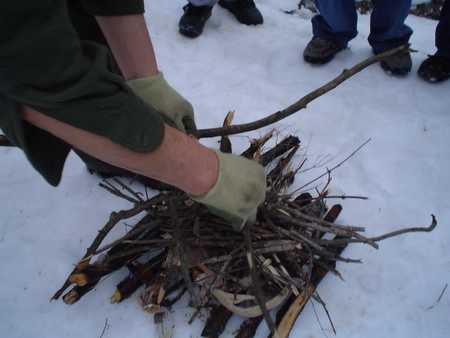
<p><img alt="fire building" src="http://www.emfoley.com/ecos/archives/DSC01782.JPG" width="450" height="338" border="1" /><br />
The second lesson on day one is how to build a fire by placing small to larger pieces of dry wood on a platform of small branches. The students have to pay close attention because they are going to build their own fires the next day and they are given only one match to light them.  </p>

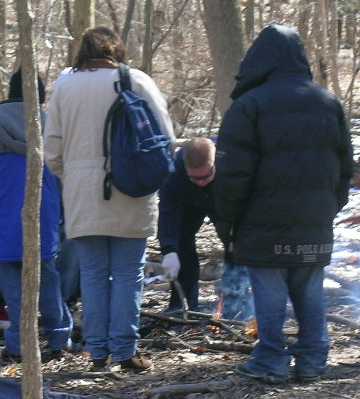
<p><img alt="feeding the fire" src="http://www.emfoley.com/ecos/archives/DSCN1424.JPG" width="360" height="399" border="1" /><br />
After the fire is started, the students are taught how to keep it going with "feeder wood."  When there is no snow on the ground, a perimeter must be cleared around the fire to make sure it doesn't spread. When there is snow, it is used to put out the fire.  When there isn't, the students must get some water from a nearby source, or bring some along.  </p>

<p><img alt="ducks" src="http://www.emfoley.com/ecos/archives/DSC01645-1.JPG" width="450" height="338" border="1" /><br />
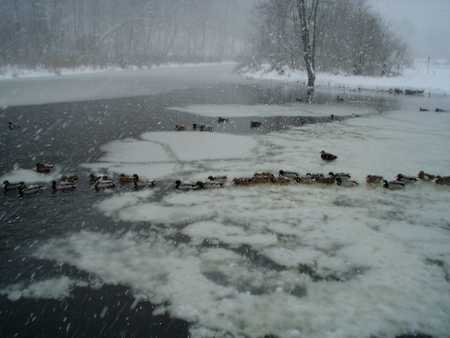
While walking from the cabin to practice and camping areas, the teachers at ECOS take advantage of the time to point out to the students the way other animals like these ducks adapt to and survive winter. </p>

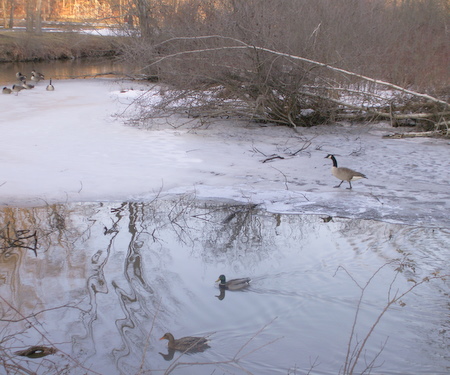
<p><img alt="Canada Geese" src="http://www.emfoley.com/ecos/archives/PICT0016-2.JPG" width="450" height="375" border="1"/>The Canada Goose and the Mallard Duck are two species of water fowl that stay in the ponds over the winter.</p>
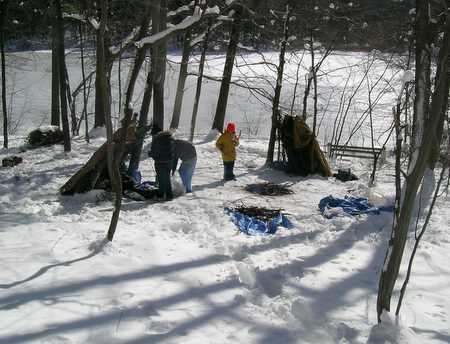
<p><img alt="camp setup" src="http://www.emfoley.com/ecos/archives/DSCN1337.JPG" width="450" height="344" border="1" /><br />
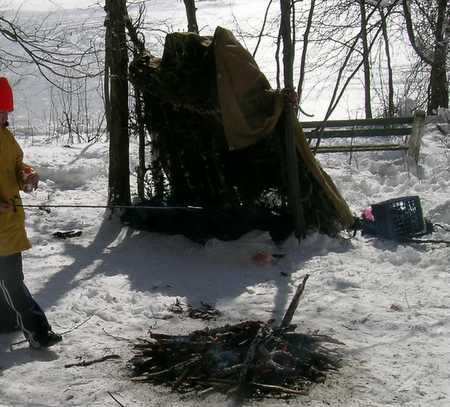
A typical camp set up by the students with supervision on the second -- all outdoors -- day of Winter Survival. </p>

<p><img alt="hotdog" src="http://www.emfoley.com/ecos/archives/DSCN1336-1.JPG" width="450" height="407" border="1" /><br />
A winter survivor heats his lunch.</p>

<p><img alt="Keeping warm" src="http://www.emfoley.com/ecos/archives/DSCN1411.JPG" width="450" height="360" border="1" /><br />
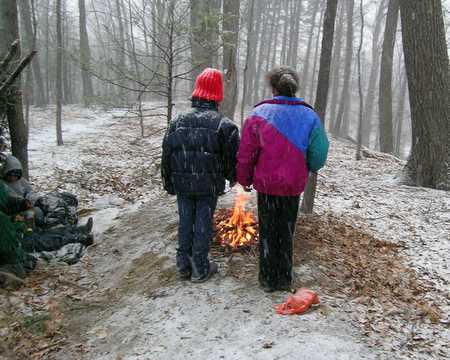
While the other students finish lunch, two students stand by their fire to keep warm as snow starts to fall.  </p>

<p><br />
<img alt="Heading Back" src="http://www.emfoley.com/ecos/archives/PICT0017-1.JPG" width="450" height="341" border="1" />One of the classes heads out of the woods, lugging equipment, after breaking camp. </p>
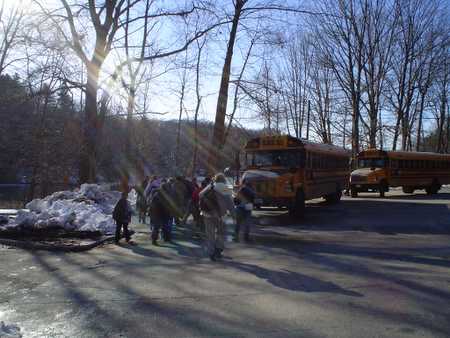
<p><img alt="Back to school" src="http://www.emfoley.com/ecos/archives/DSC01795.JPG" width="450" height="338" border="1" /><br />
The sixth graders head for their buses, having officially survived Winter Survival. </p>

<p></p>

<p></p>

<p></p>

<p> </p>

<p></p>

<p></p>

<p></p>

<p>  </p>]]>
</content>
</entry>

<entry>
<title>Introduction to ECOS for Parents</title>
<link rel="alternate" type="text/html" href="http://www.emfoley.com/ecos/archives/2008/09/introduction-to-1.html" />
<modified>2008-09-06T18:06:02Z</modified>
<issued>2008-09-03T01:31:46Z</issued>
<id>tag:www.emfoley.com,2008:/ecos/4.291</id>
<created>2008-09-03T01:31:46Z</created>
<summary type="text/plain">ECOS Environmental Center for Our Schools Springfield Public Schools – Springfield, Massachusetts At the height of the environmental movement, Springfield Public School educators Lorraine Ide and Clifford A. Phaneuf realized the necessity of educating students to appreciate and understand their...</summary>
<author>
<name>mpdoran</name>
<url>http//www.emfoley.com/ecos/</url>
<email>mpdoran@emfoley.com</email>
</author>
<dc:subject>Parent Guide</dc:subject>
<content type="text/html" mode="escaped" xml:lang="en" xml:base="http://www.emfoley.com/ecos/">
<![CDATA[<p><strong>ECOS<br />
Environmental Center for Our Schools<br />
Springfield Public Schools – Springfield, Massachusetts <br />
</strong></p>

<p>At the height of the environmental movement, Springfield Public School educators Lorraine Ide and Clifford A. Phaneuf realized the necessity of educating students to appreciate and understand their role in nature. Working in collaboration with the Springfield Park Department and the School Department, these two innovative teachers opened the Environmental Center for Our Schools in 1970. This unique school has now provided an exciting environmental education program for generations of Springfield residents. <br />
ECOS is designed for elementary and middle school students in Springfield. Each student and her/his teacher spend two school days at the Clifford A. Phaneuf Environmental Center in Forest Park. Students are transported from their school to Forest Park each morning and  returned to their school in time for dismissal.</p>

<p>The 750 acres of Forest Park provide a classroom which contains a treasure of environmental experiences. Some students have never had the opportunity to explore natural areas. ECOS provides an activity centered program in which students can expand their knowledge of the natural world by exploring the diverse habitats of the park.</p>

<p>STAFF</p>

<p>ECOS is staffed by certified teachers interested in environment education, adept at using the outdoors as a teaching tool, and skilled in the discovery method of teaching. The ECOS staff is assisted by the students’ classroom teacher a well as parents and visitors.</p>

<p>CLOTHING</p>

<p>Students should wear appropriate clothes for the outdoors, such as jeans, sweatshirts, sneakers or boots, etc. Since the program is held outside throughout the school year, students should dress according to the season and weather. Students should dress in layers because it is always a little cooler in the forest. They can always take off a sweatshirt if it gets warmer. (For a guide to dressing for Winter Survival see "6th-Grade Activities.") </p>

<p>LUNCH</p>

<p>Lunches are handled the same way as in school. Students who bring lunch to school should bring their lunch to ECOS. Students who receive a school lunch will receive their school lunch at ECOS.</p>

<p>AN INVITATION<br />
 <br />
Get in to your spirit of adventure! Get into some old clothes, dress for the weather, pack a lunch and tell your child’s teacher you would like to accompany the class to ECOS for one day or the entire session. We look forward to having you join us. </p>

<p>IMPORTANT</p>

<p>Sign the permission slip and return it to school as soon as possible. If you have any questions, please contact the school or your child’s teacher.<br />
We look forward to having your child participate in the ECOS program and hope you will consider joining us also. </p>

<p><br />
Ron St. Amand, Director of Science  					</p>

<p><br />
</p>]]>

</content>
</entry>

<entry>
<title>6th-Grade Schedule</title>
<link rel="alternate" type="text/html" href="http://www.emfoley.com/ecos/archives/2007/08/6thgrade-schedu-1.html" />
<modified>2008-02-07T17:36:21Z</modified>
<issued>2007-08-09T03:26:48Z</issued>
<id>tag:www.emfoley.com,2007:/ecos/4.296</id>
<created>2007-08-09T03:26:48Z</created>
<summary type="text/plain">2 Day Program (The day and time slots are interchangeable) Day 1 Morning Students will learn to keep warm in Winter by: -- making group decisions. -- building a one match fire using available materials found in the forest. --...</summary>
<author>
<name>mpdoran</name>
<url>http//www.emfoley.com/ecos/</url>
<email>mpdoran@emfoley.com</email>
</author>
<dc:subject>6th-Grade Activities</dc:subject>
<content type="text/html" mode="escaped" xml:lang="en" xml:base="http://www.emfoley.com/ecos/">
<![CDATA[<p>2 Day Program<br />
(The day and time slots are interchangeable)</p>

<p>Day 1</p>

<p>Morning<br />
Students will learn to keep warm in Winter by:<br />
-- making group decisions.<br />
-- building a one match fire using available materials found in the forest.<br />
-- dressing appropriately</p>

<p>Lunch – outside if weather permits</p>

<p>Afternoon<br />
Students will learn to:<br />
-- build a shelter using available materials found in the forest. Branches from used Christmas trees and natual debris will be made available to students.<br />
-- the knots necessary in building shelters.</p>

<p><br />
Day 2</p>

<p>Students will spend the entire day in a designated survival area. They will work together cooperatively in small groups without teacher assistance but with teacher supervision. The survival experience will include:<br />
-- choosing a site in the survival area.<br />
-- building a shelter.<br />
-- building a one match fire.<br />
-- heating food over the fire.<br />
-- the importance of leaving the area as clean as it was found – if not cleaner.<br />
</p>]]>

</content>
</entry>

<entry>
<title>Shelter  Building</title>
<link rel="alternate" type="text/html" href="http://www.emfoley.com/ecos/archives/2007/08/design-a-shelte.html" />
<modified>2008-02-07T17:37:26Z</modified>
<issued>2007-08-09T02:14:50Z</issued>
<id>tag:www.emfoley.com,2007:/ecos/4.278</id>
<created>2007-08-09T02:14:50Z</created>
<summary type="text/plain">Standard(s): Science and Technology/Engineering Strand #4: Technology/Engineering Learning Standard #32: Engineering design is an iterative process involving modeling and optimizing for developing technological solutions to problems within given constraints. Standard(s): English Language Arts Strand: Language Learning Standard #2: Questioning, listening,...</summary>
<author>
<name>mpdoran</name>
<url>http//www.emfoley.com/ecos/</url>
<email>mpdoran@emfoley.com</email>
</author>
<dc:subject>6th-Grade Curriculum Standards</dc:subject>
<content type="text/html" mode="escaped" xml:lang="en" xml:base="http://www.emfoley.com/ecos/">
<![CDATA[<p>Standard(s): Science and Technology/Engineering<br />
Strand #4: Technology/Engineering<br />
Learning Standard #32: Engineering design is an iterative process involving modeling and optimizing for developing technological solutions to problems within given constraints.</p>

<p>     Standard(s): English Language Arts<br />
       Strand:  Language<br />
       Learning Standard #2:  Questioning, listening, and contributing – Students will pose questions, listen to             the ideas of others, and contribute their own information or ideas in group discussions or interviews in order to acquire knowledge</p>

<p><a href="http://www.emfoley.com/ecos/archives/Gr6 Shelter Building - Design a Shelter.pdf">Download file</a><br />
</p>]]>

</content>
</entry>

<entry>
<title>Forms of Energy</title>
<link rel="alternate" type="text/html" href="http://www.emfoley.com/ecos/archives/2007/08/standards-scien-1.html" />
<modified>2008-02-07T17:38:01Z</modified>
<issued>2007-08-09T01:03:06Z</issued>
<id>tag:www.emfoley.com,2007:/ecos/4.275</id>
<created>2007-08-09T01:03:06Z</created>
<summary type="text/plain">Strand#3: Physical Science Learning Standard #13: Differentiate between potential and kinetic energy. Identify situations where kinetic energy is transformed into potential energy and vice versa. Download file...</summary>
<author>
<name>mpdoran</name>
<url>http//www.emfoley.com/ecos/</url>
<email>mpdoran@emfoley.com</email>
</author>
<dc:subject>6th-Grade Curriculum Standards</dc:subject>
<content type="text/html" mode="escaped" xml:lang="en" xml:base="http://www.emfoley.com/ecos/">
<![CDATA[<p>Strand#3: Physical Science<br />
Learning Standard #13: Differentiate between potential and kinetic energy. Identify situations where kinetic energy is transformed into potential energy and vice versa. </p>

<p><a href="http://www.emfoley.com/ecos/archives/Gr6 Forms of energy.pdf">Download file</a></p>]]>

</content>
</entry>

<entry>
<title>Design a raft to run the rapids in Forest Park</title>
<link rel="alternate" type="text/html" href="http://www.emfoley.com/ecos/archives/2007/08/design-a-raft-t.html" />
<modified>2008-02-07T17:38:35Z</modified>
<issued>2007-08-09T00:24:47Z</issued>
<id>tag:www.emfoley.com,2007:/ecos/4.290</id>
<created>2007-08-09T00:24:47Z</created>
<summary type="text/plain">Have your students use their “Floating and Sinking” knowledge in a real life situation. As part of the fifth grade Changes in Nature program at ECOS, students are asked to design a raft that can stay afloat when placed into...</summary>
<author>
<name>mpdoran</name>
<url>http//www.emfoley.com/ecos/</url>
<email>mpdoran@emfoley.com</email>
</author>
<dc:subject>5th-Grade Activities</dc:subject>
<content type="text/html" mode="escaped" xml:lang="en" xml:base="http://www.emfoley.com/ecos/">
<![CDATA[<p>Have your students use their “Floating and Sinking” knowledge in a real life situation. As part of the fifth grade Changes in Nature program at ECOS, students are asked to design a raft that can stay afloat when placed into a fast-moving stream. This activity lets students apply what they learn in the classroom to solve a problem at ECOS.<br />
</p>]]>
<![CDATA[<p>To reinforce the concept of reusing/recycling, the rafts should be made of reused materials, such as cans, plastic bottles, or anything else that might be ready to discard. Use only materials that will not fall apart in water. Please keep safety in mind. Remind students not to use glass bottles or cans with sharp edges.<br />
 <br />
Rafts can be made in school or at home prior to visiting ECOS. The finished raft should be brought to ECOS on the first day. Students can work on their designs independently, in groups, or as a class project. The option is up to you. Because the stream is fast moving, sails or other means of locomotion are not needed. Depending on what direction the wind is coming from, a sail may actually cause the boat to go in the wrong direction. This could raise some good classroom discussions. What could happen to the rafts on windy days? How will the stream be affected by heavy rain or a lack of rain? How does weight and momentum affect the speed of the boat?</p>

<p>This activity is optional. If you choose not to have students make rafts, we can still do the stream activity. For more information or help with the design call ECOS at 787-6493.</p>

<p><a href="http://www.emfoley.com/ecos/archives/Gr 5 Design a Raft - Floating & Sinking.pdf">Download file</a></p>]]>
</content>
</entry>

<entry>
<title>Heat Transfer</title>
<link rel="alternate" type="text/html" href="http://www.emfoley.com/ecos/archives/2007/08/heat-transfer-1.html" />
<modified>2008-02-07T17:39:16Z</modified>
<issued>2007-08-08T20:25:29Z</issued>
<id>tag:www.emfoley.com,2007:/ecos/4.299</id>
<created>2007-08-08T20:25:29Z</created>
<summary type="text/plain">Download file...</summary>
<author>
<name>mpdoran</name>
<url>http//www.emfoley.com/ecos/</url>
<email>mpdoran@emfoley.com</email>
</author>
<dc:subject>6th-Grade Curriculum Standards</dc:subject>
<content type="text/html" mode="escaped" xml:lang="en" xml:base="http://www.emfoley.com/ecos/">
<![CDATA[<p><a href="http://www.emfoley.com/ecos/archives/Gr 6 Heat transfer.pdf">Download file</a><br />
</p>]]>

</content>
</entry>

<entry>
<title>Soil Formation</title>
<link rel="alternate" type="text/html" href="http://www.emfoley.com/ecos/archives/2007/08/soil-formation.html" />
<modified>2008-02-07T17:39:52Z</modified>
<issued>2007-08-08T20:17:29Z</issued>
<id>tag:www.emfoley.com,2007:/ecos/4.298</id>
<created>2007-08-08T20:17:29Z</created>
<summary type="text/plain">Download file...</summary>
<author>
<name>mpdoran</name>
<url>http//www.emfoley.com/ecos/</url>
<email>mpdoran@emfoley.com</email>
</author>
<dc:subject>5th-Grade Curriculum Standards</dc:subject>
<content type="text/html" mode="escaped" xml:lang="en" xml:base="http://www.emfoley.com/ecos/">
<![CDATA[<p><a href="http://www.emfoley.com/ecos/archives/Gr 5 Soil Formation.pdf">Download file</a><br />
</p>]]>

</content>
</entry>

<entry>
<title>Mapping the Earth</title>
<link rel="alternate" type="text/html" href="http://www.emfoley.com/ecos/archives/2007/08/mapping-the-ear.html" />
<modified>2008-02-07T17:40:26Z</modified>
<issued>2007-08-08T04:37:46Z</issued>
<id>tag:www.emfoley.com,2007:/ecos/4.287</id>
<created>2007-08-08T04:37:46Z</created>
<summary type="text/plain">Standard(s): Science and Technology/Engineering Strand #1: Earth and Space Science Learning Standard #1: Recognize, interpret, and be able to create models of the earth’s common physical features in various mapping representations, including contour maps. Download file...</summary>
<author>
<name>mpdoran</name>
<url>http//www.emfoley.com/ecos/</url>
<email>mpdoran@emfoley.com</email>
</author>
<dc:subject>7th-Grade Curriculum Standards</dc:subject>
<content type="text/html" mode="escaped" xml:lang="en" xml:base="http://www.emfoley.com/ecos/">
<![CDATA[<p>Standard(s): Science and Technology/Engineering<br />
       Strand #1: Earth and Space Science<br />
       Learning Standard #1: Recognize, interpret, and be able to create models of the earth’s common physical features in various mapping representations, including contour maps. </p>

<p><a href="http://www.emfoley.com/ecos/archives/Gr 7 Mapping the Earth.pdf">Download file</a><br />
</p>]]>

</content>
</entry>

<entry>
<title>Earth&apos;s History</title>
<link rel="alternate" type="text/html" href="http://www.emfoley.com/ecos/archives/2007/08/earth-history-1.html" />
<modified>2008-02-07T17:40:56Z</modified>
<issued>2007-08-08T04:35:05Z</issued>
<id>tag:www.emfoley.com,2007:/ecos/4.286</id>
<created>2007-08-08T04:35:05Z</created>
<summary type="text/plain">Standard(s): Science and Technology/Engineering Strand #1: Earth and Space Learning Standard #6: Describe and give examples of ways in which the Earth’s surface is built up and torn down by natural processes, including deposition of sediments, rock formation, erosion,and weathering....</summary>
<author>
<name>mpdoran</name>
<url>http//www.emfoley.com/ecos/</url>
<email>mpdoran@emfoley.com</email>
</author>
<dc:subject>7th-Grade Curriculum Standards</dc:subject>
<content type="text/html" mode="escaped" xml:lang="en" xml:base="http://www.emfoley.com/ecos/">
<![CDATA[<p>Standard(s): Science and Technology/Engineering<br />
       Strand  #1: Earth and Space  <br />
       Learning Standard  #6: Describe and give examples of ways in which the Earth’s surface is built up and torn down by natural processes, including deposition of sediments, rock formation, erosion,and weathering. </p>

<p><a href="http://www.emfoley.com/ecos/archives/Gr 7 Earths History.pdf">Download file</a><br />
</p>]]>

</content>
</entry>

<entry>
<title>Rocks and Minerals</title>
<link rel="alternate" type="text/html" href="http://www.emfoley.com/ecos/archives/2007/08/rocks-and-miner.html" />
<modified>2008-02-07T17:41:26Z</modified>
<issued>2007-08-08T04:33:09Z</issued>
<id>tag:www.emfoley.com,2007:/ecos/4.285</id>
<created>2007-08-08T04:33:09Z</created>
<summary type="text/plain">Standard(s): Science and Technology/Engineering Strand #1: Earth and Space Learning Standard #1: Give a simple explanation of what a mineral is and some examples e.g. quartz, mica. Learning Standard #2: Identify the three categories of rock (metamorphic, igneous, and sedimentary)...</summary>
<author>
<name>mpdoran</name>
<url>http//www.emfoley.com/ecos/</url>
<email>mpdoran@emfoley.com</email>
</author>
<dc:subject>4th-Grade Curriculum Standards</dc:subject>
<content type="text/html" mode="escaped" xml:lang="en" xml:base="http://www.emfoley.com/ecos/">
<![CDATA[<p>Standard(s): Science and Technology/Engineering<br />
     Strand #1:  Earth and Space<br />
       Learning Standard #1: Give a simple explanation of what a mineral is and some examples e.g. quartz, mica.<br />
       Learning Standard #2: Identify the three categories of rock (metamorphic, igneous, and sedimentary) based <br />
        on how they are formed and explain the natural and physical processes that create these rocks. <br />
        <br />
       Standard(s): English Language Arts<br />
       Strand:  Language<br />
       Learning Standard #2:  Questioning, listening, and contributing – Students will pose questions, listen to               the ideas of others, and contribute their own information or ideas in group discussions or interviews in order to acquire knowledge.</p>

<p><a href="http://www.emfoley.com/ecos/archives/Gr4 Rocks & Minerals.pdf">Download file</a><br />
</p>]]>

</content>
</entry>

<entry>
<title>Adaptations</title>
<link rel="alternate" type="text/html" href="http://www.emfoley.com/ecos/archives/2007/08/adaptations.html" />
<modified>2008-02-07T17:42:04Z</modified>
<issued>2007-08-08T04:28:31Z</issued>
<id>tag:www.emfoley.com,2007:/ecos/4.283</id>
<created>2007-08-08T04:28:31Z</created>
<summary type="text/plain">Standard(s) Science and Technology/Engineering Strand #2: Life Science (Biology) Learning Standard# 6: Give examples of how inherited characteristics may change over time as adaptations to changes in the environment that enable organisms to survive, e.g., shape of beak or feet,...</summary>
<author>
<name>mpdoran</name>
<url>http//www.emfoley.com/ecos/</url>
<email>mpdoran@emfoley.com</email>
</author>
<dc:subject>5th-Grade Curriculum Standards</dc:subject>
<content type="text/html" mode="escaped" xml:lang="en" xml:base="http://www.emfoley.com/ecos/">
<![CDATA[<p>Standard(s) Science and Technology/Engineering<br />
      Strand #2: Life Science (Biology)<br />
      Learning Standard# 6:  Give examples of how inherited characteristics may change over time as <br />
      adaptations to changes in the environment that enable organisms to survive, e.g., shape of beak or feet,                                                                placement of eyes on head, length of neck, shape of  teeth, color.<br />
        <br />
       Standard(s): English Language Arts<br />
      Strand:  Language<br />
       Learning Standard #2:  Questioning, listening, and contributing – Students will pose questions, listen to the ideas of others, and contribute their own information or  ideas in group discussions or interviews in order to acquire knowledge. </p>

<p><a href="http://www.emfoley.com/ecos/archives/Gr 5 Adaptations.pdf">Download file</a></p>]]>

</content>
</entry>

</feed>